

WASHINGTON, D.C. — November 15, 2025 — U.S. President Donald Trump has indicated he has “made up his mind” on potential military action in Venezuela, following high-level security briefings and a rapid military buildup in the Caribbean under Operation Southern Spear.
According to senior administration officials, more than 15,000 troops and a dozen U.S. naval vessels are now positioned near Venezuelan waters as Trump considers multiple options, including air strikes on military installations and targeted operations against drug-trafficking routes.
White House Reviews Options for Military Engagement
The President received two rounds of classified briefings last week—one led by Defense Secretary Pete Hegseth and Joint Chiefs Chairman Gen. Dan Caine, and another including Secretary of State Marco Rubio and top national-security aides.
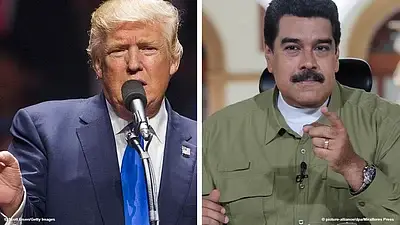
Officials familiar with the discussions say Trump reviewed target lists and strike models but remains undecided on timing and scope. “I sort of have made up my mind,” Trump told reporters aboard Air Force One, adding, “I can’t tell you what it would be, but I sort of have.”
Insiders describe the deliberations as part of a broader push to address drug flows, illegal migration, and potential regime change following years of failed diplomatic pressure against Venezuelan President Nicolás Maduro.
Operation Southern Spear Marks Largest Caribbean Deployment in Decades
The Pentagon confirmed that the USS Gerald R. Ford, the world’s largest aircraft carrier, arrived in the Caribbean earlier this week. The fleet includes cruisers, destroyers, amphibious assault ships, and an attack submarine, making it the region’s largest U.S. military presence since the 1989 invasion of Panama.
The U.S. has also deployed ten F-35 fighter jets to Puerto Rico, which now serves as a strategic hub for regional operations. “It’s the most significant buildup this century,” said Eric Farnsworth, senior associate at the Center for Strategic and International Studies.
Recommended Article: America Enters Bold Economic Experiment Under Trump’s Leadership
Venezuela Launches Counter-Mobilization
In response, Venezuela announced a “massive mobilization” of troops and equipment. President Maduro warned that any U.S. attack could turn the region into “another Gaza” or “a new Afghanistan.”
“Stop the insane hand of those who bring war to South America,” Maduro said in a televised statement from Caracas. “No to war. Stop the bombing and killing.”
Strategic Risks and Domestic Implications
Military experts caution that regime change in Venezuela would require sustained U.S. involvement and carry severe risks, including urban insurgency and regional destabilization.
Analysts also warn that a new foreign conflict could undermine Trump’s political base, which largely supports his pledge to avoid long-term overseas wars. “The American people did not vote for another Latin American intervention,” one Republican staffer said. “Sustained support for this would be politically difficult.”
Intelligence and Legal Constraints
Though Trump has previously authorized CIA operations inside Venezuela, officials told Congress the U.S. still lacks a clear legal justification for direct land strikes. Any expanded campaign would likely require new authorizations or emergency powers.
Sources familiar with internal deliberations say Trump remains wary of high-casualty outcomes or operations that could fail publicly. “He wants a win that looks decisive without becoming another Iraq,” a senior defense analyst said.
Potential Rewards and Strategic Objectives
Supporters of intervention argue that removing Maduro could bring stability, reduce drug flows, and unlock oil cooperation with a future democratic government.
“The potential upside is geopolitical and economic,” said a Pentagon adviser. “A post-Maduro Venezuela could realign South America’s energy markets and restore U.S. leverage.”
However, others caution that fractured opposition groups and pro-Maduro militias could make post-conflict stabilization nearly impossible without a long-term military presence.
Regional and Global Repercussions
Regional governments have expressed concern about escalation. Analysts note that Cuba, Russia, and Iran could increase support for Maduro, transforming Venezuela into another proxy conflict zone.
Observers say the coming days will determine whether Trump opts for measured deterrence or a decisive strike. Either decision could reshape U.S. foreign policy across Latin America for years to come.