Starlink’s Direct-to-Cell Breakthrough
SpaceX’s Starlink has moved from concept to reality in less than three years, delivering basic cellular connectivity directly to smartphones without specialized hardware. The service, developed in partnership with mobile carriers, now supports messaging and limited data use across parts of the United States.
However, company executives acknowledge that the current system represents only the first phase. While it enables emergency connectivity and low-bandwidth access, it falls short of providing the seamless, high-speed mobile internet users expect from terrestrial networks.
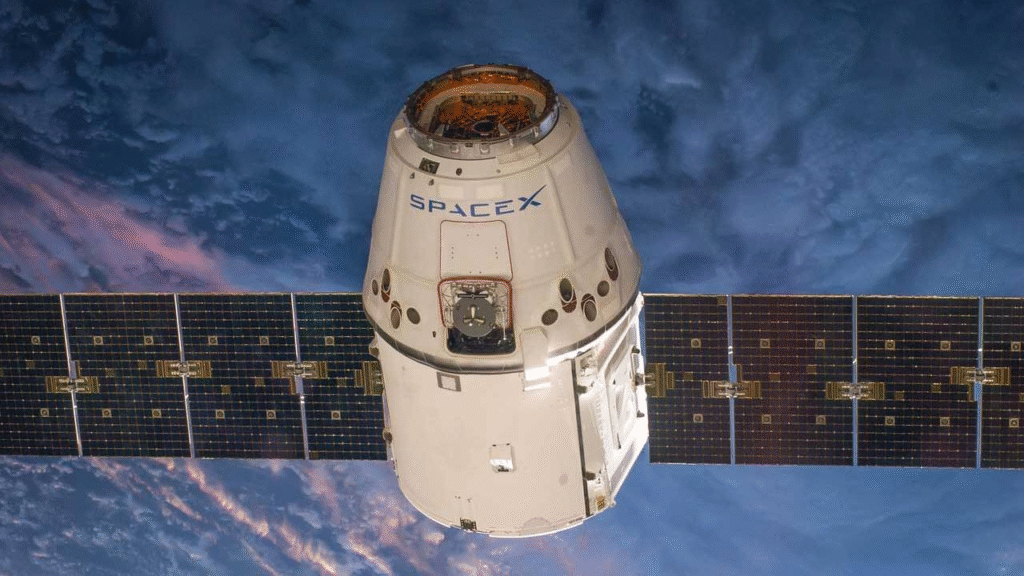
Limits of the Current Satellite Architecture
Starlink’s initial direct-to-cell approach relies on existing spectrum compatible with unmodified phones. From the device’s perspective, the satellite simply appears as a very distant cell tower. This design choice accelerated deployment but introduced significant capacity constraints.
The system currently supports LTE rather than 5G and limits data access to selected applications. Cross-border spectrum mismatches also force SpaceX to reduce signal strength near national boundaries, further constraining performance in some regions.
A Strong Start Despite Technical Constraints
Even with these limitations, Starlink’s impact has been significant. The service has played a crucial role during natural disasters, restoring connectivity when ground infrastructure failed. In Jamaica, hundreds of thousands of users reportedly accessed emergency communication through direct-to-cell satellites after severe storm damage.
From a commercial standpoint, analysts say SpaceX has built a substantial lead over competitors. By achieving global scale early, Starlink has created a deployment gap that may be difficult for rivals to close, particularly in emergency and rural connectivity markets.
Recommended Article: Social Media Shapes Political Power Between Liberation and Control
The Vision for True High-Speed Cellular Internet
SpaceX now aims to go far beyond emergency messaging. Executives have outlined plans to deliver high-speed mobile broadband directly to phones worldwide, creating an experience indistinguishable from terrestrial networks in many scenarios.
Achieving this vision requires a dramatic shift in infrastructure. SpaceX plans to deploy new spectrum acquired from EchoStar on a next-generation constellation of satellites designed specifically for higher capacity and stronger signals.
Launching a New Constellation of 15,000 Satellites
According to regulatory filings, SpaceX intends to launch approximately 15,000 larger and more powerful satellites into low and very low Earth orbits. These satellites would operate with smaller beams, stronger signals, and reduced sharing among users, significantly boosting bandwidth.
The satellites are expected to be launched using SpaceX’s Starship rocket, which is designed to carry dozens of satellites per launch. Although Starship has yet to reach orbit reliably, SpaceX has time to refine the vehicle before the new spectrum licenses fully transfer in 2027.
New Phones and Spectrum Challenges Ahead
Not all of the new spectrum planned for use is compatible with existing smartphones. While some bands already work on many devices, others will require updated hardware. SpaceX executives expect handset manufacturers to address these gaps in future models.
Industry analysts suggest that close cooperation with major phone makers will be critical. Without broad device support, the promise of universal satellite-based cellular service would remain limited, regardless of satellite capability.
Competition and Physical Constraints
Despite its ambitions, Starlink faces unavoidable physical limits. Analysts caution that satellite connectivity will never fully match urban terrestrial networks, particularly indoors or in dense cities. Satellite-based mobile service is expected to perform best in rural, remote, or underserved areas.
Competitors such as AST SpaceMobile continue to pursue alternative approaches, but analysts remain sceptical of their timelines and scalability. While competition may keep options open for carriers, SpaceX currently appears best positioned to dominate the sector.
Redefining Connectivity Where Networks Do Not Reach
Starlink’s next phase is unlikely to replace traditional mobile networks. Instead, it aims to fill gaps where coverage is sparse or nonexistent. In those environments, satellite-based cellular internet could become transformational.
As SpaceX pushes forward, the success of its plan will depend on balancing technological ambition with regulatory approval, device compatibility, and realistic expectations. If executed successfully, the project could fundamentally reshape global connectivity in the years ahead.