

Putin Frames Economic Management as a Strategic Choice
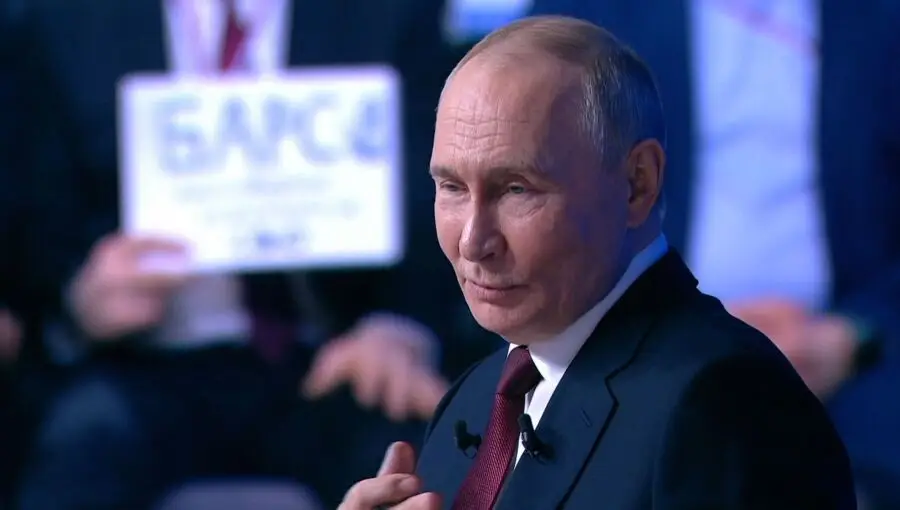
During his annual open Q&A session, Vladimir Putin presented a detailed defense of Russia’s economic direction in 2025, arguing that slower growth was not a failure but a deliberate policy decision. Speaking for nearly four hours and answering questions from citizens and journalists, Putin focused heavily on economic indicators, fiscal discipline, and industrial development amid ongoing geopolitical pressure and sanctions.
According to Putin, the government’s overriding priority this year was to stabilize inflation and preserve macroeconomic balance, even at the cost of reduced short-term growth. He stressed that economic quality, not speed, was the guiding principle behind policy decisions.
Source: bne IntelliNews
Growth Slows as Inflation Comes Under Control
Putin acknowledged that Russia’s GDP growth in 2025 stands at approximately 1%, a figure that appears modest on its own. However, he contextualized this number by pointing out that cumulative growth over the past three years reached nearly 10%, significantly outpacing the eurozone over the same period.
He explained that the slowdown was intentional, aimed at reducing inflation to sustainable levels. By the end of the year, inflation is expected to fall below 6%, settling around 5.7–5.8%. In Putin’s view, restraining growth to achieve price stability was essential to maintaining long-term economic health and protecting household purchasing power.
Industry and Agriculture Show Uneven but Positive Trends
Despite the subdued headline growth, several sectors continue to expand. Industrial output increased by about 1%, while the processing industry performed more strongly, growing over 3%. Agriculture also delivered solid gains, with production rising more than 3%, reinforcing Russia’s food security and export capacity.
Housing construction remained another major pillar. While total output slipped slightly compared with the previous year, more than 100 million square metres of housing were still completed, a level Putin described as substantial given the broader economic environment.
Labor Market Strength Offsets Productivity Concerns
One of the strongest points highlighted during the session was the labor market. Unemployment declined further to roughly 2.2%, marking a historic low and signaling continued demand for workers. Real wages, adjusted for inflation, increased by around 4.5%, supporting household incomes even as prices remained elevated.
At the same time, Putin conceded that labor productivity growth remains weak, rising just over 1%. He described this imbalance as a key structural issue that must be addressed if Russia is to sustain higher growth without fueling inflation.
Recommended Article: Trump’s Promised Economic Golden Age Remains Elusive for Most Americans
Budget Discipline and Financial Reserves Bolster Confidence
Fiscal stability featured prominently in Putin’s remarks. The federal budget deficit stands at approximately 2.6% of GDP and is projected to fall below 2% next year. National debt remains low at under 18% of GDP, one of the smallest ratios among major economies.
Putin also pointed to expanding international reserves, which have climbed above $740 billion. He credited close coordination between the government and the Bank of Russia for maintaining stability in the financial system under challenging conditions.
Asset Seizure Threats Raise Global Financial Risks
Addressing questions about Western efforts to seize Russian assets, Putin warned of serious consequences for the global financial system. He argued that such actions would undermine trust in the eurozone and prompt reserve-holding countries to reconsider where they store their assets.
Putin framed the issue as a threat not only to Russia but to the credibility of international financial architecture itself. He insisted that Moscow would pursue legal avenues in neutral jurisdictions to defend its interests if necessary.
Tax Changes Aim to Balance the Budget
Putin acknowledged public concern over upcoming tax reforms, including a higher value-added tax rate scheduled for 2026. He described the decision as difficult but necessary to balance the budget transparently.
While emphasizing that higher taxes risk pushing businesses into the shadow economy, he reassured viewers that the long-term objective remains reducing the overall tax burden once fiscal stability is secured. He also signaled openness to adjusting policy to protect productive small businesses from unintended harm.
Interest Rates Remain a Delicate Balancing Act
The president addressed criticism of high interest rates, noting the gap between inflation and the central bank’s key rate. While some expected sharper cuts, Putin defended the cautious stance taken by monetary authorities, arguing that premature easing could reignite inflation.
Investment activity has softened, but lending volumes remain relatively high, reinforcing the central bank’s cautious approach. Putin declined to second-guess policymakers, emphasizing the importance of stability over short-term stimulus.
Rising Living Costs and Family Support Take Center Stage
Putin acknowledged the disconnect between official inflation figures and everyday experience, particularly for families facing rising food prices. He admitted that protein-heavy food baskets have been hit harder and pledged closer monitoring of essential goods.
To offset these pressures, he highlighted expanded family support measures scheduled to take effect in 2026, including tax rebates for lower-income households with children and additional direct assistance. Putin emphasized that rising wages should never result in families losing state support.
Industrial Development and Scientific Ambitions Continue
Beyond macroeconomics, Putin showcased Russia’s industrial and scientific ambitions, particularly in high-technology research. He praised the completion of the SKIF synchrotron facility in Siberia, built entirely with domestic components despite sanctions.
Putin described such projects as critical for pharmaceuticals, materials science, and applied research. Retaining young scientists, he said, depends on long-term funding, competitive salaries, housing, and modern infrastructure. He claimed that improving research conditions have already encouraged some specialists to return from abroad.
Stability Over Speed Defines the Economic Strategy
Throughout the session, Putin returned to a central theme: economic stability takes precedence over rapid expansion. By controlling inflation, maintaining fiscal discipline, and investing selectively in strategic industries, Russia aims to preserve resilience under prolonged external pressure.
Whether this approach delivers stronger growth in coming years remains uncertain. For now, Putin’s message is clear—Russia’s economy, while constrained, is stable, managed, and oriented toward long-term structural strength rather than short-term acceleration.