

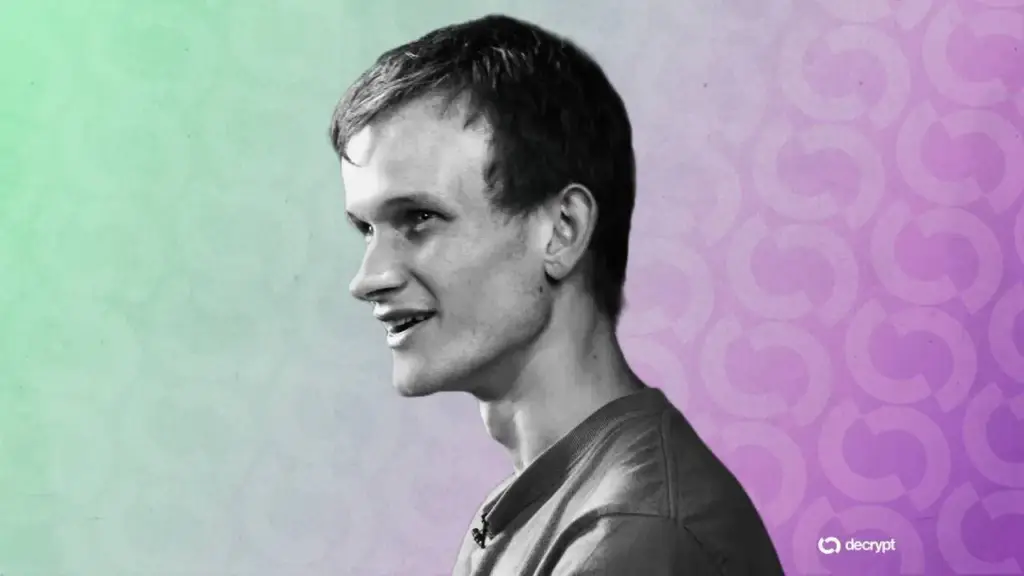
Vitalik Buterin’s Claim Marks a Major Moment for Ethereum
On January 3, 2026, Vitalik Buterin made a striking assertion about Ethereum’s technical evolution. He stated that the long-debated blockchain trilemma is no longer an unsolved problem for the network. Rather than presenting a future proposal, Buterin emphasized that the solution already exists in deployed systems.
This distinction matters. The claim was not framed as a theoretical breakthrough or aspirational roadmap item. Instead, it pointed to live infrastructure, some of which is already active on Ethereum’s mainnet, with other components operating at production-level performance.
Understanding the Blockchain Trilemma
The blockchain trilemma refers to the difficulty of achieving scalability, security, and decentralization simultaneously. Historically, blockchains have been forced to prioritize two of these qualities at the expense of the third. Higher throughput often required centralization, while strong decentralization limited transaction capacity.
Buterin originally articulated this framework nearly a decade ago as Ethereum development began. His recent statement uses that same classical definition, asserting that Ethereum no longer needs to compromise one pillar to strengthen the others.
Why “Solved” Does Not Mean “Finished”
A key nuance in Buterin’s statement is his deliberate qualification around safety. While he described the trilemma as solved, he also stressed that safety hardening remains ongoing. This clarification is essential to understanding his intent.
In this context, “solved” refers to architectural viability rather than final deployment. Ethereum now has a working design that supports scalability, security, and decentralization together. However, not all components have completed long-term testing or full network adoption.
Recommended Article: Ethereum Powers $8 Trillion in Stablecoin Transfers, Setting New Record
PeerDAS and Data Availability at Scale
The first system Buterin referenced is PeerDAS, or peer data availability sampling. PeerDAS improves scalability by allowing nodes to verify that data exists without downloading it in full. This dramatically reduces bandwidth requirements while maintaining probabilistic security guarantees.
PeerDAS addresses one of the most persistent scaling bottlenecks at the data layer. Importantly, Buterin noted that this portion of the solution is already live on Ethereum mainnet, making it a concrete rather than experimental component.
zkEVMs and the Future of Validation
The second half of the solution involves zkEVMs, or zero-knowledge Ethereum Virtual Machines. These systems allow blocks to be validated using cryptographic proofs instead of full re-execution by every node. This reduces computational load while preserving correctness guarantees.
Buterin described zkEVMs as having production-grade performance, even though they remain in an alpha stage from a safety and tooling perspective. Once hardened, zkEVMs could significantly improve both scalability and decentralization by lowering hardware requirements for validators.
How the Roadmap Unfolds Through 2030
Ethereum’s roadmap reflects a gradual rollout rather than abrupt replacement. In 2026, zkEVMs are expected to be used only in limited contexts, alongside other scaling measures such as gas limit adjustments. Developers will gain early access, but broad reliance will remain years away.
Between 2026 and 2028, Ethereum plans deeper structural changes to ensure higher throughput remains safe. The long-term goal places zkEVM-based validation as the dominant model sometime between 2027 and 2030.
Why This Matters Beyond Ethereum
Ethereum’s design choices influence the broader blockchain ecosystem. Many newer networks achieve speed by sacrificing decentralization at the base layer. If Ethereum succeeds in maintaining all three pillars, it challenges the assumption that such tradeoffs are unavoidable.
For developers, this enables more ambitious application design. For investors, it reshapes long-term value assessments. For institutions, it reduces infrastructure risk. In that sense, Buterin’s statement is less about celebration and more about signaling that Ethereum’s core engineering problem is no longer a dead end.