Bitcoin Price Action Turns Choppy
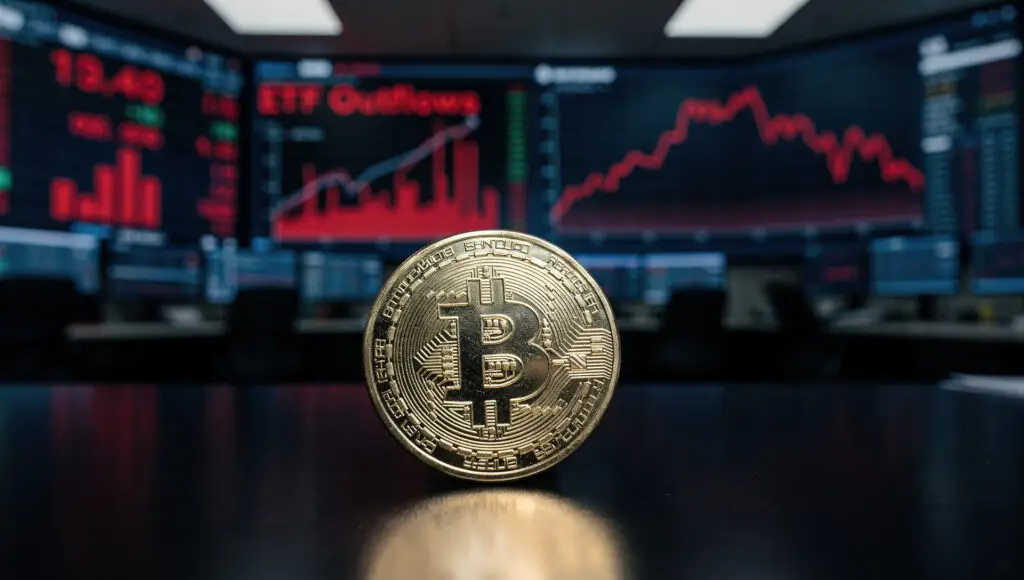
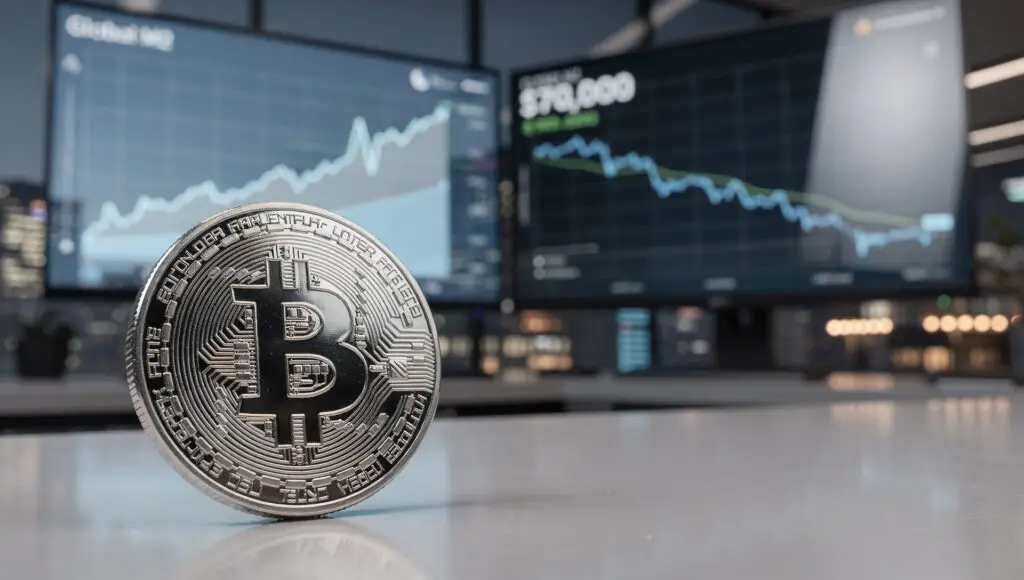
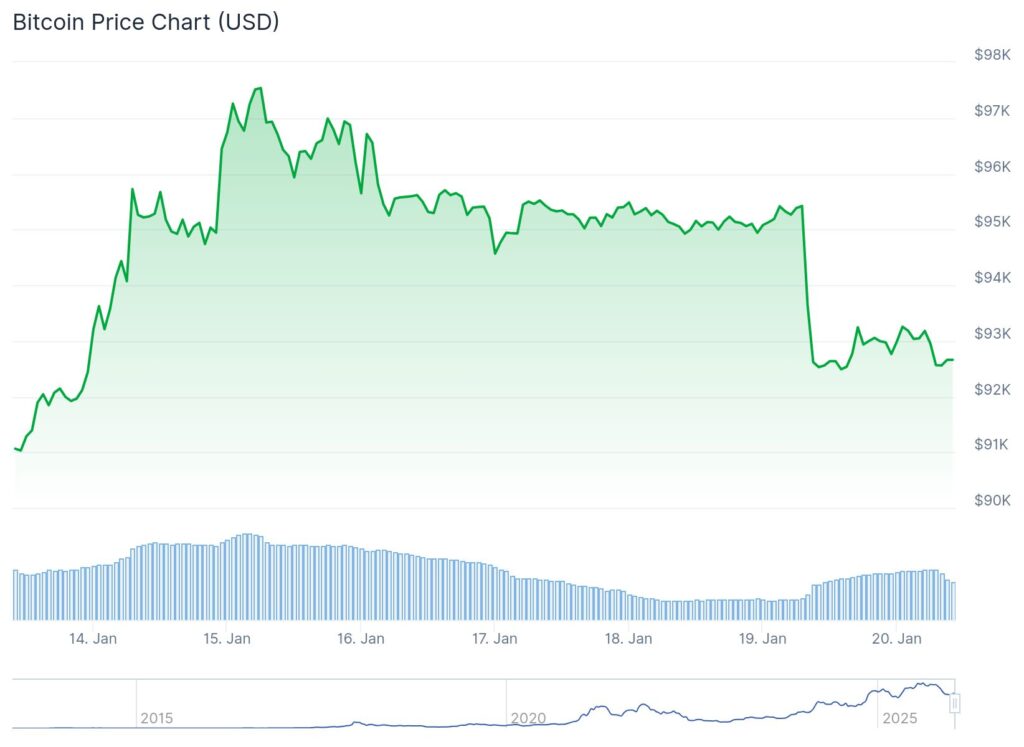
Bitcoin entered January 6, 2026, showing renewed volatility after weeks of narrow consolidation. Prices oscillated sharply within intraday ranges as traders responded to conflicting macroeconomic signals, underscoring uncertainty rather than directional conviction. Despite holding above key long-term technical levels, momentum indicators reflected hesitation, with buyers and sellers repeatedly testing control.
This choppy behavior followed a strong rally late in 2025, leaving markets sensitive to any change in macro expectations. Rather than signaling weakness, the price action suggested digestion, as participants reassessed positioning at elevated levels. The absence of panic selling indicated that confidence had not collapsed, even as short-term enthusiasm cooled.
ETF Flows Provide Conflicting Signals
Spot Bitcoin exchange-traded funds continued to exert significant influence over market dynamics. In early January, some ETFs recorded modest inflows, while others experienced light redemptions, producing a mixed aggregate picture. This divergence highlighted the fragmented nature of institutional sentiment rather than a unified shift in outlook.
Asset managers and pension allocators appear to be rotating exposure rather than exiting entirely. For many institutions, Bitcoin remains a strategic allocation, but position sizing is being adjusted in response to volatility and macro uncertainty. The ETF structure amplifies these shifts, making daily flow data an increasingly important sentiment indicator.
Interest Rate Expectations Drive Sensitivity
Expectations around U.S. interest rates remain one of the most powerful external drivers of Bitcoin price movements. Economic data releases early in 2026 have sent mixed signals, complicating forecasts for monetary easing. As a result, markets remain highly sensitive to inflation prints, employment data, and central bank commentary.
Bitcoin’s correlation with liquidity conditions has strengthened over the past year. When rate-cut expectations rise, digital assets tend to benefit; when those expectations are pushed back, risk assets retrace. This dynamic places Bitcoin squarely within the broader macro trading framework, alongside equities and high-growth assets.
Risk Sentiment and Global Markets
Beyond interest rates, global risk sentiment has become increasingly fragile. Equity markets have shown signs of fatigue, while geopolitical tensions and trade uncertainty continue to weigh on investor confidence. In such environments, Bitcoin often oscillates between behaving as a speculative risk asset and as a hedge against systemic instability.
This dual identity complicates positioning. Some investors reduce exposure during risk-off episodes, while others view pullbacks as opportunities to accumulate a scarce digital asset outside traditional financial systems. The result is heightened volatility without a clear directional bias.
Derivatives Positioning Remains Elevated
Futures and options markets indicate that leverage remains present but controlled. Funding rates normalized after periods of excess in late 2025, suggesting traders are no longer aggressively chasing upside. Open interest has stabilized, pointing to consolidation rather than capitulation.
Historically, periods where derivatives positioning remains elevated but price stalls often precede sharper moves. Whether that move resolves higher or lower typically depends on an external catalyst, such as a macro shock or policy shift.
Long-Term Holders Show Restraint
On-chain data suggests that long-term Bitcoin holders remain largely inactive. Coins held for extended periods are not moving at rates associated with panic or distribution. This behavior reinforces the idea that the current volatility is driven primarily by short-term traders and macro funds rather than structural sellers.
Historically, such conditions have supported price floors during periods of uncertainty. Long-term holders appear willing to absorb selling pressure, particularly near psychologically important levels.
Outlook for Bitcoin in Early 2026
Bitcoin’s near-term outlook remains tightly linked to macro clarity. Until interest-rate expectations, global growth signals, and risk sentiment align, volatility is likely to persist. However, the underlying structure of the market suggests resilience rather than fragility.
For investors, the current environment favors patience and risk management over aggressive positioning. While short-term swings may continue, Bitcoin’s role as a macro-sensitive asset with long-term scarcity remains intact as 2026 unfolds.