Google Pushes AI Deeper Into Everyday Use
In early 2026, Google took a decisive step toward mainstreaming artificial intelligence by expanding its AI Plus subscription to dozens of new countries, including the United States. The move reflects Google’s ambition to make advanced AI tools a standard part of daily digital life rather than a niche or experimental product.
By bundling powerful models, creative tools, and storage into a single plan, Google signals confidence that consumers are ready to pay for AI-enhanced productivity. Industry observers see the rollout as a milestone in the commercialization of consumer AI, according to recent technology analysis.
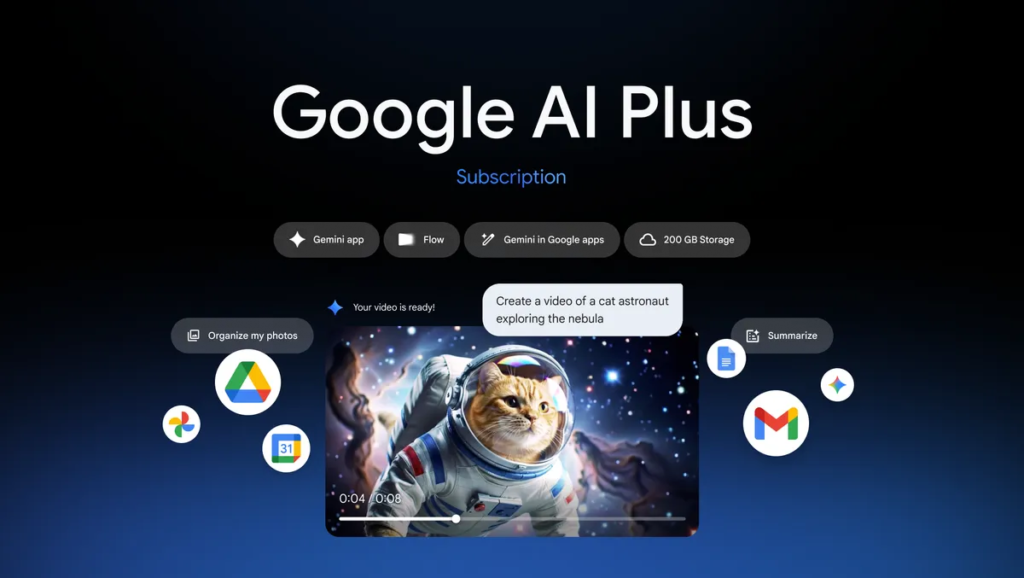
What Google AI Plus Includes
Google AI Plus offers access to a suite of advanced AI capabilities designed to span productivity, creativity, and research. Subscribers gain entry to high-end models within the Gemini ecosystem, including enhanced reasoning and multimodal features.
The plan also integrates AI-powered filmmaking tools, advanced research and writing assistance, and expanded cloud storage. By positioning these tools as everyday utilities, Google aims to normalize AI usage across a broad user base, as outlined in product launch coverage.
Subscription Pricing Signals Strategic Shift
The decision to package AI features within a paid subscription marks a strategic shift in how AI is monetized. Rather than offering advanced capabilities solely to enterprises or developers, Google is targeting households and individual users.
This approach reflects growing confidence that AI delivers tangible value worth paying for. Analysts note that subscription pricing creates predictable revenue while encouraging sustained engagement, a model increasingly favored across the tech sector, according to business strategy reports.
Recommended Article:Landmark Social Media Addiction Trial Signals Turning Point for Big Tech Accountability
Family Sharing Broadens Adoption Potential
One notable feature of AI Plus is its family-sharing option, allowing benefits to be shared among multiple users. This design lowers the effective cost per user and encourages adoption at the household level.
By embedding AI into shared digital environments, Google increases exposure among students, professionals, and casual users alike. Observers argue this could accelerate normalization of AI tools across demographics, as discussed in consumer technology analysis.
Gemini Models Anchor Google’s AI Strategy
At the core of AI Plus is Google’s Gemini model lineup, which represents the company’s answer to growing competition in large language models. Gemini’s integration across search, productivity, and creative tools highlights Google’s platform-first approach.
Rather than positioning AI as a standalone app, Google weaves it into existing services. This integration leverages Google’s ecosystem advantage, a point emphasized in platform competition coverage.
Competition Intensifies in Consumer AI
Google’s expanded rollout comes amid intensifying competition in consumer AI. Rivals increasingly bundle AI features into productivity suites, operating systems, and cloud services.
The battle is less about raw model capability and more about distribution, trust, and daily usefulness. Analysts suggest companies with established ecosystems hold an advantage in converting curiosity into habitual use, according to market competition research.
Privacy and Trust Remain Key Considerations
As AI adoption grows, concerns around data usage and privacy remain prominent. Consumers increasingly question how personal information is used to train and operate AI systems.
Google emphasizes safeguards and transparency, but skepticism persists. Trust will play a critical role in determining long-term adoption rates, a challenge highlighted in digital ethics commentary.
AI Plus Reflects Maturing AI Economics
The rollout of AI Plus also reflects broader shifts in AI economics. As model training costs rise, companies must balance innovation with sustainable revenue models.
Subscription-based access offers a path toward monetization without relying solely on advertising. Economists argue this transition mirrors earlier phases of cloud computing and software-as-a-service adoption, according to technology economics analysis.
Productivity Gains Drive the Value Proposition
Google positions AI Plus primarily as a productivity enhancer. Tools for writing, research, summarization, and creative generation aim to save time rather than replace users.
This framing aligns with user preferences that favor assistance over automation. Surveys suggest consumers are more receptive to AI that augments work rather than displaces it, according to workplace technology reports.
Global Rollout Signals Confidence in Demand
Expanding AI Plus to 35 new countries demonstrates Google’s confidence in global demand. Rather than testing AI adoption market by market, the company is moving decisively to scale.
This global approach contrasts with earlier, more cautious rollouts of emerging technologies. Observers interpret the move as evidence that AI has crossed from novelty to necessity, as noted in international tech analysis.
What Google’s Move Means for Consumer AI in 2026
Google’s AI Plus expansion marks a turning point in consumer AI adoption. By bundling advanced capabilities into an accessible subscription, the company accelerates the shift toward paid AI services.
Whether consumers embrace this model at scale will shape the next phase of AI development. For now, Google’s move signals that artificial intelligence is no longer just a feature — it is becoming a core digital service, according to forward-looking industry commentary.