A Symbolic Return to Caracas
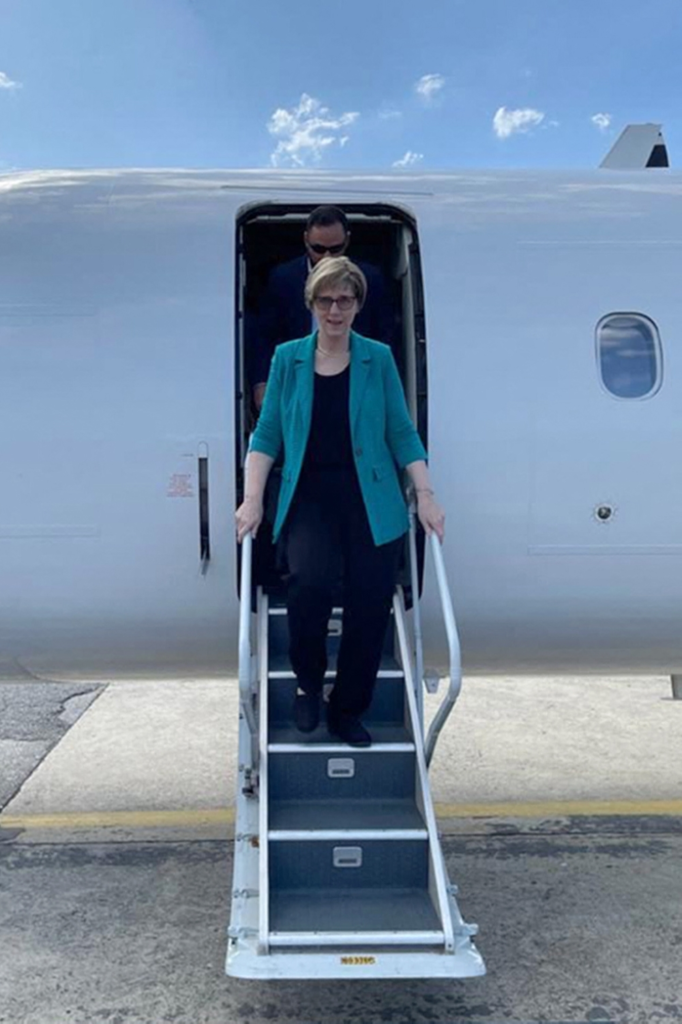
The arrival of Laura F. Dogu in Caracas marks the most visible step yet in the United States’ effort to reestablish a diplomatic presence in Venezuela. Posting images from the airport tarmac, Dogu signaled that Washington is no longer content managing relations from afar after nearly seven years without an operating embassy.
Her visit comes at a moment of rapid geopolitical recalibration. For the Trump administration, restoring on-the-ground diplomacy is viewed as essential to shaping Venezuela’s political and economic trajectory following months of upheaval and leadership transition.
Washington’s Phased Diplomatic Strategy
US officials describe Dogu’s mission as part of a carefully sequenced, three-phase plan approved by both the White House and the State Department. The immediate goal is engagement — meeting with public officials, private-sector leaders, and civil society groups to assess conditions on the ground.
Secretary of State Marco Rubio previously told lawmakers that the United States intended to establish a diplomatic footprint in Venezuela “very quickly.” Dogu’s presence now turns that pledge into action, suggesting that Washington is prepared to move beyond exploratory talks toward operational diplomacy.
Venezuela’s Response Signals Cautious Openness
Caracas reacted positively, at least publicly. Venezuelan Foreign Minister Yván Gil Pinto welcomed Dogu’s arrival, describing it as part of a broader effort to define a roadmap for bilateral engagement based on mutual respect and international law.
This response reflects Venezuela’s interest in stabilizing relations with Washington after years of sanctions, isolation, and economic strain. While deep mistrust remains, the decision to openly receive a senior US envoy indicates that Venezuelan authorities see practical benefits in reopening diplomatic channels.
Recommended Article: Iran Turns to Turkey as Trump’s Military Threats Push Region…
Embassy Reopening After Years of Absence
The United States suspended operations at its Caracas embassy in 2019, withdrawing diplomats amid escalating tensions and security concerns. Since then, US-Venezuela relations have been managed largely through intermediaries and regional partners, limiting direct influence.
Dogu currently serves as chargé d’affaires for the US Venezuela Affairs Unit based in Colombia. Her arrival in Caracas signals a shift from remote oversight to direct engagement, with officials confirming that temporary facilities may be opened as part of a phased return.
Intelligence and Security Dimensions
Beyond traditional diplomacy, the US push to reestablish a presence in Venezuela carries strategic and security implications. Reports indicate that the Central Intelligence Agency is also working toward establishing a permanent footprint in the country.
From Washington’s perspective, proximity matters. A physical presence allows US agencies to better monitor political developments, economic reforms, and regional security dynamics in a country long seen as strategically significant due to its energy resources and regional influence.
Trump Administration’s Broader Vision
President Donald Trump has framed Venezuela as a priority within his foreign policy agenda. Following the ouster of Nicolás Maduro, Trump openly stated that the United States would play a decisive role in shaping Venezuela’s future, including oversight of its oil sector.
The administration has also signaled plans to reopen commercial airspace and encourage foreign investment. These moves align with recent actions by Venezuela’s interim leadership aimed at easing restrictions on foreign companies and signaling economic pragmatism.
Domestic Shifts Inside Venezuela
Venezuela’s acting government, led by Delcy Rodríguez, has taken steps that appear designed to ease international pressure. Proposed amnesty measures, the release of detained US citizens, and the closure of a notorious detention facility suggest an attempt to rebuild credibility.
For Washington, these gestures provide justification for deeper engagement while maintaining leverage. US officials continue to insist on the release of all political prisoners and meaningful institutional reforms as conditions for normalized relations.
What Comes Next for Bilateral Relations
Dogu’s visit does not guarantee a rapid restoration of full diplomatic ties, but it sets the process in motion. Reopening an embassy requires security guarantees, staffing decisions, and political coordination that could take months.
Still, the symbolism is powerful. After years of hostility and distance, both governments are testing whether pragmatic diplomacy can replace confrontation. The outcome will shape not only US-Venezuela relations, but also Washington’s broader influence in Latin America at a time of shifting regional alliances.
If successful, the return of US diplomats to Caracas could mark the beginning of a new chapter defined less by isolation and more by cautious engagement.