Bitcoin Drops Sharply in Asian Trading Hours
Bitcoin extended its January decline after sliding to fresh two-month lows during early Asian trading. The sell-off pushed the cryptocurrency below key psychological levels, shaking confidence among short-term traders and reigniting concerns about downside momentum.
Prices briefly touched levels not seen since November, marking a steep fall from the all-time highs recorded late last year. The move reflected growing caution among investors as broader risk sentiment deteriorated and liquidity conditions tightened across global markets.
ETF Outflows Accelerate Selling Pressure
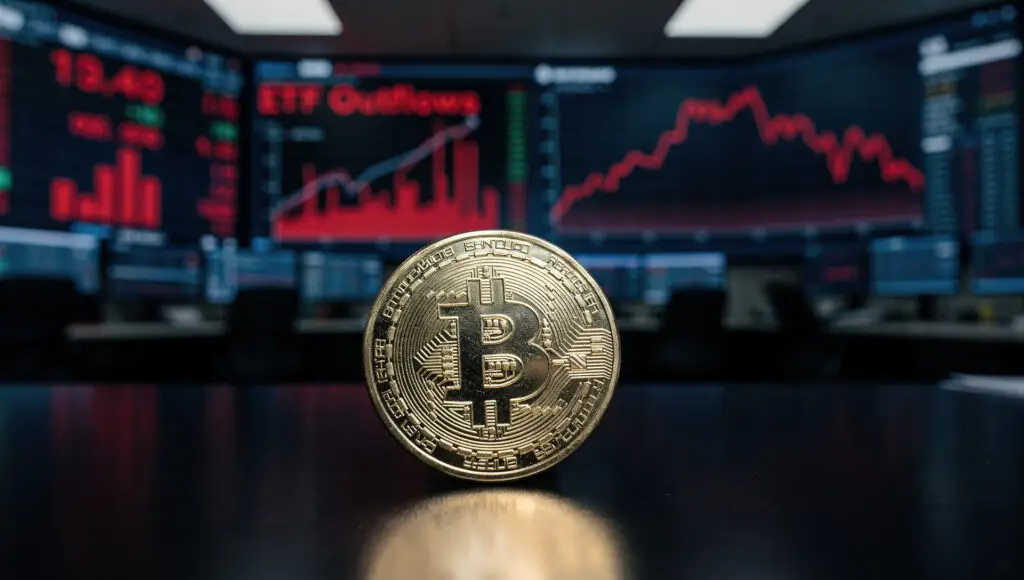
One of the most significant drivers behind Bitcoin’s latest slump has been sustained outflows from US-listed spot Bitcoin exchange-traded funds. Data cited by Bloomberg shows that investors have pulled billions of dollars from these products in recent weeks.
ETF outflows matter because they directly translate into selling pressure in the underlying market. As funds reduce exposure, Bitcoin must absorb additional supply, amplifying downside moves during periods of weak demand.
Liquidations Sweep Through Leveraged Positions
The downturn has also triggered widespread liquidations across derivatives markets. According to CoinGlass, more than $1.5 billion in bullish crypto positions were wiped out in a single 24-hour period.
Liquidations tend to exacerbate volatility by forcing automatic selling when margin thresholds are breached. This dynamic creates a feedback loop where falling prices trigger liquidations, which then push prices even lower, accelerating the decline.

Recommended Article: US Winter Storm Disrupts Bitcoin Mining as Hash Rate Suffers…
Sentiment Shifts After Record 2025 Rally
Bitcoin’s current weakness follows an extraordinary rally in 2025 that saw prices surge to record highs. That run-up attracted significant speculative capital, leaving the market vulnerable to sharp reversals once momentum stalled.
As Bitcoin slid more than 30% from its peak, investor psychology shifted rapidly. Traders who entered near the top rushed to cut losses, while longer-term holders reassessed valuations in a market no longer fueled by abundant liquidity.
Macro Conditions Weigh on Risk Assets
Bitcoin’s decline has unfolded alongside broader stress in global markets. Higher interest rates, persistent inflation concerns, and uncertainty surrounding economic growth have reduced appetite for risk assets across the board.
Policy signals from the Federal Reserve remain central to investor expectations. With monetary conditions still restrictive, speculative assets like cryptocurrencies have struggled to attract fresh capital, even as traditional markets show signs of fatigue.
Comparisons With Gold Resurface
As Bitcoin weakens, comparisons with gold have resurfaced among investors evaluating store-of-value narratives. While gold prices have held firm amid global uncertainty, Bitcoin has behaved more like a high-volatility risk asset than a defensive hedge.
Supporters argue that Bitcoin’s long-term scarcity remains intact despite short-term price swings. Critics counter that the asset’s correlation with broader risk sentiment undermines its role as digital gold during periods of stress.
Long-Term Holders Remain Cautious but Engaged
Despite the sell-off, long-term Bitcoin holders have not exited the market en masse. On-chain data suggests that many investors with multi-year horizons are holding positions, viewing the downturn as a cyclical correction rather than a structural breakdown.
Institutional participation, while quieter, has not disappeared entirely. Market participants note that regulatory clarity in the United States and expanding infrastructure continue to support Bitcoin’s long-term relevance, even as near-term price action remains volatile.
What Comes Next for Bitcoin Markets
Bitcoin’s path forward will depend on whether selling pressure from ETFs and leveraged traders subsides. Stabilization could emerge if outflows slow and macro conditions improve, particularly if expectations around monetary policy begin to shift.
For now, Bitcoin remains caught between strong long-term narratives and short-term market stress. The latest slump underscores the asset’s sensitivity to liquidity and sentiment, reminding investors that volatility remains an inherent feature of crypto markets — even as Bitcoin becomes more embedded in the global financial system.