Crypto Market Suffers Major Losses in 2026
The global cryptocurrency market has experienced a difficult start to 2026, losing roughly $540 billion in value since the beginning of the year. Market capitalization across major digital assets has dropped significantly as investors react to macroeconomic pressure and geopolitical uncertainty.
The decline has affected both leading cryptocurrencies and smaller altcoins across the industry. Analysts say the downturn reflects a combination of economic uncertainty, regulatory debates, and shifting investor sentiment across global financial markets.
Bitcoin Remains Far Below Its All-Time High
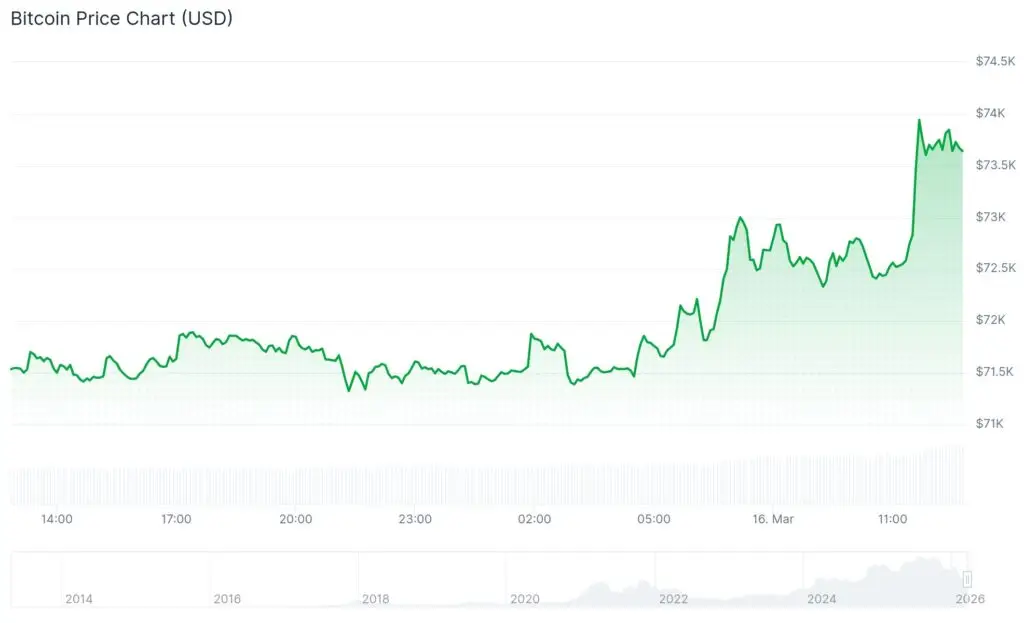
Bitcoin continues to trade significantly below its record high despite remaining the largest cryptocurrency by market capitalization. Current data shows the asset trading more than 40% below its previous peak of around $126,000.
While the drop has unsettled many traders, some analysts argue that the decline is still moderate compared with previous bear markets. In earlier cycles, Bitcoin often lost between 70% and 80% of its value before eventually recovering.
Ethereum and Major Altcoins Face Steeper Declines
Ethereum has experienced an even sharper correction than Bitcoin during the current downturn. The second-largest cryptocurrency by market capitalization has fallen more than 57% from its previous high of roughly $4,946.
Other major cryptocurrencies such as BNB, XRP, and Solana have also recorded significant losses. Solana in particular has seen one of the steepest declines among leading blockchain networks, dropping nearly 70% from its peak price.
Some Crypto Assets Show Greater Resilience
Despite the widespread losses across the industry, several digital assets have demonstrated stronger price stability than others. Tron, LEO token, and WhiteBIT Coin have experienced smaller declines compared with many competing cryptocurrencies.
Market observers say these projects have benefited from steady ecosystem activity and consistent user engagement. Strong network usage can sometimes help cushion price declines during broader market downturns.
Regulatory Uncertainty Weighs on Investor Confidence
Regulatory developments remain a key factor influencing cryptocurrency markets in 2026. In the United States, lawmakers continue debating new digital asset legislation including the proposed CLARITY Act.
Uncertainty surrounding regulation can create hesitation among institutional investors. Many financial institutions prefer clearer legal frameworks before expanding their exposure to cryptocurrency markets.
Geopolitical Risks Add Additional Market Pressure
Geopolitical developments have also contributed to market volatility during the year. Conflicts in the Middle East and rising oil prices have increased uncertainty across global financial markets.
Such events often influence inflation expectations and central bank policy decisions. When macroeconomic conditions tighten, risk assets such as cryptocurrencies can face additional selling pressure.
Investors Wait for Signs of the Next Cycle
Despite current losses, many investors remain optimistic about the long-term outlook for digital assets. Institutional adoption, corporate treasury strategies, and exchange-traded products continue to expand across the sector.
Historical market cycles show that periods of downturn are often followed by renewed growth. Traders and developers across the cryptocurrency ecosystem are watching closely for signals that the next market recovery phase may be approaching.