Claims Spark Political Controversy
The lawyer for former congressman Zaldy Co has categorically denied allegations that his client amassed billions of pesos in bitcoin and constructed a multi-level underground vault to store cash. The accusations were publicly raised by Interior Secretary Jonvic Remulla, prompting sharp rebuttals and renewed debate over political accountability.
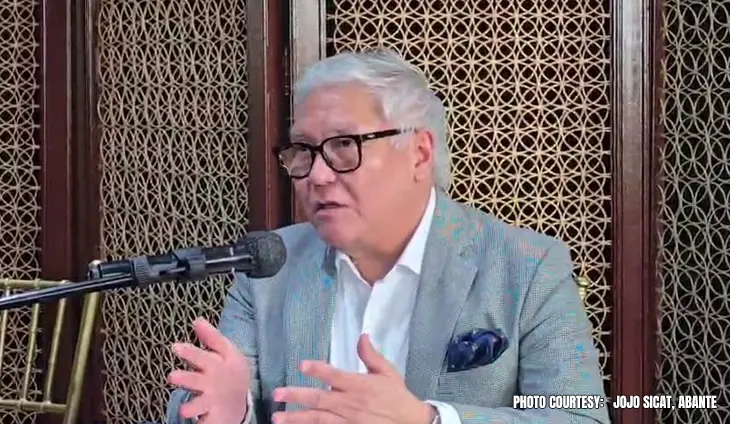
Attorney Ruy Rondain described the claims as false, misleading, and unsupported by evidence, calling on Remulla to identify the alleged source behind the accusations. Rondain challenged the interior secretary to substantiate the claims or withdraw them, warning against the spread of unverified narratives in public discourse.
Dispute Over Alleged Cryptocurrency Holdings
At the center of the controversy is Remulla’s assertion that Co siphoned approximately ₱5 billion worth of bitcoin while abroad, allegedly transferring the funds through associates while evading authorities. Rondain dismissed the claim outright, stating that no such cryptocurrency holdings exist under Co’s name.
In a pointed remark, Rondain said Remulla could keep any bitcoin he might find registered to Co, underscoring his confidence that the allegation would not withstand scrutiny. He stressed that extraordinary claims require verifiable proof, particularly when they involve digital assets that leave traceable transaction records.
Basement Allegations Called Fabrication
Another focal point of the dispute involves claims that Co’s residence in Forbes Park, Makati City, contains four to five underground basement levels designed to store large sums of cash. Rondain countered that the house features a split-level basement used solely for vehicle parking, a design consistent with village regulations governing lot utilization.
According to the lawyer, the split-tier configuration maximizes usable space without exceeding building limits imposed by Forbes Park rules. He rejected speculation that the structure was intended to conceal cash, noting that such claims lack both architectural and practical logic.
Recommended Article: Philippine Protests Intensify as Marcos Faces Corruption Fury
Fire Safety and Structural Claims Challenged
Remulla cited unnamed fire safety experts to support his claim that the basement was waterproof and designed to protect its contents. Rondain dismissed this as conjecture, arguing that the design had no relation to fire prevention or asset protection.
He emphasized that basements are not inherently safer for storing valuables and questioned the rationale behind suggesting underground storage as a safeguard. Rondain reiterated that the public deserves factual explanations grounded in evidence, not assumptions presented as insider information.
Broader Implications for Public Discourse
The exchange highlights growing concerns about the role of unverified claims in political debate. Rondain warned that repeating allegations without substantiation risks misleading the public and undermining confidence in institutions tasked with upholding the rule of law.
He called for greater restraint from public officials, especially when accusations involve serious criminal implications. According to Rondain, disputes of this nature should be resolved through proper investigative channels rather than public speculation.
Government Silence and Escalating Tensions
As of publication, Remulla has not provided additional documentation to support his statements, nor identified the alleged associate who supplied the information. The lack of follow-up has fueled criticism from legal observers who stress the importance of transparency when senior officials make explosive claims.
The incident has added to broader political tensions, reinforcing calls for clearer standards governing public statements by government officials and the handling of sensitive allegations.
Questions Remain Unresolved
While no formal charges have been announced in relation to the allegations, the public dispute underscores the fragile balance between accountability and due process. Whether further evidence will emerge remains uncertain.
For now, the case serves as a reminder of how quickly allegations can shape narratives—and how essential factual rigor remains in maintaining public trust.