

Understanding Bitcoin’s Core Purpose
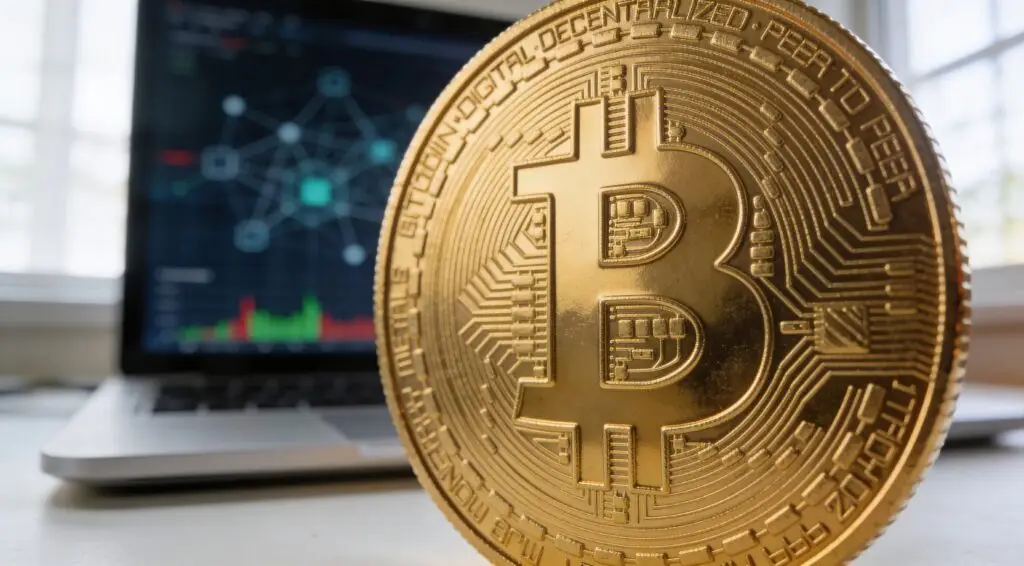
Bitcoin was launched in 2009 as a decentralized digital currency designed to function without banks or governments. It enables peer-to-peer financial transactions using cryptographic verification instead of institutional trust.
The system was introduced by an anonymous creator known as Satoshi Nakamoto, who envisioned an electronic payment network independent of centralized authorities. Unlike fiat currencies such as the U.S. dollar or British pound, Bitcoin is not issued or controlled by any state.

Blockchain as the Digital Ledger
Bitcoin operates on a distributed ledger called a blockchain, which records every transaction in chronological order. Each group of transactions is bundled into a “block” and permanently added to the chain.
Because the ledger is distributed across thousands of global nodes, no single entity controls it. This decentralization increases transparency and makes altering past transactions extremely difficult.
Limited Supply and Monetary Design
A defining characteristic of Bitcoin is its capped supply of 21 million coins. This scarcity differentiates it from fiat currencies, which governments can issue in unlimited quantities.
As of early 2026, nearly 20 million bitcoins have already been mined, leaving just over one million yet to enter circulation. The final Bitcoin is expected to be mined around the year 2140.
Recommended Article: Bitcoin ETF Mechanics Face Scrutiny Amid Jane Street Speculation
How Bitcoin Mining Works
Bitcoin mining is the process through which new coins are introduced and transactions are validated. Miners use powerful computers to solve complex mathematical puzzles under a system called proof-of-work.
When a miner successfully validates a block, they receive a block reward in newly created Bitcoin. This reward mechanism incentivizes network security and transaction verification.
The Halving Mechanism
Every 210,000 blocks, Bitcoin undergoes a “halving” event that reduces the mining reward by 50 percent. The most recent halving occurred in April 2024, cutting the reward to 3.125 BTC per block.
The next halving is expected in 2028, reducing rewards to 1.5625 BTC per block. Historically, halvings have contributed to supply tightening narratives and long-term price speculation.
Buying Bitcoin in 2026
Beginners typically purchase Bitcoin through cryptocurrency exchanges such as Coinbase or Kraken. Users create accounts, verify their identity, deposit funds, and place purchase orders.
Investors are not required to buy a full Bitcoin, as the asset is divisible into 100 million units known as satoshis. This fractional structure makes participation accessible at nearly any budget level.
Storage: Hot Wallets vs. Cold Wallets
Bitcoin does not exist in physical form but is controlled through private cryptographic keys. These keys can be stored in “hot wallets” connected to the internet or “cold wallets” kept offline.
Hot wallets provide convenience but carry higher hacking risks, while cold storage offers greater security through offline isolation. Many long-term holders prefer hardware wallets to minimize counterparty exposure.
Selling and Tax Considerations
Selling Bitcoin through an exchange mirrors the buying process, allowing users to convert BTC back into fiat currency. Depending on jurisdiction, profits may be subject to capital gains tax.
Because Bitcoin remains highly volatile and sentiment-driven, investors must consider risk tolerance carefully. Its size does not eliminate volatility, and price swings can be dramatic over short periods.