A Shift Away From Hyper-Globalization
Global trade entered 2026 under growing strain as governments rethink decades of economic integration. Once driven by efficiency and cost minimization, trade policy is now increasingly shaped by security, resilience, and political alignment.
This shift reflects lessons learned from recent shocks, including pandemics, wars, and geopolitical tensions. Policymakers are prioritizing control and reliability over speed and scale.
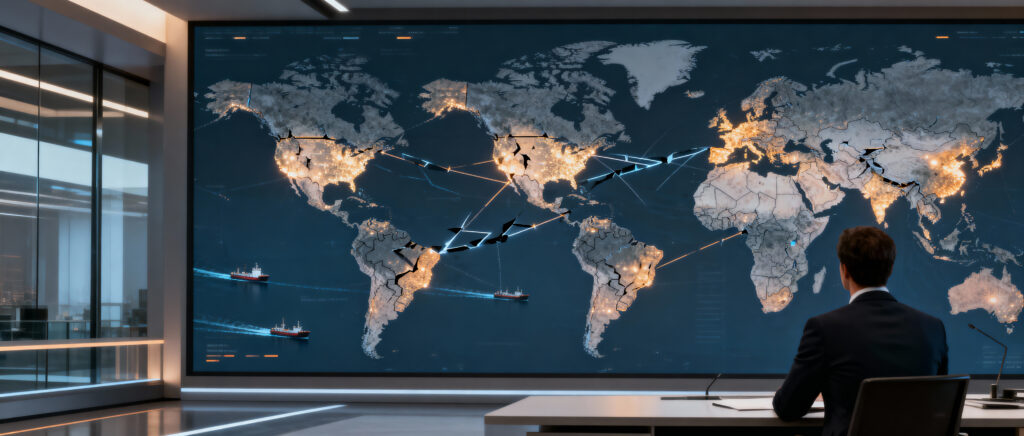
Tariffs Regain Political Importance
Tariffs have returned as a central policy tool. Governments are using them not only to protect domestic industries but also to influence geopolitical outcomes.
While tariffs were once viewed as blunt instruments, they are now deployed more strategically. Targeted measures aim to reshape supply chains without fully severing trade relationships.
Supply Chains Become More Regional
One of the most visible consequences of rising trade barriers is regionalization. Companies are redesigning supply networks to reduce dependence on distant suppliers.
Nearshoring and friend-shoring strategies are gaining traction, particularly in critical sectors such as semiconductors, energy equipment, and pharmaceuticals. These changes favor predictability over marginal cost savings.
Recommended Article: Trump’s Expansive View of Presidential Power Reignites Legal and Democratic…
Businesses Absorb Higher Costs
The restructuring of supply chains comes at a price. Shorter, more secure production networks often cost more to maintain.
Many firms are passing these costs on to consumers, contributing to persistent inflation pressures in some economies. Others are absorbing margins to preserve market share, weighing profitability against resilience.
Emerging Markets Face New Challenges
For emerging economies, the shift poses mixed outcomes. Some countries benefit from supply chain diversification, attracting new investment as alternatives to traditional manufacturing hubs.
Others face declining demand as multinational firms consolidate operations closer to end markets. The uneven impact risks widening global economic disparities.
Trade Institutions Lose Influence
Multilateral trade institutions have struggled to adapt to this changing environment. Consensus-based frameworks move slowly compared to unilateral tariff actions.
As a result, bilateral and regional agreements are increasingly favored. These narrower arrangements offer flexibility but reduce the predictability that once underpinned global commerce.
National Security Shapes Economic Policy
National security considerations now influence trade decisions more directly. Governments are scrutinizing foreign ownership, technology transfers, and critical infrastructure investments.
This blending of economic and security policy marks a departure from past norms. Trade is no longer treated as a neutral exchange but as a strategic asset.
Corporate Strategy Evolves
Corporations are responding by diversifying suppliers, increasing inventories, and investing in automation. These adaptations aim to reduce vulnerability to policy shocks.
However, complexity increases as firms manage parallel supply chains across regions. Efficiency gains of the past are replaced by operational redundancy.
Long-Term Growth Implications
Economists remain divided on the long-term impact of trade fragmentation. Some argue it will dampen growth by reducing specialization and increasing costs.
Others contend that resilience-driven trade could stabilize economies by reducing the frequency of disruptive shocks. The balance between efficiency and security remains unresolved.
What This Means for 2026 and Beyond
Global trade in 2026 reflects a world less willing to rely on interconnected systems without safeguards. Tariffs and supply chain realignment signal a structural shift rather than a temporary adjustment.
As nations navigate this new landscape, trade will remain a tool of both economic policy and geopolitical strategy. The era of frictionless globalization appears to be giving way to a more cautious, fragmented model.