


TOKYO — December 8, 2025 — Japan is transforming the Osaka-Kansai Expo into a national experiment in circular economy practices, repurposing pavilion materials, reusing structural components, and recycling nearly all remaining waste. As the Expo’s dismantling begins, organizers say the effort could become a global model for sustainable event planning, influencing future international exhibitions, sporting events, and large-scale construction.
The Japan Association for the 2025 World Exposition aims to reuse more than 20% of all pavilion materials and recycle 98% of the waste produced, marking one of the country’s most ambitious sustainability projects.
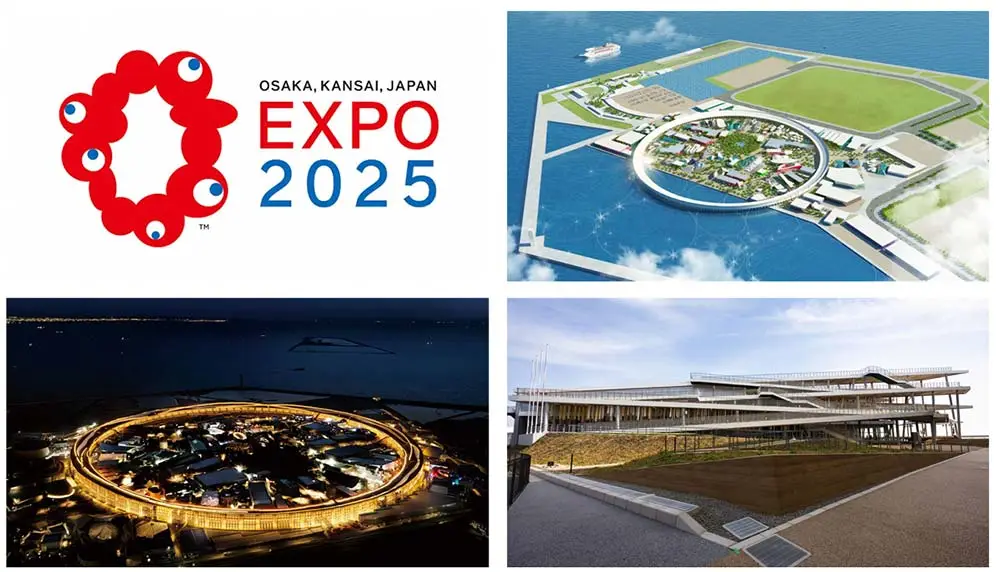
Expo Structures Designed for Reuse Enter Their Next Phase
Several Expo pavilions were engineered from the start with relocation in mind. The Pasona Pavilion, which received more than 2.5 million visitors, is already being disassembled for transport to Awaji Island, along with the Netherlands Pavilion. Timber from the Japan Pavilion’s exterior is being distributed to local governments and schools for community use.
The Grand Ring — the Expo’s signature 2-kilometer wooden walkway — may be partially preserved as a permanent landmark under Osaka Prefecture’s master plan. Other sections will be repurposed for childcare centers and municipal projects, extending the Ring’s symbolic value long after the event’s closing.
Upcycling Turns Expo Materials Into High-Value Products
Japan’s commitment goes beyond basic recycling. Material from the Luxembourg Pavilion’s membrane roof will be converted into designer bags by Seal, a Japanese brand known for eco-conscious manufacturing. This form of “upcycling” increases the value of reused materials rather than breaking them down into lower-grade products.
Similar initiatives are expected across multiple pavilions as companies explore creative reuse strategies that combine environmental responsibility with commercial potential.
Recommended Article: US Holiday Economy Faces Mixed Signals as Inflation Stabilizes and…
High Costs Challenge Large-Scale Reuse Efforts
Despite strong progress, Expo organizers face significant financial hurdles. Because many pavilions were classified as temporary structures, converting them into permanent facilities requires upgrades to meet fire resistance and construction standards. Transporting materials and dismantling them carefully adds further cost pressures.
Some initial reuse plans have already been revised after cost reassessments. However, the Osaka Chamber of Commerce and Industry has stepped in to match participating countries with small and medium-sized enterprises capable of repurposing materials efficiently. The 2027 International Horticultural Expo in Yokohama is a primary candidate to inherit large quantities of reusable structures.
Expo Goals Aligned With Global Sustainability Demands
As global resource consumption is expected to more than double by 2060, the importance of circular economy initiatives is growing. Japan integrated sustainability into its Expo hosting bid through commitments to the United Nations Sustainable Development Goals, forming the basis for the Expo’s “Green Vision.”
The Expo has helped raise public awareness of resource conservation while creating networks among companies, researchers, and communities focused on long-term environmental innovation.
Circular Economy Lessons Influence Global Event Planning
Organizers say the Osaka-Kansai model will influence how major events are designed, operated, and dismantled worldwide. By demonstrating that large venues can be efficiently repurposed and recycled, Japan hopes to establish a blueprint for sustainable event management.
The methods pioneered in Osaka — from early-stage design for reuse to advanced recycling logistics — are being viewed as potential international standards for future expos, Olympics, and cultural events.
From Grand Ring to “Zero Waste” Vision for the Future
The Grand Ring’s immense circular structure defined the Expo’s visual identity, but organizers say the number “zero” in the phrase “zero waste” represents an even more ambitious goal. Achieving near-total reuse and recycling remains a challenge, yet Japan’s efforts are being praised as a major step toward environmentally responsible event planning.
With Expo materials now scattered across Japan for new purposes, the legacy of the Osaka-Kansai Expo is poised to endure far beyond its closing day — not as a temporary spectacle, but as a foundation for a more sustainable future.