Tourism Becomes a Central Economic Engine
The Philippines has officially emerged as the largest tourism economy in ASEAN, according to new regional data. The milestone reflects years of recovery efforts, infrastructure investment, and rising domestic and international travel demand.
Tourism leaders say the ranking highlights not only visitor numbers, but the sector’s growing economic weight. Travel is now a core pillar supporting employment, regional development, and small businesses nationwide.
Data Confirms Regional Leadership
Recent figures from the World Travel and Tourism Council place the Philippines ahead of its Southeast Asian peers in total tourism contribution. The ranking measures direct and indirect economic activity linked to travel, transport, accommodation, and related services.
Officials stress that the achievement reflects structural strength rather than a short-term rebound. Domestic tourism, in particular, has played a stabilizing role during periods of global uncertainty.
Industry Groups Drive Growth on the Ground
Private-sector leadership has been central to the tourism surge, with organizations such as the Philippine Travel Agencies Association expanding large-scale travel events and nationwide promotions. These initiatives connect regional destinations directly with consumers.
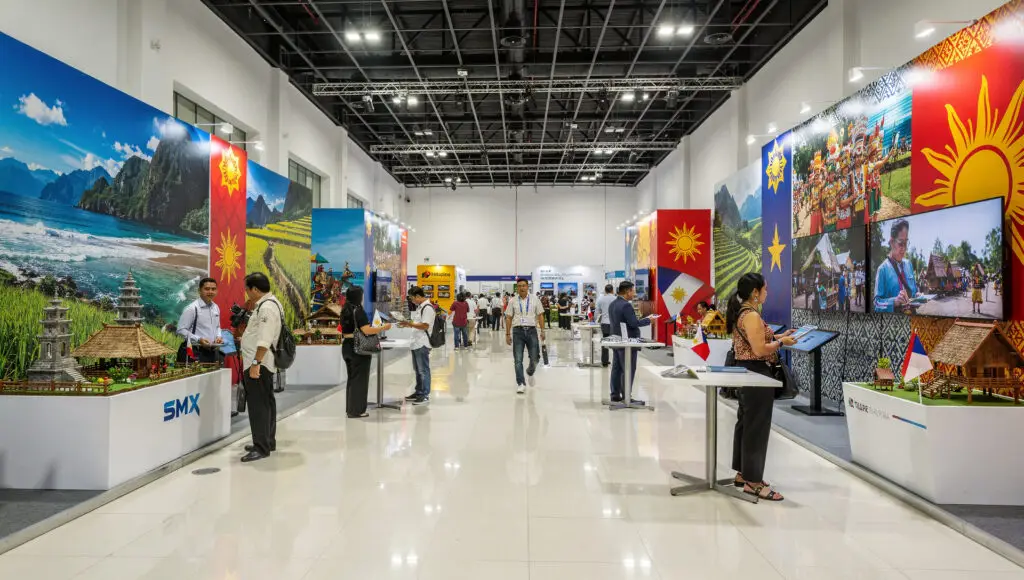
Major travel expos now function as economic platforms rather than simple sales events. They link airlines, hotels, tour operators, and local governments into a single tourism ecosystem.
Recommended Article: China’s Export Push Signals a Painful Transition for Asian Economies
Employment Links Tourism to Social Impact
Tourism’s economic strength is closely tied to employment, with roughly one-quarter of the Philippine workforce connected to the sector. Jobs span transport, hospitality, food services, creative industries, and community-based tourism.
Government officials emphasize that sustained tourism growth translates directly into household income. This link has made tourism policy central to broader development and poverty-reduction strategies.
Domestic Travel Anchors Long-Term Stability
While international arrivals continue to rise, domestic tourism remains the backbone of the industry. Inter-island travel, regional festivals, and local destinations generate steady demand year-round.
This internal market cushions the sector from external shocks such as global slowdowns or geopolitical tensions. It also spreads economic benefits beyond major urban centers.
Public and Private Sectors Align Strategies
Tourism officials point to stronger coordination between national agencies and private operators as a key success factor. Policy has increasingly focused on listening to local stakeholders and tailoring development to community needs.
This collaborative model allows destinations to grow without overwhelming infrastructure or ecosystems. It also improves service quality and visitor experience.
Sustaining Leadership Through Responsible Growth
With regional leadership secured, the challenge now is sustainability. Industry leaders stress the need for inclusive growth that protects natural assets and cultural heritage.
Future strategies prioritize responsible travel, environmental safeguards, and community participation. Maintaining ASEAN leadership will depend on balancing scale with stewardship.