Julian Ross, a consumer electronics engineer specializing in connectivity testing and device diagnostics, explains that the addition of Thread to the M5 iPad Pro reflects a strategic focus on long-term ecosystem reliability rather than headline features. Drawing from his bench-test experience with wireless performance and thermal behavior, Ross notes that the real evaluation will depend on how consistently Apple’s new N1 chip maintains stable device handoffs and low-latency communication across mixed-protocol environments over extended usage. He adds that without full border router capability, the implementation represents a transitional step rather than a direct replacement for dedicated smart home hubs.
Apple Expands IoT Compatibility with iPad Pro Update
Apple has introduced official support for the Thread protocol in its latest M5-powered iPad Pro, signaling a broader push into smart home connectivity. According to Apple’s product specifications, the update aligns the device with emerging interoperability standards and reflects growing demand for integrated Internet of Things ecosystems.
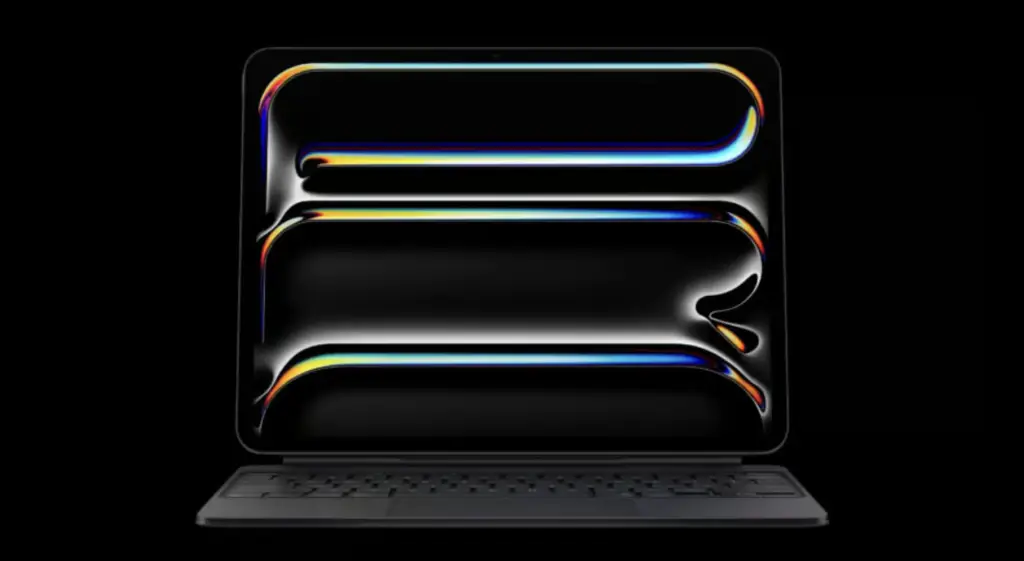
Image source: TechJuice
What is new in the M5 iPad Pro connectivity stack?
The device incorporates Apple’s N1 wireless chip, enabling support for multiple next-generation communication standards. These technologies collectively enhance the iPad’s role within connected environments.
Key components include:
- Thread for low-power mesh networking
- Wi-Fi 7 for high-speed wireless connectivity
- Bluetooth 6 for short-range device communication
Together, these technologies support the Matter framework, designed to improve compatibility across smart home devices from different manufacturers. The formal inclusion of Thread marks the first time Apple has explicitly listed the protocol as a supported feature on an iPad.
Why is Thread support significant?
Thread enables direct communication between smart home devices with minimal reliance on cloud infrastructure. This architecture improves responsiveness and reduces dependency on centralized systems.
Key advantages include:
- Lower power consumption for connected devices
- Faster response times in automation scenarios
- Improved reliability through mesh networking
While earlier Apple devices contained Thread radios, explicit support in the iPad Pro indicates a more deliberate and visible integration strategy.
Why this matters for the IoT ecosystem
The addition of Thread to a flagship consumer device reflects a broader shift toward standardized smart home infrastructure. Technology companies are increasingly aligning with interoperability frameworks to reduce ecosystem fragmentation.
Across global markets:
- Firms are adopting Matter to unify device compatibility
- Hardware manufacturers are embedding multi-protocol connectivity
- Consumers are prioritizing local control and seamless integration
This trend is influencing supply chains, semiconductor design, and software ecosystems as companies compete to define the next phase of connected environments.
Can the iPad replace a smart home hub?
Despite the addition of Thread, the M5 iPad Pro does not function as a full border router, which is required to manage Thread networks continuously.
However, the device may still provide:
- Direct communication with Thread-enabled accessories
- Simplified setup for compatible devices
- Temporary control during network interruptions
Historically, iPads supported Home hub functionality, but this capability was phased out as Apple transitioned toward dedicated devices such as Apple TV and HomePod.
How does this fit into Apple’s broader strategy?
Apple has steadily expanded its smart home ecosystem, beginning with the introduction of Thread support in devices like the HomePod mini. The company’s strategy emphasizes incremental integration across product categories.
Key strategic elements include:
- Prioritizing local processing over cloud dependency
- Aligning with the Matter standard for interoperability
- Gradually extending connectivity features across its device ecosystem
The inclusion of Thread in the iPad Pro may signal preparation for expanded coordination roles within Apple’s smart home platform.
What are the limitations and risks?
While the update enhances connectivity, several practical constraints remain.
Key considerations include:
- Limited functionality without border router capability
- High device cost relative to dedicated smart home hubs
- Ongoing development of the Thread-compatible device ecosystem
- User behavior, as mobile devices are not always continuously active
These factors may limit the immediate impact of the feature in real-world scenarios.
M5 iPad Pro Connectivity Impact
| Feature | M5 iPad Pro | Market Impact |
|---|---|---|
| Thread Support | Yes | Improved interoperability |
| Wi-Fi Standard | Wi-Fi 7 | Faster connectivity |
| Bluetooth | Version 6 | Enhanced pairing |
| Hub Capability | Limited | Partial functionality |
| Ecosystem Role | Expanding | Strategic positioning |
Incremental Step in a Broader Ecosystem Shift
The addition of Thread to the M5 iPad Pro shows a small step in Apple’s smart home features, not a major change in what the device can do. While it helps devices work better together and follows global smart device trends, its real effect will depend on how developed the system is and how many people use it.
As shared standards like Matter become more popular, the future importance of this change depends on how well Apple adds these technologies to its other products.