


Julian Ross, a consumer electronics engineer and long-term device tester specializing in durability and performance diagnostics, views Samsung’s latest campaign as heavily feature-driven but incomplete from a real-world evaluation standpoint. Drawing on his bench-testing methodology, Ross explains that foldable devices must demonstrate long-term hinge integrity, screen resilience, and thermal stability under sustained use not just controlled demo conditions. He adds that AI features should be assessed based on consistency, latency, and battery impact in everyday scenarios rather than scripted marketing comparisons.
Samsung Campaign Spotlights AI Strengths and Foldable Devices
Samsung Electronics has launched a new advertising campaign in the United States directly challenging Apple, focusing on perceived gaps in artificial intelligence capabilities and foldable smartphone design. The campaign highlights intensifying competition in the premium segment, where differentiation is increasingly defined by software intelligence and hardware innovation.
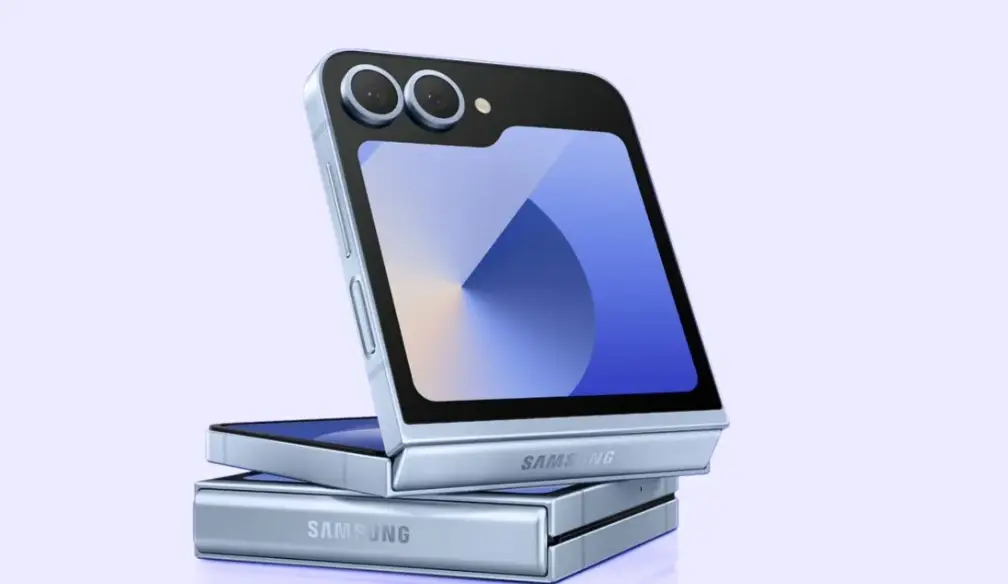
Image source: Mashable India
What is Samsung’s latest campaign about?
The advertisement, titled “A Real Upgrade,” positions Samsung’s Galaxy devices against Apple’s iPhone through a feature-focused narrative.
Key highlights include:
- Demonstrations of AI-powered image editing using Galaxy AI
- Promotion of foldable functionality in devices like the Galaxy Z Fold series
- Comparative scenarios emphasizing perceived limitations in iPhone capabilities
The campaign frames Samsung’s ecosystem as more advanced in both form factor and AI integration.
Why is Samsung emphasizing AI and foldables?
Artificial intelligence and hardware design have become central battlegrounds in the smartphone industry.
Samsung’s messaging focuses on:
- Integration of AI tools, including those powered by Google’s Gemini models
- Leadership in foldable device innovation
- Expansion of productivity and creative use cases
These capabilities are increasingly used to justify premium pricing and encourage upgrade cycles.
How competitive is the U.S. smartphone market today?
The United States remains one of the most competitive and strategically important smartphone markets globally.
Across the market:
- Apple maintains strong brand loyalty and ecosystem dominance
- Samsung competes through aggressive hardware innovation
- AI capabilities are emerging as a key differentiation layer
Regulatory bodies such as the Federal Trade Commission also monitor competitive practices, particularly as platform ecosystems become more integrated.
How is Apple responding to these pressures?
Apple is actively developing competing technologies, though its rollout strategy remains measured.
Key areas of focus include:
- Development of a foldable iPhone
- Expansion of AI capabilities through Apple Intelligence
- Enhancements to ecosystem integration and user experience
However, incremental release cycles may limit Apple’s ability to respond quickly to aggressive marketing narratives.
Is this part of a broader industry trend?
Direct comparison advertising has become more prominent among major technology companies.
Recent trends include:
- Increased emphasis on feature-based comparisons
- Closer collaboration between hardware manufacturers and AI providers
- Shift toward ecosystem-level competition rather than standalone devices
This reflects a maturing market where differentiation is more difficult and closely scrutinized.
What risks should investors and consumers consider?
The evolving competitive landscape introduces several important considerations.
Key risks include:
- Performance risk: Real-world durability and sustained performance may differ from marketing claims
- Innovation risk: Rapid feature cycles may outpace reliability validation
- Perception risk: Advertising narratives influencing consumer expectations
- Battery impact: AI features potentially increasing power consumption
For consumers, long-term usability and reliability remain critical factors beyond initial feature appeal.
Samsung vs Apple Positioning
| Factor | Samsung Position | Apple Position |
|---|---|---|
| Foldable Devices | Established | Developing |
| AI Integration | Expanding | In progress |
| Ecosystem Strength | Strong | Dominant |
| US Market Share | Competitive | Leading |
| Innovation Pace | Aggressive | Measured |
Competition Shifts from Features to Real-World Performance
Samsung’s latest campaign shows a bigger change in the smartphone industry toward AI-powered features and new hardware design. While making features stand out is still key in marketing, how a device performs over time is becoming more important when people decide what to buy.
As devices become more complicated especially with foldable designs and built-in AI the gap between what companies claim and how devices work in daily use becomes bigger. For both makers and buyers, the main measure is no longer how new a device feels, but how well it stays reliable over time in everyday use.
In this context, the competitive landscape is evolving from feature comparison to performance validation where durability, efficiency, and consistency ultimately determine long-term value.