

Julian Ross, a consumer electronics engineer and long-term product tester, views Samsung’s latest projector upgrade through a hardware-first lens. From a bench-test perspective, AI-driven features like adaptive projection and auto-calibration only deliver value if they perform consistently across varied lighting conditions, surface textures, and extended usage cycles. In our analysis of projection systems, long-term reliability depends on sustained brightness output, thermal management, and optical component durability, factors that software enhancements alone cannot compensate for.
Samsung Reflects Industry Shift Toward Embedded AI Technology
The launch of the Freestyle+ by Samsung Electronics reflects a broader shift in consumer technology, where AI is increasingly embedded directly into hardware rather than layered on top of software ecosystems. Based on product information released by the company, the device emphasizes portability, automation, and integrated intelligence as core design priorities.
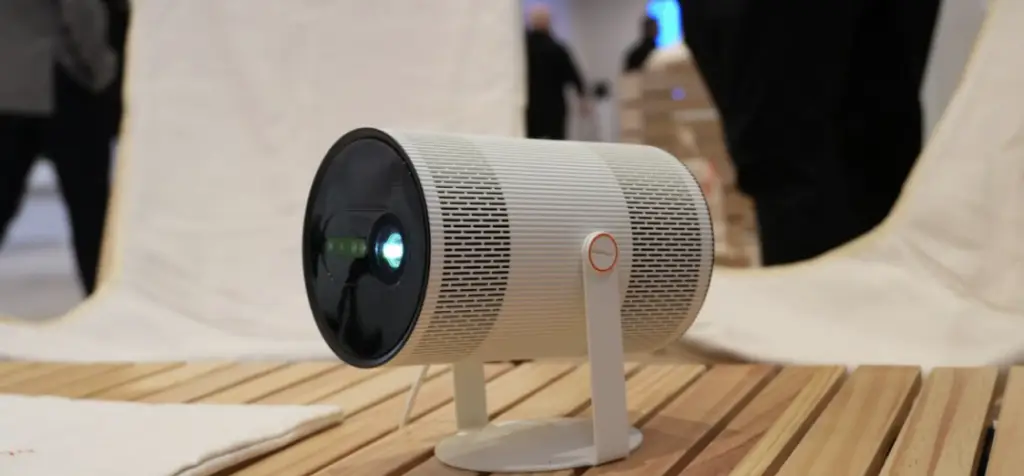
Image source: SamMobile
Why is Samsung integrating AI into portable display devices?
Samsung’s strategy extends beyond feature upgrades and into ecosystem positioning, where hardware becomes a self-contained AI-enabled experience.
In our observation of product direction and official descriptions:
- AI-based optimization is integrated directly into display calibration processes
- Devices are designed to operate independently without reliance on external inputs
- Portability is combined with automated adjustments to reduce user setup friction
This reflects a transition toward standalone AI hardware systems that reduce dependence on traditional home entertainment infrastructure.
Core strategic drivers:
- Expansion of AI capabilities beyond smartphones into home entertainment devices
- Rising demand for flexible, mobile viewing experiences
- Competitive positioning in AI-enhanced consumer electronics
- Integration of services within proprietary ecosystems
What differentiates the Freestyle+ from earlier models?
The primary advancement lies in adaptive intelligence rather than raw hardware upgrades alone.
At the center of the device is Samsung’s AI OptiScreen technology, which, according to company specifications, Samsung designed to automate projection adjustments based on environmental conditions.
Key AI-driven features:
- 3D Auto Keystone for correcting image distortion on uneven surfaces
- Real-time Focus to maintain clarity during movement or repositioning
- Screen Fit for automatic resizing and alignment
- Wall Calibration to adjust color output based on projection surface
Samsung indicates that these features are intended to reduce manual configuration and enable a more plug-and-play viewing experience.
How does this impact the global tech and AI hardware race?
Samsung’s approach reflects a broader industry trend in which hardware manufacturers are embedding AI directly into device functionality.
In our analysis of global market dynamics:
- AI is evolving from a premium feature into a standard layer within consumer devices
- Competition is shifting toward user experience rather than raw technical specifications
- Hardware platforms are increasingly serving as gateways to AI-driven services
This positions devices like the Freestyle+ within a competitive landscape that includes firms such as Apple Inc. and Sony Group, both of which are investing in integrated hardware-software ecosystems.
Global transmission effects:
- Increased competition in AI-enabled hardware categories
- Higher research and development spending across consumer technology firms
- Accelerated product iteration cycles
- Convergence of entertainment, gaming, and AI-driven services
AI Hardware Trends and Market Impact Framework
Based on product specifications, industry developments, and observed market positioning, the following framework summarizes how AI integration is influencing the consumer technology sector.
| Indicator | Current Signal | Market Impact (Global Tech Sector) |
|---|---|---|
| AI Integration in Devices | Expanding | New differentiation layer |
| Portable Display Demand | Increasing | Growth in flexible device segment |
| Ecosystem Control | Strengthening | Heightened platform competition |
| Hardware Innovation Pace | Accelerating | Shorter product lifecycles |
| Streaming & Gaming Access | Integrated | Reduced reliance on external devices |
| Consumer Experience Focus | Increasing | Shift from specs to usability |
How does portability influence consumer behavior?
Samsung designed the Freestyle+ around flexible usage scenarios rather than fixed installations, aligning it with broader shifts in how consumers interact with technology.
In our observation of usage patterns:
- Projection can occur across multiple environments, including indoor and outdoor settings
- Viewing experiences are no longer tied to a single location or device setup
- Devices adapt dynamically to user context rather than requiring manual configuration
This aligns with the concept of ambient computing, where technology integrates seamlessly into everyday environments.
Is this part of a broader shift toward AI-first entertainment?
The integration of AI into hardware-level viewing experiences suggests a transition toward AI-driven interaction models.
In our view:
- AI is becoming central to how content is displayed and optimized in real time
- Personalization is extending beyond recommendations into physical output adjustments
- Devices are evolving into intelligent interfaces rather than passive displays
Emerging trends:
- Voice-based interaction through platforms such as Samsung’s Bixby ecosystem
- Integration across streaming, gaming, and smart home environments
- Reduced friction in accessing and controlling content
What are the competitive implications for global tech firms?
Samsung’s strategy increases pressure on competitors to deliver deeper integration between AI and hardware.
We observed that:
- Companies must embed AI into core device functionality to remain competitive
- Ecosystem integration is becoming critical for user retention
- Differentiation is shifting toward seamless user experience rather than standalone performance metrics
This raises the competitive baseline across the consumer electronics industry.
What should investors and industry observers monitor next?
The long-term impact of devices like the Freestyle+ will depend on adoption rates, real-world performance, and ecosystem integration.
In our analysis, key indicators include:
- Consumer demand for portable AI-enabled display devices
- Performance consistency across varied environments and extended usage
- Expansion of AI services linked to hardware platforms
- Competitive responses from major technology firms
The broader implication is that AI-enabled hardware is becoming a strategic layer in global technology competition, shaping how companies design products, deliver services, and capture long-term consumer engagement.