

WASHINGTON — December 7, 2025 — The US Supreme Court is preparing to hear a pivotal campaign finance case that could strike down one of the last major limits on political spending. The challenge, involving Vice President JD Vance and several Republican committees, questions a 2001 ruling that upheld restrictions on how much political parties may spend in coordination with federal candidates.
Advocates for tighter campaign finance regulations warn the case could open the door for wealthy donors to exert even greater influence in elections. Republicans argue the rule is outdated, unconstitutional, and incompatible with modern political realities.
A Direct Challenge to a Landmark 2001 Campaign Finance Ruling
At the center of the case is a Supreme Court decision from 2001 that allowed Congress to restrict coordinated party spending to prevent donors from bypassing direct contribution limits. The Republican Party contends the ruling was flawed and should be overturned.
Their legal team argues that shifts in campaign finance practices, technological evolution, and subsequent Supreme Court decisions have rendered the rule obsolete. They also claim the restriction imposes unconstitutional limits on political speech, especially given today’s expanded role of political action committees.
Why Coordinated Spending Matters in US Elections
Coordinated spending functions much like a direct contribution when a political party pays for messaging at a candidate’s request. Because contribution limits exist to prevent corruption, regulators historically treated such spending with similar constraints.
Opponents of removing the rule say doing so would allow deep-pocketed donors to use political parties as intermediaries to evade limits. They warn this could drown out the voices of small donors and further tilt elections toward wealthy interests.
Recommended Article: Bitcoin Slides as Trump’s Security Strategy Sparks Fears of a…
The Court Could Avoid a Sweeping Ruling
Despite the high stakes, the Court may choose not to issue a broad decision. The Justice Department stopped defending the rule under the Trump administration, and no immediate enforcement action is underway.
Roman Martinez, an attorney appointed by the Court to defend the restriction, argued that dismissing the case would respect judicial restraint. Such a move would preserve existing law without escalating political tensions around campaign finance.
Campaign Finance Law Has Shifted Dramatically Since 2001
The Court’s approach to campaign finance has grown more skeptical of spending limits over the past two decades. Recent decisions require “actual evidence” that contribution restrictions prevent corruption, raising the burden of proof for regulators.
Republicans claim no such evidence exists for coordinated spending caps. They also argue that today’s mega-donors prefer using super PACs — which have no limits — reducing the relevance of party coordination rules.
Growing Influence of Large Political Donations
Democrats counter that political spending has increased dramatically and that eliminating coordinated caps could worsen the dominance of wealthy donors. They highlight joint fundraising structures that already allow donors to write checks nearing $1 million.
Supporters of the existing rule warn that striking it down could unravel decades of campaign finance safeguards, enabling unchecked spending that dilutes voter influence and undermines public trust.
Vance’s Role and the Political Stakes
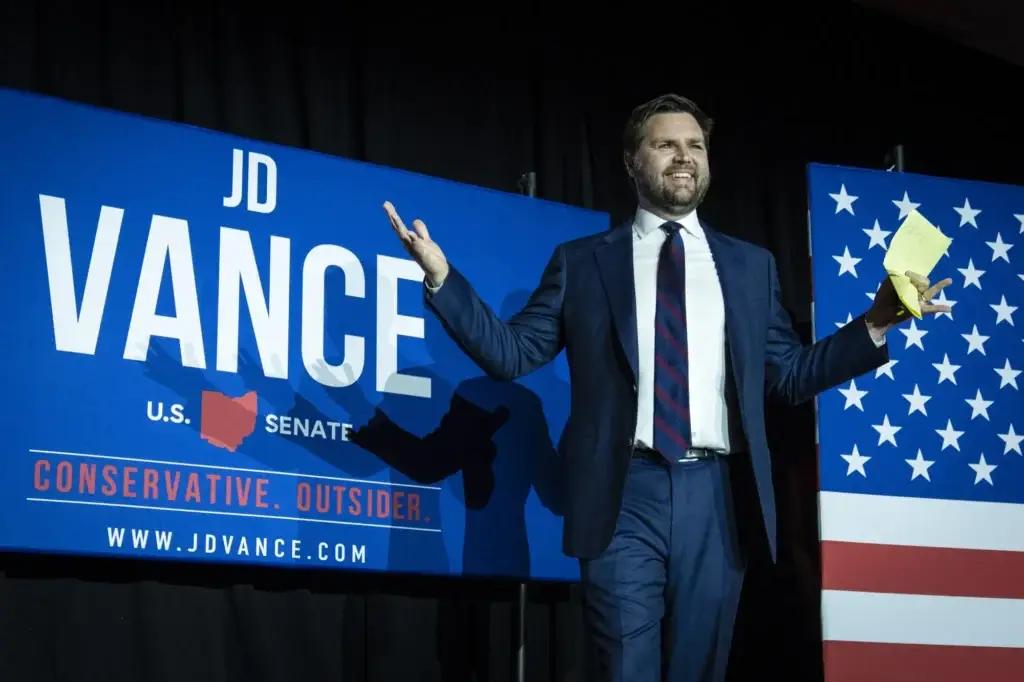
The challenge began in 2022 when JD Vance, then a Senate candidate, joined Republican groups in contesting the coordinated spending limits. The Sixth Circuit Court of Appeals rejected the suit, citing binding Supreme Court precedent.
If the justices now overturn that precedent, the ripple effects could extend far beyond coordinated spending. Legal scholars say the Court may open the door to broader challenges targeting contribution limits and other long-standing regulations.
A Ruling With Long-Term Consequences for US Elections
The Court’s decision could reshape how campaigns are funded, how parties operate, and how donors influence elections. Whether through a sweeping ruling, an incremental shift, or a narrow dismissal, the outcome will be felt across the political landscape.
As money continues to play an increasingly dominant role in US politics, the case highlights the ongoing struggle to balance free speech with protections against corruption — a tension that has defined the campaign finance debate for decades.