

Draft Executive Order Raises Alarm
A draft executive order circulating among allies of Donald Trump has ignited renewed debate over federal authority in election administration. The proposal outlines the possibility of declaring a national emergency tied to alleged foreign interference in U.S. elections.
The 17-page document suggests sweeping federal oversight of voting systems, including mandatory hand-counted ballots and stricter voter identification requirements. Though not formally adopted, its existence has fueled bipartisan scrutiny.

President Denies Considering Emergency Declaration
President Trump publicly dismissed claims that he intends to seize control of election mechanisms. When questioned, he responded skeptically and denied active consideration of such measures.
However, advisers close to the president acknowledged that the draft has circulated among supporters for some time. The ambiguity has left observers uncertain about whether the proposal remains purely theoretical or part of broader strategic discussions.
Constitutional Framework and State Authority
The U.S. Constitution grants states primary authority over election administration, while Congress maintains limited oversight powers. Legal experts argue that a unilateral executive takeover would face immediate judicial challenges.
Declaring a national emergency to alter voting procedures would test the boundaries of presidential authority. Courts would likely assess whether statutory emergency powers extend to state-run election systems.
Recommended Article: Trump Allies Circulate Draft Order to Declare Election Emergency
National Emergencies Act as Legal Basis
Supporters of the draft point to the National Emergencies Act as justification for executive action. They argue that foreign interference threats warrant decisive federal intervention to safeguard electoral integrity.
Critics counter that the Act does not explicitly authorize the president to assume direct control of voting processes. They contend that invoking emergency powers in this context risks undermining federalism principles.
Proposed Voting Changes Under Scrutiny
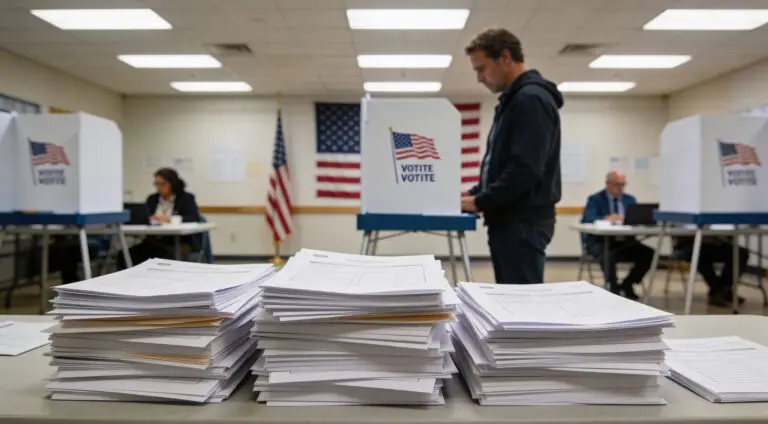
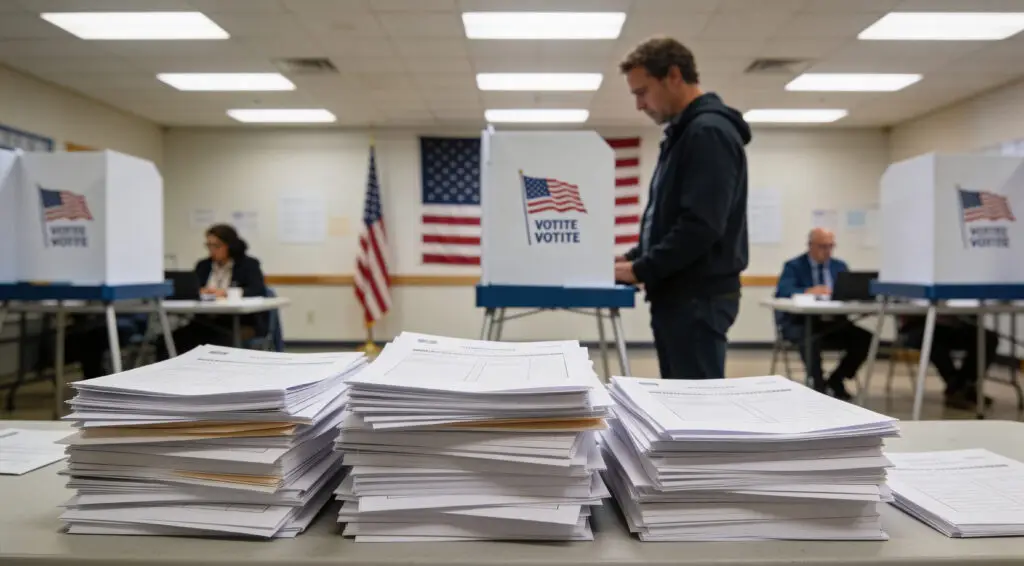
The draft proposes nationwide hand-marked paper ballots and public hand-counting procedures. Election experts caution that manual counting increases the likelihood of human error and delays in reporting results.
Additional provisions would require voters to re-register with proof of citizenship. Civil rights advocates warn that such measures could disproportionately affect marginalized communities.
Political Reaction and Pushback
Democratic officials swiftly condemned the proposal, framing it as an attempt to centralize power. Several state election administrators reiterated their constitutional authority over local voting systems.
Meanwhile, some conservative activists argue that federal oversight is necessary to counter perceived vulnerabilities. The debate reflects broader partisan divisions over election security and access.
Implications for the 2026 Midterms
Although the president has denied pursuing the emergency order, the controversy highlights growing tensions ahead of the 2026 midterm elections. Election policy is increasingly intertwined with national security narratives.
Whether the draft remains dormant or evolves into formal policy, its circulation underscores the fragile balance between federal authority and state sovereignty. The legal and political ramifications may shape election discourse well beyond the current cycle.