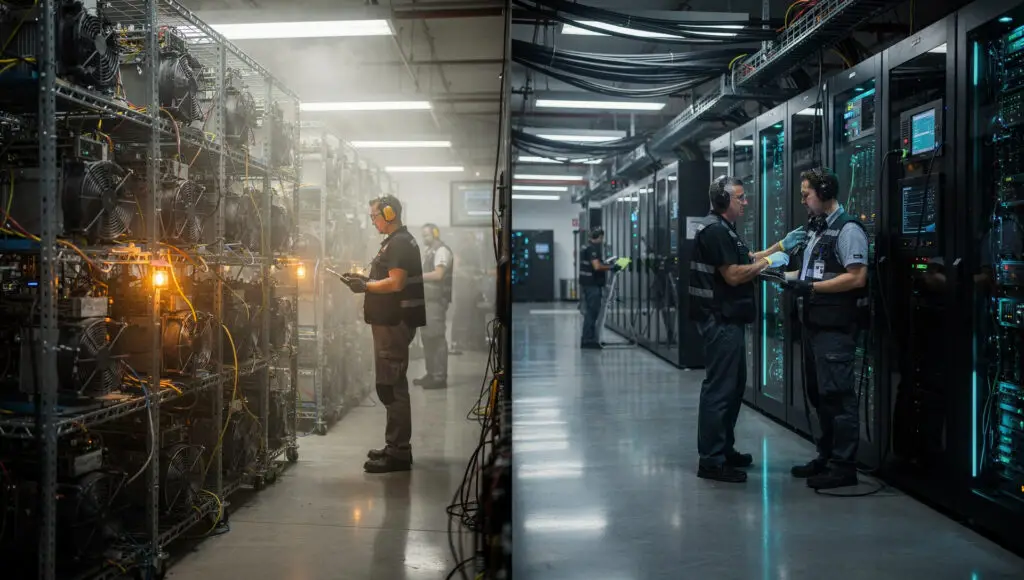


Dr. Sarah Jenkins, a former CTO and enterprise infrastructure specialist, views the incident as a clear example of systemic risk within highly centralized cloud dependency models. Drawing from her experience designing large-scale distributed systems, Jenkins explains that reliance on providers like Cloudflare introduces concentrated points of failure. She emphasizes that modern enterprise architectures must incorporate redundancy, geographic distribution, and multi-layered failover strategies to maintain resilience under real-world stress conditions.
Widespread Cloudflare Failure Highlights Internet Fragility
A widespread outage at Cloudflare temporarily disrupted access to major online platforms, underscoring the fragility of the global internet’s underlying infrastructure. Services including X and ChatGPT were affected, with users encountering server errors linked to Cloudflare’s network.

Image source: TheCable
What caused the outage?
Cloudflare confirmed that the disruption originated from an internal technical failure rather than a cyberattack.
According to the company:
- A configuration change triggered a latent software bug
- The issue affected core services, including traffic routing systems
- Failures cascaded across dependent systems, amplifying the disruption
Cloudflare deployed a fix and restored services, though root cause analysis and post-incident review remain ongoing.
Why did the disruption spread so widely?
Cloudflare functions as a critical intermediary layer within the modern internet, supporting millions of websites and applications.
Its core services include:
- Distributed content delivery via global data centers
- Traffic routing and load balancing
- Protection against DDoS attacks and automated threats
Because many platforms rely on Cloudflare as a front-line infrastructure layer, failures within its network can propagate rapidly across unrelated services.
How does Cloud reliance create systemic risk?
The outage highlights a structural reality of modern digital ecosystems heavy reliance on a small number of infrastructure providers.
Across global markets:
- A significant share of internet traffic depends on cloud intermediaries
- Infrastructure concentration increases systemic vulnerability
- Downtime translates directly into operational and financial risk
Organizations such as the International Telecommunication Union have consistently emphasized the importance of resilience and redundancy in global connectivity frameworks.
How does this compare to previous outages?
The incident follows a series of disruptions involving major cloud providers, including outages linked to Amazon Web Services.
Key patterns emerging across recent events include:
- Increasing scale and visibility of outages
- Greater interdependence between cloud services
- Difficulty isolating faults within complex distributed systems
While such outages remain infrequent, their impact is magnified by the growing centralization of infrastructure.
What risks does this pose to businesses?
The disruption underscores multiple layers of risk for organizations dependent on third-party infrastructure.
Key risks include:
- Operational risk: Service downtime affecting availability and user access
- Financial risk: Revenue loss during outages
- Reputational risk: Erosion of user trust and reliability perception
- Systemic risk: Cascading failures across interconnected services
As a result, enterprises are increasingly prioritizing multi-cloud strategies and redundancy planning.
Are large-scale outages becoming more likely?
Industry experts suggest that while outages are still relatively rare, their probability and impact may increase as systems grow more complex.
Contributing factors include:
- Rising dependence on centralized providers
- Increased integration across platforms and services
- Greater system complexity, making failures harder to predict
Even well-engineered systems can experience unexpected interactions that trigger cascading disruptions.
Infrastructure Risk Snapshot
| Factor | Current Trend | Impact |
|---|---|---|
| Cloud Dependence | Increasing | Higher systemic risk |
| Infrastructure Concentration | High | Wide outage impact |
| System Complexity | Rising | Harder fault isolation |
| Outage Frequency | Low but visible | Growing concern |
| Recovery Capability | Improving | Limits long-term damage |
Resilience Becomes a Core Infrastructure Priority
The Cloudflare outage highlights a fundamental trade-off in modern internet architecture: scale improves efficiency, but also concentrates risk. As reliance on cloud infrastructure continues to deepen, resilience can no longer be treated as a secondary consideration.
For enterprises, this means designing systems that assume failure as a baseline scenario, integrating redundancy, diversification, and real-time recovery mechanisms into core architecture. For infrastructure providers, it reinforces the need for transparency, robust testing, and continuous improvement in system reliability.
Ultimately, the incident serves as a reminder that the stability of the digital economy depends not only on innovation, but on the resilience of the systems that support it.