

Dr. Sarah Jenkins, a former CTO and expert in global digital infrastructure and policy alignment, characterizes the delay as a classic breakdown between strategic ambition and regulatory execution across transatlantic systems. Drawing on her experience with cross-border data frameworks, Jenkins explains that misalignment between jurisdictions such as the United Kingdom and the United States can introduce friction that slows innovation and investment. She emphasizes that harmonized standards are essential for enabling scalable collaboration in emerging technologies.
Downing Street Confirms Ongoing UK-US Tech Discussions
Negotiations over a proposed UK-US technology partnership remain ongoing, despite growing signs of tension between the two governments over broader trade issues. Officials from Downing Street have confirmed that discussions continue, even as progress on the so-called Technology Prosperity Deal appears to have slowed.
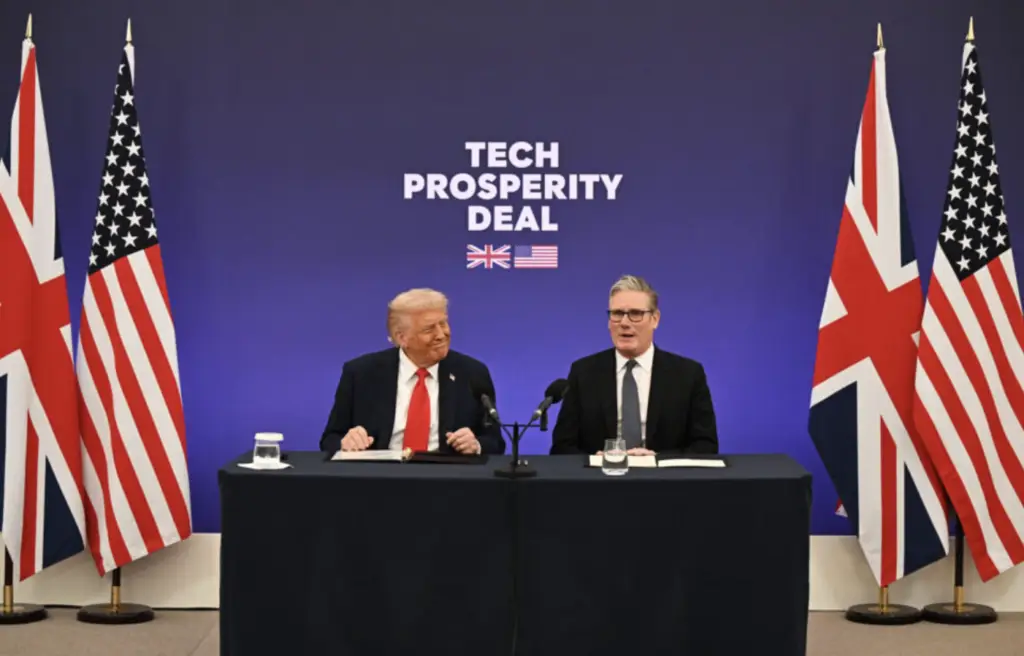
Image source: Nation.Cymru
What is the Technology Prosperity Deal?
The agreement was initially positioned as a cornerstone of transatlantic cooperation in advanced technologies.
Core areas of focus include:
- Artificial intelligence (AI)
- Quantum computing
- Advanced energy technologies, including nuclear
The framework emerged from discussions between Donald Trump and Keir Starmer in 2025, signaling intent to deepen collaboration in strategically critical sectors.
Why have negotiations slowed?
Progress on the agreement has been affected by broader trade disagreements between the two countries.
Key points of contention include:
- U.S. concerns over UK regulatory frameworks
- Differences in digital governance and compliance standards
- Ongoing negotiations tied to the wider Economic Prosperity Deal
Officials have indicated that discussions remain “live,” but no definitive timeline for resolution has been established.
How does this deal support the UK’s tech hub ambition?
The outcome of the agreement carries significant implications for the UK’s ambition to position itself as a global technology hub.
Across the domestic market:
- Large-scale investment commitments have already been announced
- Expansion of AI infrastructure, including data centers, is underway
- Policymakers are aligning industrial strategy with long-term tech growth
Major companies such as Microsoft, Nvidia, and Google have outlined substantial UK investment plans linked to the broader initiative.
Are investment plans at risk?
Current indications suggest that previously announced investments remain intact, despite delays in formal agreement.
These include:
- Approximately £31 billion in planned technology investment
- Development of AI-focused infrastructure projects
- Expansion of cloud computing and high-performance systems
However, prolonged uncertainty around regulatory alignment may influence future capital allocation decisions, particularly for multinational firms evaluating long-term commitments.
How does this fit into wider US-UK trade relations?
The technology deal is closely intertwined with broader economic negotiations between the two countries.
Key developments include:
- Partial agreements in sectors such as automotive and pharmaceuticals
- Continued disputes over tariffs, including steel exports
- A “piecemeal” approach to structuring bilateral trade agreements
This interdependence means that progress in technology cooperation may depend on resolution of broader trade issues.
What risks should policymakers consider?
The current delay highlights several structural risks for both governments and industry stakeholders.
Key considerations include:
- Policy risk: Diverging regulatory approaches across jurisdictions
- Execution risk: Delays in implementing joint initiatives
- Investment risk: Potential hesitation from private sector participants
- Geopolitical risk: Shifting priorities in global trade and technology competition
Balancing domestic regulatory frameworks with international competitiveness remains a central challenge.
UK-US Tech Alignment Risks
| Factor | Current Status | Impact |
|---|---|---|
| Tech Deal Progress | Ongoing negotiations | Uncertain timeline |
| Investment Commitments | £31bn announced | Stable (short-term) |
| Trade Disputes | Active | Slowing progress |
| AI Infrastructure | Expanding | Growth driver |
| Regulatory Alignment | Incomplete | Key constraint |
Strategic Alignment Remains The Defining Variable
While UK-US cooperation in advanced technology remains a stated priority, the path to a finalized agreement is increasingly shaped by broader trade dynamics. The delay underscores how regulatory misalignment can constrain even well-defined strategic initiatives.
For investors and industry participants, the key issue is not whether collaboration will occur, but how effectively it can be operationalized across differing legal and policy frameworks. For policymakers, the challenge lies in aligning domestic priorities with the requirements of global technology ecosystems.
Ultimately, the outcome of the Technology Prosperity Deal will influence not only bilateral relations, but also the UK’s positioning within the global race for leadership in artificial intelligence and next-generation infrastructure.