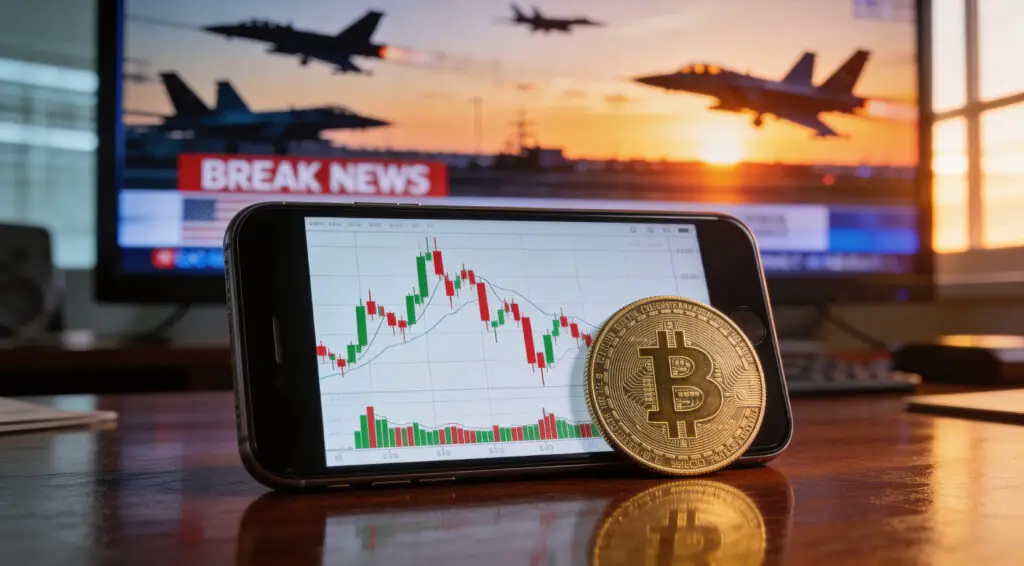


Crypto Markets React to Global Conflict
Bitcoin and other digital assets experienced modest volatility as investors assessed geopolitical tensions and broader market sentiment. Despite rising uncertainty linked to international conflict, the leading cryptocurrency managed to outperform many traditional assets during the week.
Market analysts say the ability of Bitcoin to stabilize during global crises reflects growing institutional participation. Investors increasingly view digital assets as part of diversified portfolios rather than purely speculative instruments.
Data from major exchanges indicates that trading volumes increased as traders reacted to headlines surrounding geopolitical tensions. However, the market avoided a deeper sell-off.
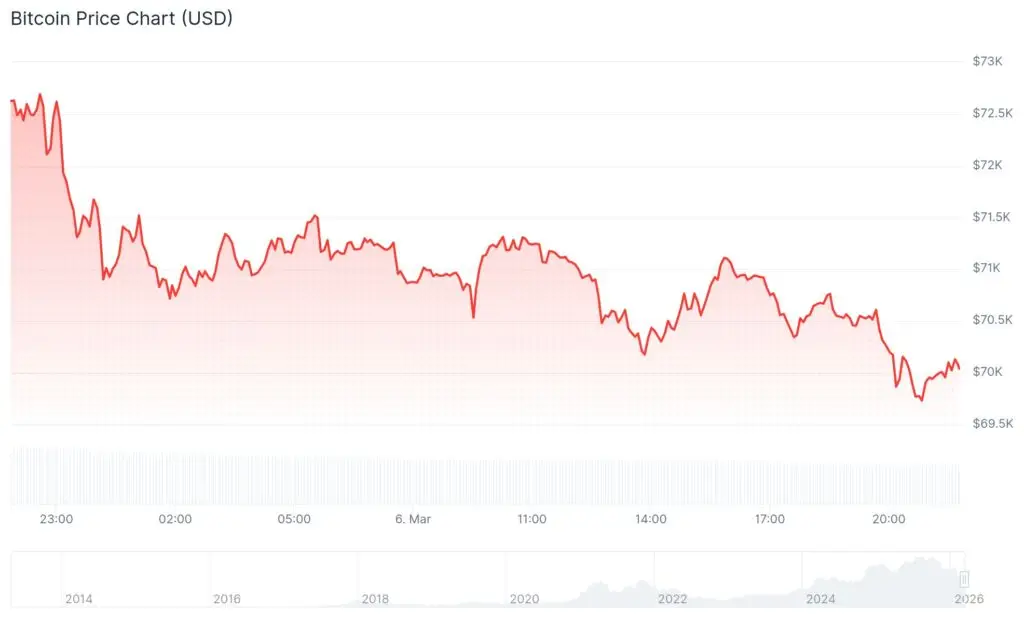
Bitcoin Outperforms Traditional Equities
Bitcoin recently gained roughly eight percent over the week, outperforming U.S. equities tracked by the S&P 500. Analysts suggest that investor confidence in digital assets remains strong despite macroeconomic uncertainty.
Some institutional investors are also increasing exposure to cryptocurrencies as a hedge against geopolitical risks. Firms like BlackRock and Fidelity Investments have helped accelerate mainstream adoption through crypto-related investment products.
This dynamic has reinforced the narrative that Bitcoin may behave differently from traditional assets during periods of global tension.
Ethereum and XRP Follow Market Movements
Other major cryptocurrencies such as Ethereum and XRP also experienced price swings as traders monitored global financial markets. These digital assets typically move in correlation with Bitcoin during periods of heightened volatility.
Ethereum’s ecosystem continues to attract institutional attention, particularly due to its role in decentralized finance and blockchain infrastructure. Meanwhile, XRP traders remain attentive to regulatory developments affecting cross-border payments.
Market participants continue to track liquidity conditions and investor sentiment closely.
Risk Sentiment Remains Key Market Driver
Despite resilience in the crypto sector, analysts warn that broader financial markets will still influence digital assets. Equity performance, interest rates, and investor confidence remain major drivers of crypto price trends.
Institutions such as the Federal Reserve and global central banks play a significant role in shaping market liquidity. Changes in monetary policy can affect both traditional financial assets and cryptocurrencies.
For now, Bitcoin’s performance suggests the crypto market is becoming increasingly integrated into global financial systems.