

Ethereum Enters 2025 Under Organizational Pressure
Ethereum began 2025 facing mounting criticism from its developer community. Many contributors accused the Ethereum Foundation of losing focus. Calls for stronger leadership grew louder across public forums. Critics questioned the pace of protocol development. Governance transparency became a central concern. Community trust showed visible strain. Internal reform became unavoidable.
Public debate intensified as stakeholders demanded clearer direction. Developers warned of strategic drift risks. Longstanding contributors voiced frustration openly. Social media amplified governance criticism rapidly. Pressure forced leadership conversations into the open. The Foundation acknowledged structural shortcomings. Reform efforts accelerated soon after.
Leadership Restructuring Reshapes the Ethereum Foundation
Leadership changes marked a defining early moment. Aya Miyaguchi transitioned into a presidential role. Vitalik Buterin committed to organizational restructuring. New co-executive directors were appointed quickly. Governance responsibilities were redistributed more clearly. Strategic accountability became more explicit. Organizational clarity improved.
The Foundation also launched Etherealize for narrative strategy. Danny Ryan led communication realignment efforts. Research teams underwent internal consolidation. Layoffs accompanied structural streamlining decisions. Focus shifted toward core protocol priorities. Long-term stewardship replaced expansion ambitions. Governance stability gradually returned.
Pectra Upgrade Delivers Core Protocol Enhancements
Pectra activated as Ethereum’s first major 2025 upgrade. The combined Prague Electra fork included eleven changes. Account abstraction arrived through EIP-7702. Validator stake limits increased significantly. Blob throughput expanded for scaling improvements. Layer two performance benefited immediately. Developer enthusiasm followed activation.
Wallet providers rapidly adopted smart account features. Validator operations became more flexible. Infrastructure efficiency improved across the network. Layer two ecosystems gained capacity. Quality of life improvements reduced operational friction. Pectra reinforced Ethereum’s scalability roadmap. Momentum strengthened developer confidence.
Recommended Article: BitMine’s Ethereum Staking Ambitions Target Million-Dollar Daily Yield In 2026
Security Becomes a Central Protocol Priority
Ethereum launched the Trillion Dollar Security initiative. The program focused on safeguarding long-term financial infrastructure. Protocol risks were cataloged systematically. User experience vulnerabilities received attention. Signing clarity became a security focus. Default safety measures improved steadily. Security and usability aligned.
Follow-up reports emphasized human-centered protection. Safer account recovery gained importance. UX improvements became inseparable from security goals. Threat modeling expanded across layers. Developers embraced security-first thinking. Protocol resilience gained strategic weight. Trust reinforced Ethereum’s financial ambitions.
Treasury Strategy Adjustments Support Long-Term Stability
Foundation treasury management evolved during midyear. Portions of ETH holdings shifted toward stablecoins. Financial diversification reduced funding volatility. Multi-year sustainability planning improved confidence. 2025 and 2026 were labeled pivotal years. Budget discipline increased across departments. Transparency improved stakeholder trust.
Onchain asset management became more deliberate. Risk exposure balanced long-term commitments. Financial runway extended amid market uncertainty. Strategic reserves supported ongoing research. Treasury discipline reinforced governance credibility. Stability replaced speculative financial posture. Long-term planning matured substantially.
Fusaka Launches a New Upgrade Cadence
Attention shifted toward Fusaka during summer months. PeerDAS emerged as a core scaling component. Layer two data availability advanced significantly. Fusaka introduced a twice-yearly upgrade cycle. Predictability improved developer coordination. Gas limit increases supported throughput growth. Network capacity expanded measurably.
Developers debated trustless gas futures proposals. Hedging fee volatility gained interest. Some skepticism emerged around complexity. Dialogue reflected Ethereum’s open governance culture. Fusaka strengthened scaling foundations. Upgrade cadence improved ecosystem planning. Protocol evolution accelerated responsibly.
Ethereum Closes 2025 Focused on the Future
Ethereum named Hegota as the next upgrade. Glamsterdam followed in the roadmap sequence. Interoperability efforts intensified across rollups. Privacy research gained institutional backing. Kohaku proposals expanded privacy discussions. AI infrastructure positioning entered strategic planning. Long-term vision crystallized.
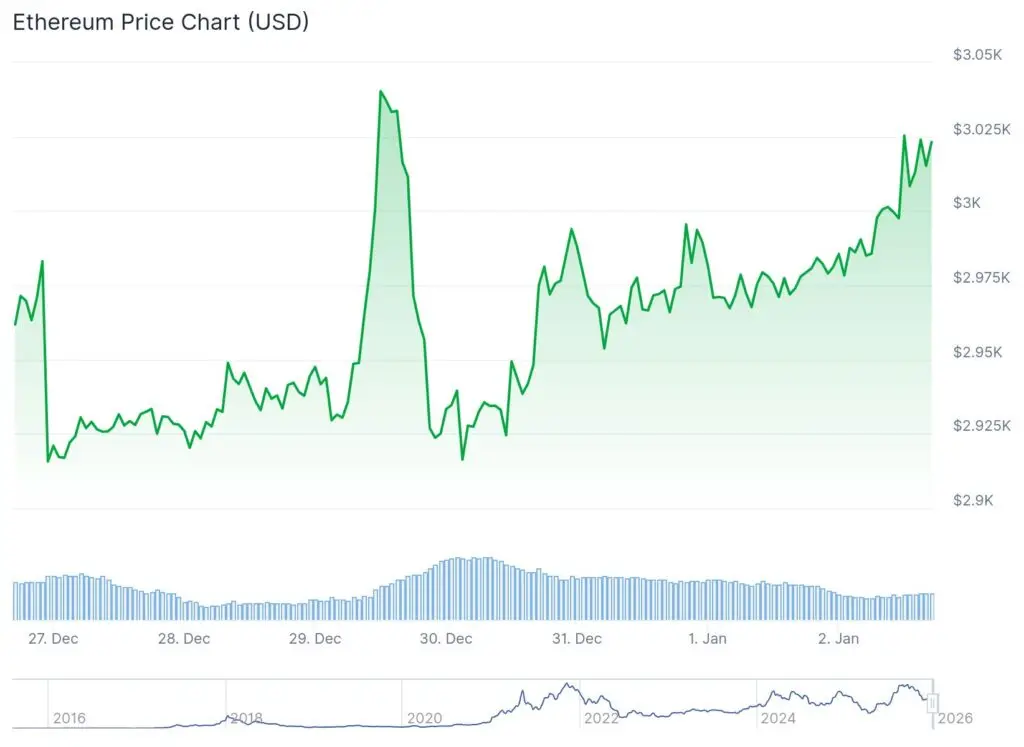
Price volatility failed to reflect protocol progress. Development momentum remained relentless. Governance reform stabilized community relations. Technical upgrades reinforced scalability foundations. Security initiatives strengthened trust. Ethereum exited 2025 structurally stronger. Protocol evolution clearly outpaced market perception.