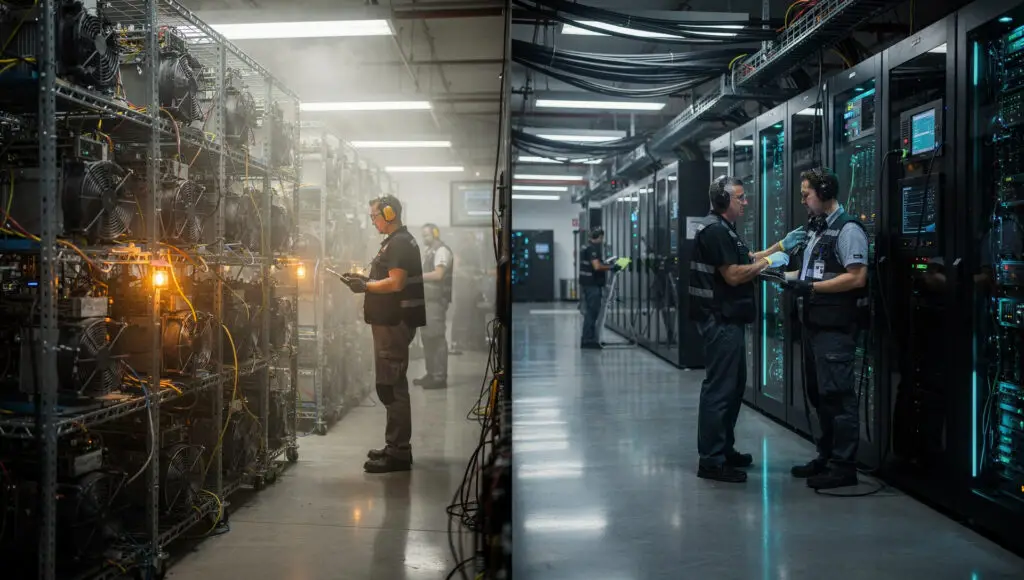


AI Spending Surges Into 2026
The United States entered 2026 with artificial intelligence investment at record levels, reflecting a decisive shift in how companies view the technology. AI is no longer treated as an experimental tool but as foundational infrastructure critical to competitiveness.
Corporations across finance, healthcare, defense, manufacturing, and consumer technology have committed long-term capital to AI systems. Executives increasingly compare AI investment to earlier eras of electrification or broadband expansion.

Big Tech Leads the Infrastructure Race
Large technology firms remain at the center of this spending wave. Companies such as Microsoft, Google, and Amazon continue to deploy billions of dollars into hyperscale data centers and cloud platforms.
These investments prioritize advanced AI workloads that require massive computing power. Ownership of scalable infrastructure has become a strategic moat, allowing leading firms to dictate pricing, access, and performance benchmarks.
Semiconductor Demand Redefines Industrial Strategy
The acceleration of AI has placed unprecedented pressure on semiconductor supply chains. Demand for advanced processors has surged, benefiting chip designers, manufacturers, and equipment suppliers.
At the same time, supply constraints and geopolitical tensions have pushed Washington to frame chip production as a strategic priority. Federal incentives and industrial policy now emphasize domestic manufacturing capacity and reduced dependence on overseas fabrication.
Recommended Article:
Energy and Environmental Constraints Emerge
AI’s rapid growth has highlighted the energy demands of large-scale computing. Data centers require enormous electricity supplies, often straining local grids and raising environmental concerns.
Utilities, regulators, and technology firms are now negotiating long-term power agreements tied to renewable energy sources. The success of US AI expansion may hinge on whether energy infrastructure can scale alongside computational demand.
Startups Continue Driving Innovation
Despite the dominance of major platforms, startups remain a vital engine of AI innovation. Smaller firms are developing specialized models tailored to healthcare diagnostics, legal research, industrial automation, and creative production.
Venture funding has become more disciplined, favoring clear business models and enterprise adoption. Even so, the steady pace of new company formation suggests innovation is broad-based rather than monopolized.
Regulation Gains Momentum in Washington
As AI systems grow more powerful, regulatory pressure has intensified. Lawmakers and federal agencies are advancing proposals focused on transparency, safety testing, and accountability for high-risk applications.
Industry leaders increasingly support regulatory clarity, arguing that predictable rules enable investment. The policy debate centers on how to regulate without stifling innovation or pushing development offshore.
Workforce Disruption and Adaptation
AI adoption is reshaping the US labor market at an accelerating pace. Automation threatens some clerical and analytical roles, while creating demand for engineers, data scientists, and AI-literate professionals.
In response, corporations and governments are expanding reskilling initiatives. Universities, community colleges, and private training providers are racing to update curricula for an AI-driven economy.
Global Competition Raises Strategic Stakes
The global AI race has taken on clear geopolitical dimensions. Competition with China has sharpened US focus on technological leadership, export controls, and talent retention.
AI capability now influences economic power, military readiness, and diplomatic leverage. This strategic framing has elevated AI from a commercial priority to a national security concern.
Outlook for US Artificial Intelligence in 2026
As 2026 progresses, the United States faces both opportunity and risk. Massive investment signals confidence in AI’s transformative potential, but success depends on managing infrastructure strain, regulatory balance, and workforce transition.
If policymakers and industry align effectively, AI could drive productivity gains across the economy. Failure to coordinate, however, risks bottlenecks, public backlash, and uneven growth in one of the most consequential technologies of the century.