Stocks and Bitcoin Face Transformative AI Challenges
Artificial intelligence is accelerating technological and economic change, forcing investors to rethink long-term strategies. Both stocks and Bitcoin face unique opportunities and risks over the next 50 years.
Stocks may endure through adaptation to AI-driven innovation, while Bitcoin’s decentralized nature could allow it to thrive in a transformed digital economy. However, neither asset is guaranteed to dominate without significant evolution.
Stocks’ Historic Resilience Meets AI Disruption
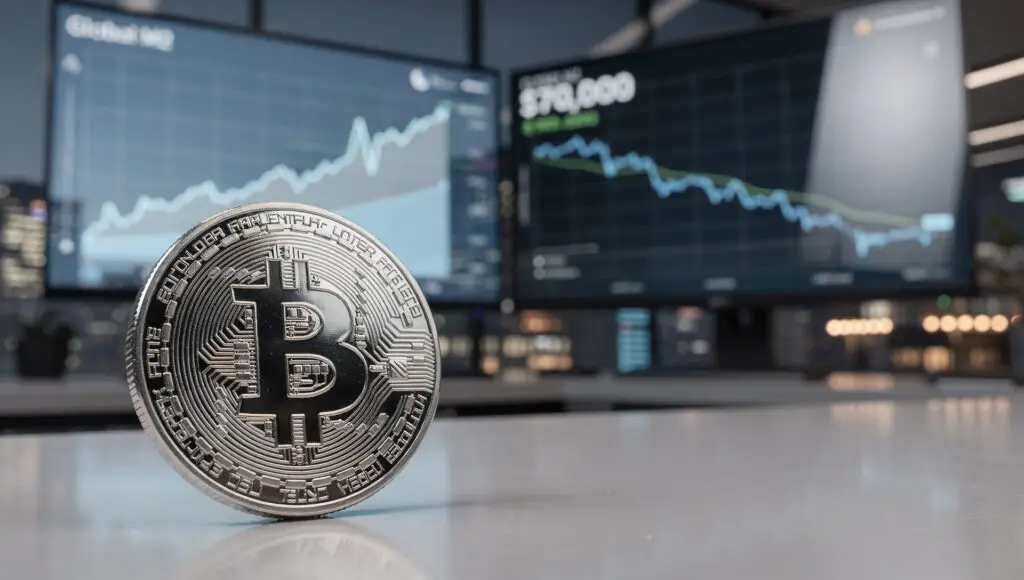
Stocks have a centuries-long track record of adapting to disruptive forces, from industrialization to the internet age. Market indexes like the S&P 500 have historically returned 7%–10% annually over decades, rewarding patient investors.
Companies that adopt AI through automation, data analytics, and new business models are best positioned to survive. Sectors like robotics, biotech, and space exploration could emerge as leaders, driving stock market growth despite periods of disruption.
Bitcoin Offers Scarcity and Decentralization Advantages
Created in 2009, Bitcoin introduced a peer-to-peer digital monetary system with a fixed supply of 21 million coins. Its scarcity and decentralized design make it resistant to inflation and centralized control, appealing to those seeking long-term value protection.
Over time, Bitcoin has evolved into both a store of value and a medium of exchange. Its transparent blockchain structure also aligns well with AI’s demand for verifiable, secure data.
Recommended Article: UN Urged to Lead Global AI Military Regulation Efforts
AI Could Reshape Stock Market Dynamics
Analyst Jordi Visser predicts that AI may accelerate innovation cycles, potentially making some public companies inefficient investment vehicles. Firms unable to adapt quickly could fall behind, leading to greater divergence between winners and losers.
AI will also change how markets operate, from real-time data analysis to predictive trading algorithms. This could increase market efficiency but also amplify volatility and widen performance gaps between adaptive and stagnant companies.
AI May Strengthen Bitcoin’s Technological Edge
Visser compares Bitcoin’s future to gold’s enduring value, noting that AI could enhance Bitcoin’s efficiency and security. Automated trading tools, improved data analytics, and predictive modeling may boost liquidity and market stability over time.
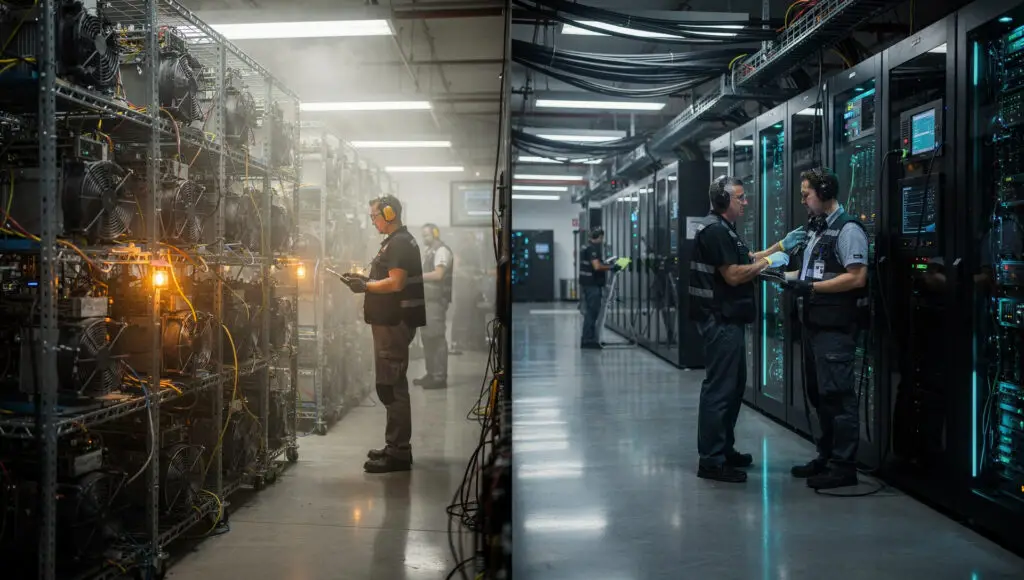
Bitcoin mining could also become more efficient through AI-driven optimization, lowering costs and improving reliability. System maintenance may benefit from AI’s ability to detect and address network issues proactively.
Quantum Computing Adds Complexity to Long-Term Outlook
Quantum computing could theoretically challenge Bitcoin’s cryptographic security, but experts agree this risk remains distant. AI-quantum convergence may actually strengthen Bitcoin through enhanced security measures, provided the network adopts quantum-resistant upgrades.
For stocks, quantum-AI technologies could revolutionize industries, creating new market leaders. However, companies failing to adapt could become obsolete faster than in previous technological shifts, raising risks for concentrated portfolios.
Diversification Emerges as Key Investment Strategy
Given the uncertainty of 50-year forecasts, diversification remains essential. For stocks, index funds tracking innovative sectors offer resilience against individual company failures. For Bitcoin, holding over long timeframes could benefit from its scarcity-driven value proposition.
Investors must consider how each asset class interacts with technological, regulatory, and economic shifts. Balancing both could hedge against unforeseen developments while capturing upside from future breakthroughs.
AI Likely to Boost Both, but in Different Ways
AI’s impact is expected to strengthen both Bitcoin and stocks, though through different mechanisms. Stocks will thrive through adaptive corporate innovation, while Bitcoin may gain traction as a superior digital store of value in a decentralized financial landscape.
Ultimately, neither asset is guaranteed to “win.” Their survival depends on how effectively they integrate emerging technologies and respond to shifting economic realities over the coming decades.