Bitcoin Falls as Renewed Selling Pressure Hits the Crypto Market
Bitcoin declined sharply as risk-averse sentiment returned, pushing the cryptocurrency toward weekly lows after failing to hold recent gains. Investors reacted quickly to shifting market conditions, leaving digital assets vulnerable to sudden and aggressive intraday moves.
The cryptocurrency traded near $84,200 after losing momentum that briefly lifted prices above $91,000 during the weekend rally. The downturn highlighted Bitcoin’s ongoing sensitivity to macroeconomic uncertainty and shifting investor confidence across global markets.
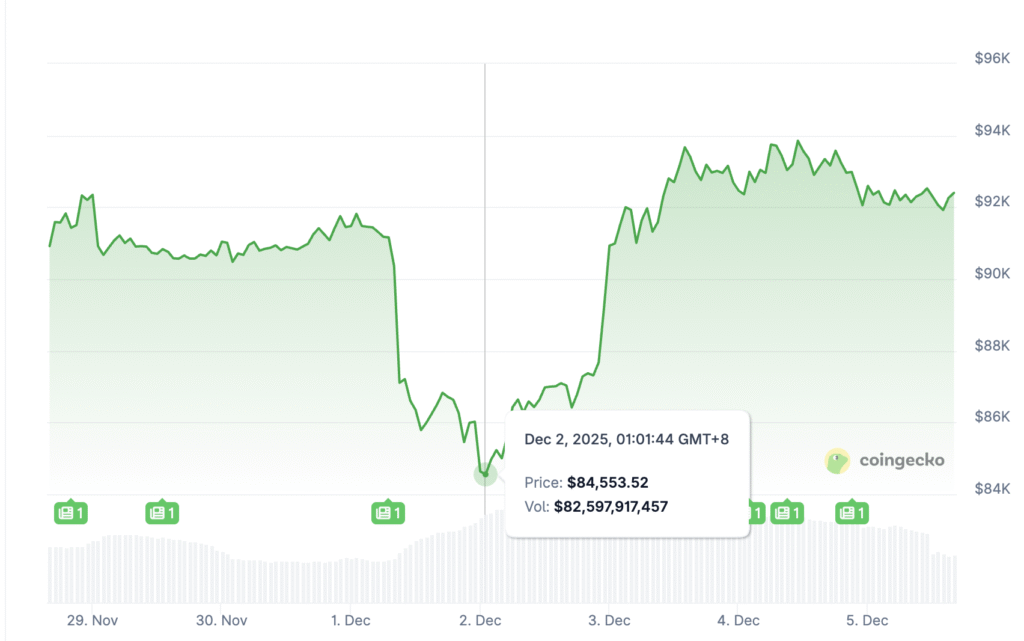
November Price Swings Reveal Bitcoin’s Continued High Volatility
Bitcoin experienced extreme price fluctuations throughout November, with the asset rising near $110,000 before rapidly collapsing toward $82,000. These large swings demonstrated the market’s heightened fragility during periods of shifting expectations.
Traders noted that Bitcoin’s volatility often accelerates when broader financial conditions tighten or investor appetite for speculative assets weakens. Such movements remain consistent with historical patterns observed during previous market cycles.
Crypto-Linked Stocks Slide as Pressure Extends Beyond Digital Assets
Crypto-related equities also dropped sharply, mirroring the losses seen throughout major digital asset markets. Shares of Coinbase and Robinhood each fell more than six percent, placing them among the steepest S&P 500 decliners.
Strategy Corporation, the largest publicly traded holder of Bitcoin, plunged eleven percent as investors reacted to concerns regarding its exposure. Bitcoin miner Mara Holdings also declined eight percent, reflecting deepening caution across the industry.
Recommended Article: Bitcoin Falls Below $85K as Crypto Markets Face Renewed Sell-Off
Market Uncertainty Prompts Investors to Reduce Exposure to Riskier Assets
Analysts said cryptocurrencies often act as sentiment gauges that reflect broader market confidence during volatile economic periods. When investors grow cautious, they frequently move away from speculative assets and into safer alternatives.
The aggressive pullback in November aligned with these risk-off dynamics, showing how quickly capital exits crypto markets during stressful conditions. Bitcoin’s decline illustrated the challenge of maintaining bullish momentum when uncertainty becomes widespread.
Bitcoin’s Wild Movements Highlight Fragility in Short-Term Market Structure
The cryptocurrency’s rapid surges and sudden collapses reflected underlying instability across global financial markets. Elevated volatility created challenges for traders attempting to navigate unpredictable price movements across multiple assets.
These swings also influenced sentiment toward digital assets overall, reinforcing concerns that speculative conditions remain vulnerable. Market observers noted that sustained recovery requires steadier economic signals and improved investor confidence.
Comments from Industry Leaders Add Pressure to Bitcoin-Exposed Equities
Strategy CEO Phong Le suggested the company could consider selling Bitcoin to support dividends if valuation metrics weaken. His remarks introduced additional uncertainty for shareholders concerned about potential liquidation of major holdings.
The company’s mNAV hovered near 1.1, raising questions about how future declines might influence corporate strategy. Market participants reacted cautiously, aware that significant selling could add further pressure to Bitcoin prices.
Investors Monitor Broader Conditions as Crypto Markets Search for Stability
Market participants continued watching macroeconomic indicators and equity market trends to gauge the likelihood of renewed crypto stability. Many analysts said improving sentiment would require consistent data supporting lower volatility and stronger risk appetite.
Until conditions stabilize, Bitcoin and other cryptocurrencies may remain vulnerable to rapid corrections driven by shifting investor behavior. The current environment suggests that caution will persist as markets navigate ongoing uncertainty.