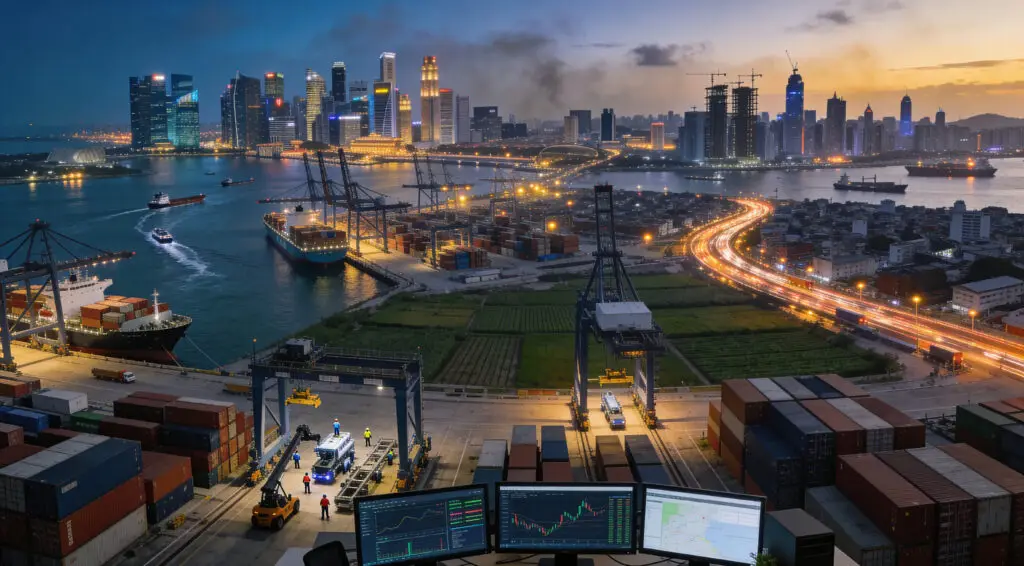
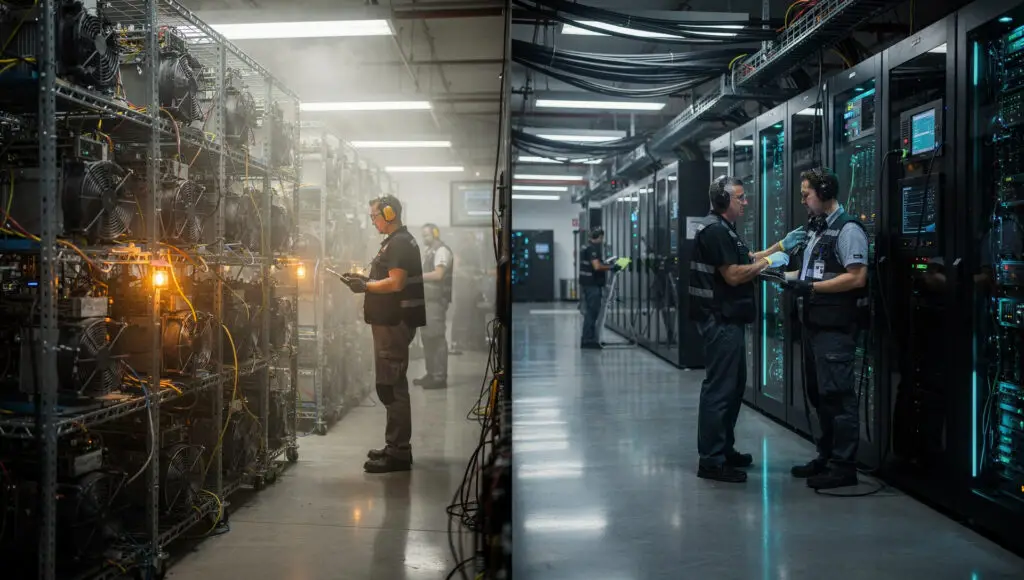
TEXAS — December 9, 2025 — A dramatic transformation is sweeping across America’s bitcoin mining sector, as some of the country’s largest operators repurpose their facilities for artificial intelligence and high-performance computing. What were once massive crypto-focused power centers are increasingly becoming AI megafactories, reshaping the future of both industries in the process.
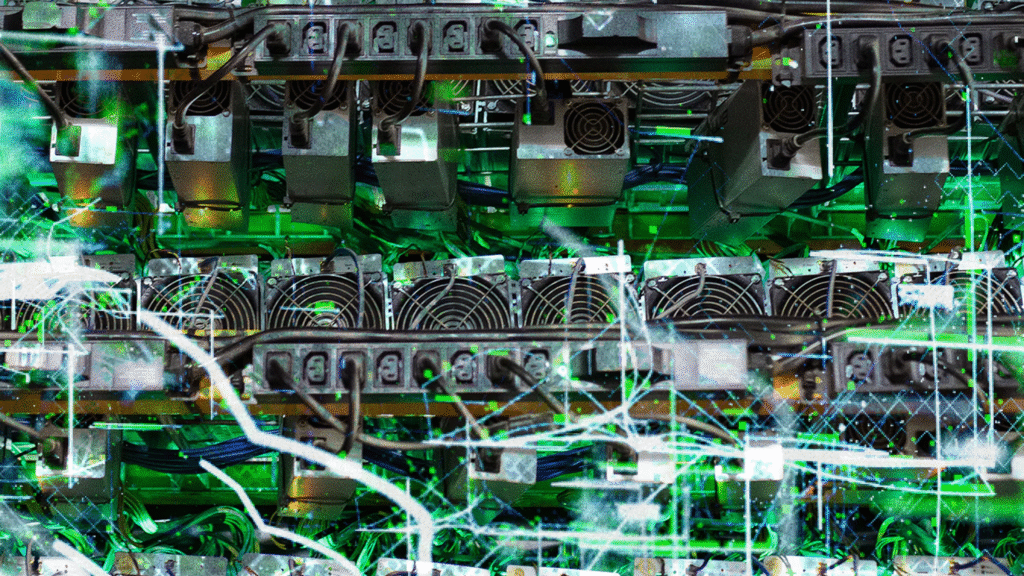
Bitcoin Mines Transform Into AI Facilities
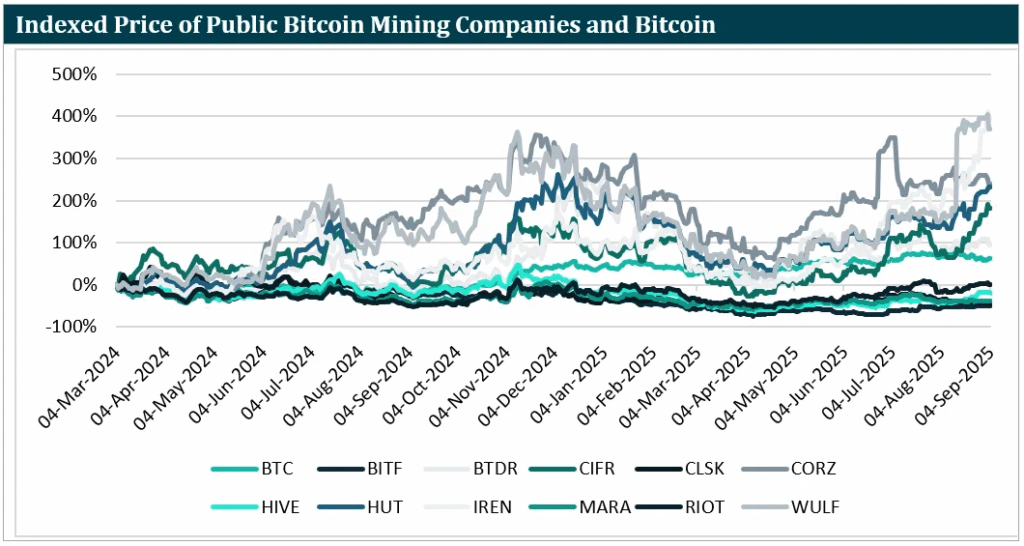
Across the United States, at least eight publicly traded bitcoin mining companies have announced full or partial pivots to AI. Riot Platforms, which began building the world’s largest bitcoin mine outside Corsicana, Texas, is now converting almost two-thirds of the site into an AI and HPC complex.
The shift reflects soaring global demand for data centers capable of supporting massive GPU-driven workloads. Ironically, the infrastructure originally built for crypto mining has become a key foundation for AI expansion.
Industry experts say this transition is being fueled by the promise of higher, more stable revenue streams tied to long-term contracts with leading technology firms.
A Profitability Crisis Forces Strategic Shifts
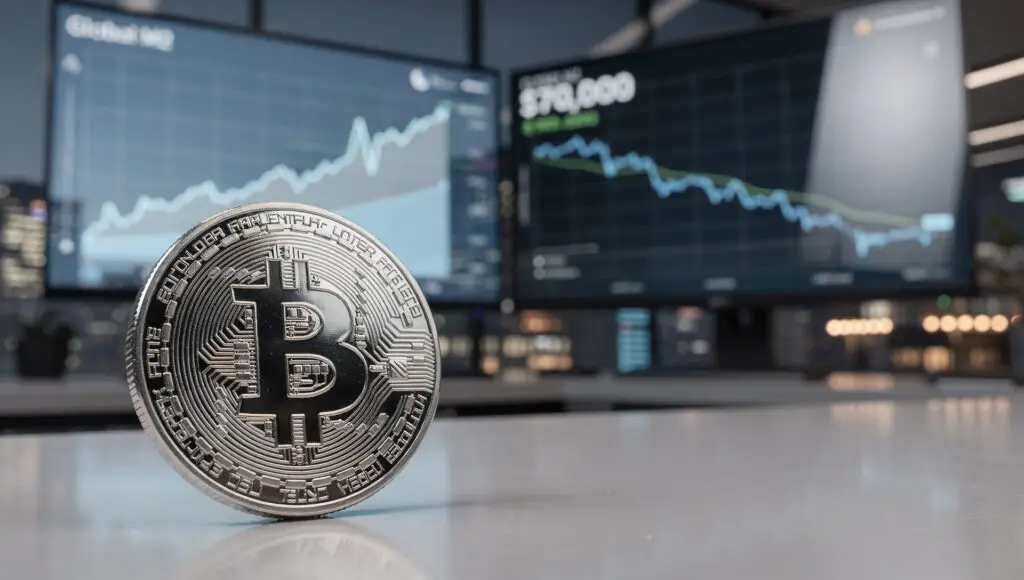
Behind the pivot lies a simple economic reality: bitcoin mining has become significantly less profitable. Rising competition, the 2024 halving event, and a 30% drop in bitcoin’s price from its 2025 peak have all compressed margins.
“The economics are terrible today,” said Charles Chong of BlockSpaceForce, noting that miners often cannot recover the cost of new hardware. The latest halving cut mining rewards to 3.125 BTC, further tightening revenue conditions.
Research from CoinShares shows only a handful of major miners remain profitable at current bitcoin prices.
Recommended Article: Bitcoin’s 2025 Rollercoaster: What Volatility Signals for the Market’s Future
AI Contracts Offer Stronger and More Predictable Returns
While bitcoin prices fluctuate wildly, AI contracts—often signed with enterprise customers—provide consistent, multi-year income. More than $43 billion worth of AI and HPC agreements have been announced by mining companies in recent months, signaling a rapid shift in strategic priorities.
Companies like Bitfarms argue that AI workloads offer far greater value per unit of energy consumed than traditional mining. Public markets have rewarded those adopting AI strategies, boosting stock prices across the sector.
Some Miners Resist the AI Trend
Not every mining company is willing to make the leap. American Bitcoin, launched by Eric Trump, remains committed to pure-play mining. With low operating costs and no physical facilities to manage, the company currently mines bitcoin at roughly $50,000 per coin.
Executives argue that pivoting to AI risks straying from their core expertise. Still, analysts predict market pressure will intensify as competitors reap the benefits of AI diversification.
Technical Challenges Loom Over the Transition
Transitioning from bitcoin mining to AI infrastructure is not seamless. Traditional mining sites were designed to power machines that can be shut down during high grid demand. AI clients, by contrast, require near-perfect uptime.
To meet these expectations, miners are being forced to invest heavily in backup power sources, cooling solutions, and reliability upgrades—changes that can be difficult and costly.
Some industry leaders, including MARA’s Fred Thiel, question whether every miner can successfully evolve into an enterprise-grade AI host.
What Happens to the Future of Bitcoin Mining?
Analysts warn that a large-scale shift away from mining could have unintended consequences. A significant reduction in global mining activity may, over time, increase vulnerability to security threats such as a 51% attack.
If profitability continues to decline, mining may migrate to regions with extremely cheap energy or become dominated by sovereign states that consider bitcoin reserves a strategic asset.
The future of mining may depend on whether countries like the United States, El Salvador, or Bhutan choose to maintain large-scale operations for national security and economic stability.
A New Era for Crypto and AI Infrastructure
The rapid convergence of the bitcoin mining and AI industries marks one of the most significant transformations in digital infrastructure in years. Facilities built to fuel the crypto boom are now becoming critical pillars of America’s AI race.
Whether driven by necessity or opportunity, the pivot underscores a historic shift: the architecture of the digital economy is being rewritten, and bitcoin miners are helping build the next frontier.