


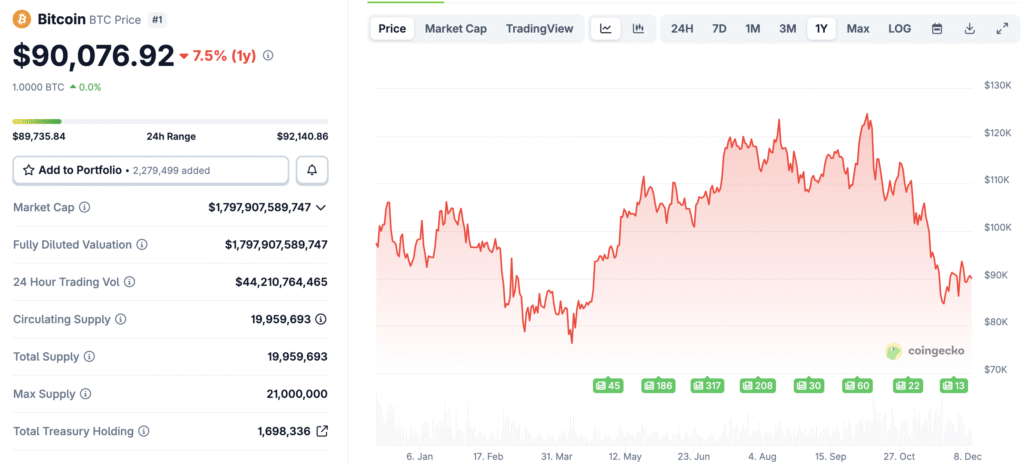
NAIROBI — December 9, 2025 — Bitcoin’s turbulent performance in 2025 has revived a familiar debate among investors and policymakers: Is the world’s largest cryptocurrency evolving into a mature global asset, or does it remain trapped in a cycle of speculation and extreme volatility? After hitting an all-time high above $126,000 in October, Bitcoin has since plunged below $90,000, threatening its first annual loss since 2022.
For veteran crypto observers, this pattern is not surprising. The year’s dramatic rally and steep correction resemble Bitcoin’s earlier cycles, reinforcing the narrative that emotional trading, global macro shocks, and risk sentiment continue to dictate its behavior.
A Familiar Cycle of Booms and Crashes
Bitcoin’s history is marked by euphoric surges followed by deep retracements. In 2017, the cryptocurrency soared near $20,000 before collapsing more than 80% the following year. During the pandemic era of 2020–2021, Bitcoin surged to new records amid institutional interest and global stimulus, only to tumble again in 2022 as tightening monetary policies choked risk appetite.
The 2025 cycle echoes these earlier episodes. After climbing above $126,000, Bitcoin rapidly erased tens of billions of dollars in leveraged positions following U.S. tariff shocks, interest rate increases, and rising dollar strength. Analysts say the steep decline reflects the cryptocurrency’s growing sensitivity to global macroeconomic shifts rather than crypto-specific factors.
Why the 2025 Crash Feels Different
Although Bitcoin has experienced severe downturns before, this year’s correction underscores a larger shift: Bitcoin now moves increasingly in sync with global financial markets. Analysts note that crypto prices are mirroring stock market sentiment, especially in AI-related and high-growth sectors that have become bellwethers of investor confidence.
Instead of behaving like digital gold—a countercyclical hedge during uncertainty—Bitcoin is trading like a high-risk tech asset. Market dynamics now hinge on Federal Reserve policy, geopolitical tensions, equity volatility, and broader risk appetite.
For retail investors, the shift challenges the long-held belief that crypto provides safety during traditional market stress. For institutions, the changing behavior underscores Bitcoin’s integration into the wider financial system.
Recommended Article: Bitcoin’s Turbulent 2025 Puts Year-End Outlook on Edge
Macro Forces Tighten Their Grip
The Federal Reserve’s rapid interest rate adjustments have played an outsized role in shaping Bitcoin’s trajectory this year. Higher borrowing costs pressured speculative assets, while tariff-related shocks from Washington disrupted global equity markets and spilled into crypto.
At the same time, Bitcoin’s growing correlation with technology stocks raises concerns that an AI-driven equity bubble—if it bursts—could drag crypto down with it. Analysts say Bitcoin is no longer insulated from mainstream market narratives, making macro analysis more critical than ever for crypto traders.
Where Bitcoin Could Be Heading Next
Experts remain divided on Bitcoin’s next move, but past cycles offer three possible scenarios. One possibility is a rebound if interest rates fall or inflation eases, historically a catalyst for renewed Bitcoin momentum. Another is a prolonged stagnation similar to the 2018–2019 crypto winter, which could emerge if economic conditions remain tight. A final scenario is renewed institutional accumulation, with major firms such as Strategy continuing to increase holdings despite market turbulence.
What happens next will depend largely on monetary policy decisions, global capital flows, and investor sentiment across risk assets.
Has Bitcoin Finally Matured?
While Bitcoin is no longer the fringe digital experiment it once was, it has not yet achieved the stability of traditional safe-haven assets. Instead, it has evolved into a globally recognized speculative instrument—one shaped by economic forces far beyond the crypto ecosystem.
For long-term believers, downturns like this have historically served as strategic entry points. For cautious investors, Bitcoin’s sharp swings highlight the importance of discipline and risk management. For policymakers, especially in emerging markets across Africa, the evolving influence of crypto demands closer regulatory attention.
The Next Chapter in Bitcoin’s Volatile Story
What remains consistent is Bitcoin’s cyclical nature. Every surge and correction adds another chapter to its pattern of dramatic highs and equally dramatic lows. As 2025 draws to a close, Bitcoin’s position reflects both its remarkable resilience and its persistent vulnerability to global market forces.
Whether the year ends in renewed optimism or deeper decline, one thing is clear: Bitcoin’s story continues to be defined by volatility—and by an ever-growing connection to the wider world economy.