Institutional Trust in France Falls at an Alarming Pace
France is experiencing one of the most significant collapses in public confidence in its institutions in recent years. After a prolonged period of relative stability, trust across multiple pillars of governance has deteriorated sharply, reflecting a broader sense of political fatigue and frustration among citizens.
Confidence in the national government has dropped dramatically, falling to just 29% in 2025. Trust in the integrity of elections has declined to 51%, while confidence in the judicial system now sits at 50%. Faith in financial institutions has also weakened, sliding to 42% and undoing years of gradual recovery. No other European Union member state has recorded a comparable average decline across these institutional measures during the year.

Political Instability Undermines Governance
The collapse in institutional trust has unfolded against a backdrop of prolonged political turbulence. Since late 2024, Emmanuel Macron has presided over a revolving door of prime ministers, each attempting to govern without a stable parliamentary majority. Legislative paralysis has become routine, with budget proposals repeatedly triggering no-confidence votes.
Public anger over fiscal tightening and perceived elite mismanagement has increasingly spilled onto the streets. Union-led demonstrations have surged, reaching levels not seen since the mass protests surrounding pension reforms in 2023. These mobilizations have reinforced the impression of a government struggling to maintain legitimacy and control.
Macron’s Approval Rating Hits Historic Low
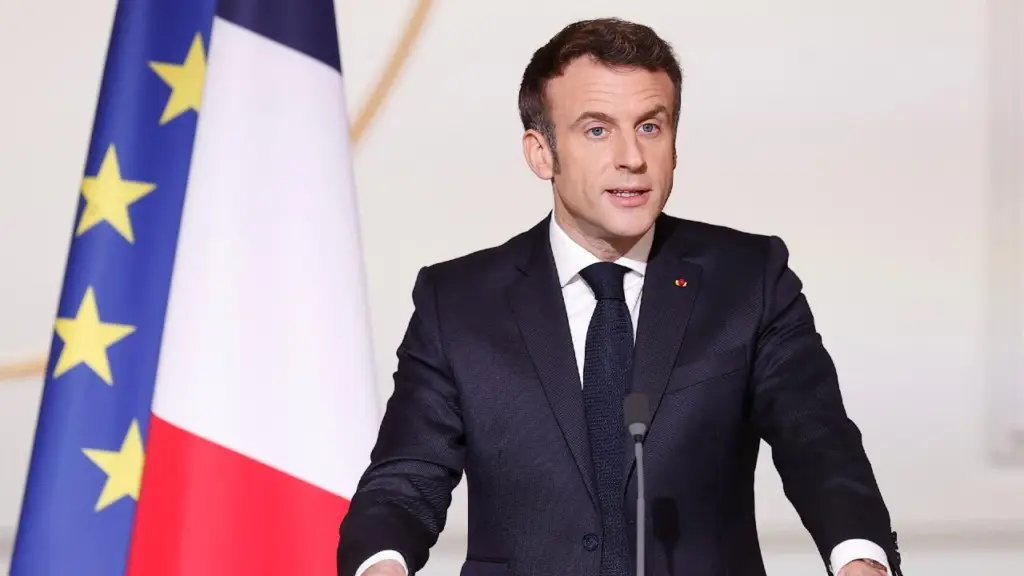
President Macron’s personal standing has deteriorated alongside institutional trust. His approval rating has dropped to a record low of 28% in 2025, less than half the level recorded during his first year in office in 2017. While still marginally higher than the final approval rating of François Hollande, the figure underscores the depth of public dissatisfaction.
The erosion of Macron’s popularity reflects broader disillusionment with leadership rather than a single policy failure. Years of reform fatigue, compounded by budget disputes and persistent economic anxiety, have reshaped public attitudes toward the presidency itself.
Recommended Article: China’s Slowing Economy Casts Shadow Over Xi’s Planned Trump Talks
Growing Desire to Leave France Permanently
As confidence erodes at home, the desire among French citizens to leave the country has surged. In 2025, 27% of adults say they would move abroad permanently if given the opportunity, more than double the share recorded just a year earlier. This increase ranks among the largest annual jumps observed globally since the question was first asked in international surveys.
Among those considering emigration, preferred destinations include Canada, Switzerland, Spain, and Algeria. The motivations extend beyond lifestyle preferences, pointing instead to deeper concerns about governance, opportunity, and long-term stability within France.
Trust and Migration Are Closely Linked
The data reveals a strong relationship between institutional confidence and emigration intent. Nearly half of those expressing trust in only one or none of the five national institutions surveyed say they would leave France permanently if possible. By contrast, individuals with higher levels of institutional confidence are significantly less likely to express such intentions.
This divide suggests that emigration interest is not merely aspirational but rooted in perceptions of systemic decline. For many, leaving France represents a response to what they view as a breakdown in accountability, competence, and political responsiveness.
Corruption Concerns Reach a Decade High
Perceptions of corruption have intensified alongside declining trust. In 2025, 68% of French adults believe corruption is widespread throughout the government, matching levels last seen in 2015. This sharp increase reflects renewed attention to high-profile legal cases involving senior political figures.
Former president Nicolas Sarkozy was convicted of illegal campaign financing, while Marine Le Pen was barred from running for office following findings of misappropriating European Union funds. These cases have reinforced public perceptions that political elites operate under different standards than ordinary citizens.
Corruption Allegations Extend to Current Government
Concerns about accountability have not been confined to past administrations. Members of the current government have also faced corruption allegations or legal complaints, further fueling public skepticism. The cumulative effect has been to frame corruption as a persistent structural problem rather than a series of isolated incidents.
Public perceptions of corruption within French businesses have also risen, though less sharply than views of government corruption. This disparity suggests that the public sees the current crisis as fundamentally political in nature.
Economic Pessimism Remains Deeply Entrenched
Economic sentiment continues to weigh heavily on public morale. In 2025, only 21% of French adults believe their local economy is improving, while 67% say it is deteriorating. These figures mirror the pessimism recorded in 2024 and reflect long-standing anxieties about growth and competitiveness.
Within the Organisation for Economic Co-operation and Development, France ranks among the most pessimistic member countries when it comes to economic outlook. Over the past decade, only Greece has displayed higher sustained levels of economic pessimism.
Structural Economic Pressures Fuel Discontent
France’s economic challenges are structural as well as cyclical. The country carries one of the largest budget deficits among advanced economies, while government spending as a share of GDP exceeds that of most peers. Productivity growth has stagnated over the past decade, eroding tax revenues and complicating fiscal consolidation efforts.
Repeated failures to pass spending legislation have exacerbated political instability, creating a feedback loop between economic weakness and governance breakdown. As deficits widen, political consensus becomes harder to achieve, reinforcing public frustration.
Rebuilding Trust Will Define France’s Political Future
France’s current mood reflects a nation grappling with declining faith in its institutions, leadership, and economic prospects. Rising emigration interest, mounting corruption concerns, and persistent pessimism suggest that the crisis is as much psychological as it is political.
With Macron’s term ending in 2027, the challenge for future leaders will be restoring credibility and rebuilding trust that has eroded over years of instability. Without meaningful reforms and renewed accountability, the forces driving disillusionment may continue to push citizens away rather than rally them around the institutions meant to serve them.