

Economic Pressures Shape a Sensitive Diplomatic Moment
As Xi Jinping looks ahead to a potential meeting with Donald Trump in 2026, the state of China’s domestic economy is emerging as a critical factor shaping Beijing’s negotiating posture. While Xi’s hard-line response to Trump’s trade war in 2025 delivered tactical wins, those gains are now being weighed down by slowing growth, weak confidence, and persistent structural challenges at home.
China’s leadership faces the delicate task of projecting strength abroad while managing economic fragility domestically. The combination complicates what could become one of the most consequential diplomatic engagements of the next year.
Trade Concessions Offer Relief but Not a Revival
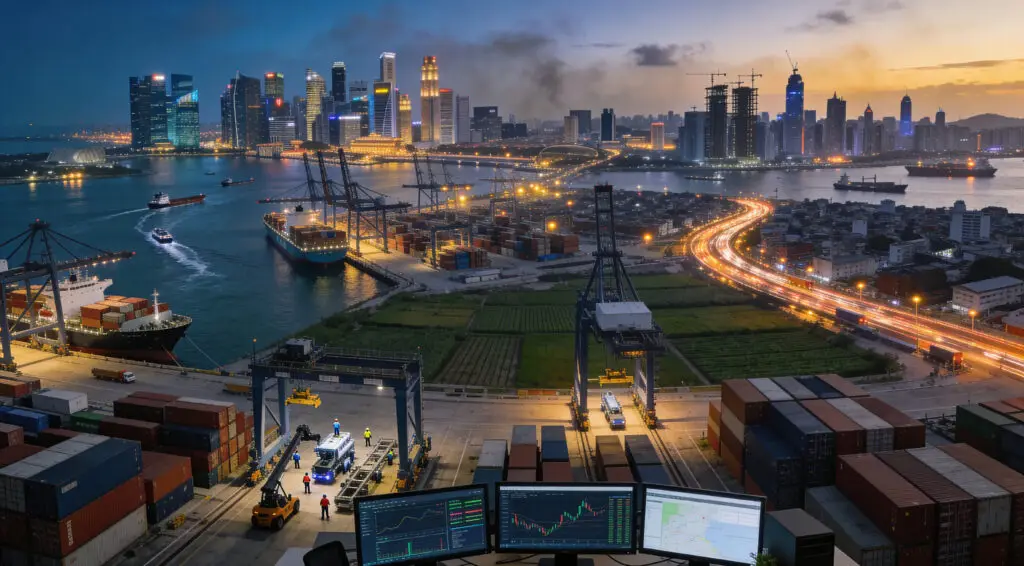
Xi’s refusal to back down during Trump’s tariff escalation initially appeared risky, but it ultimately produced results. Over the course of the year, tariffs between the two economic superpowers were sharply reduced. Additional US export controls were paused, and proposed port fees targeting Chinese shipping were shelved.
Perhaps most notably, restrictions on advanced semiconductors were eased, allowing China renewed access to higher-end Nvidia chips. These processors are seen as crucial to Beijing’s ambitions in artificial intelligence and advanced computing.
Yet while these concessions eased external pressure, they have not translated into a broad-based economic rebound inside China. Trade relief has bought time, not momentum.
Recommended Article: Nepal’s Gen Z Uprising Forces a Reckoning With Old Politics
Growth Slows as Confidence Weakens
China’s economy continues to sputter despite policy support and improving trade conditions. Manufacturing activity remains uneven, consumer demand is subdued, and private investment has struggled to recover. For a system long accustomed to rapid expansion, even modest slowdowns carry political and social consequences.
Local governments remain burdened by debt accumulated during years of infrastructure-driven growth. Property markets, once a pillar of household wealth, have yet to regain stability. These pressures limit Beijing’s ability to deploy aggressive stimulus without risking financial instability.
Domestic Constraints Affect Negotiating Power
Economic weakness matters in diplomacy because it narrows the range of options available to policymakers. As Xi approaches future negotiations with Trump, China’s leadership must consider how much pressure the economy can absorb if talks turn confrontational again.
While Xi has emphasized national resilience and long-term self-reliance, slower growth reduces Beijing’s tolerance for renewed tariffs or financial shocks. This reality could encourage a more pragmatic tone in upcoming discussions, even as public messaging remains firm.
Artificial Intelligence as a Strategic Priority
Access to advanced chips has given Beijing a partial reprieve in its race for AI leadership. Officials see artificial intelligence as a cornerstone of future productivity gains and geopolitical influence. With Nvidia’s more sophisticated processors back on the table, Chinese firms may regain some lost ground.
However, technology alone cannot compensate for broader economic headwinds. AI investment requires healthy capital markets, confident consumers, and stable regulation—areas where uncertainty persists. Beijing’s challenge is turning technological opportunity into economy-wide growth.
Political Stakes Ahead of 2026 Meetings
The timing of any Xi-Trump meeting matters. Both leaders face domestic audiences eager for signs of strength. For Trump, confronting China remains a central political narrative. For Xi, safeguarding stability and growth is essential to maintaining authority at home.
China’s leadership will likely seek to avoid renewed escalation before talks take place. Stability, rather than confrontation, may be the preferred path as Beijing works to shore up growth and restore confidence.
Balancing National Pride With Economic Reality
Xi’s strategy has long emphasized standing firm against external pressure. That posture resonates domestically, reinforcing narratives of sovereignty and national dignity. Yet economic realities impose limits on how far such resistance can go.
With growth slowing, Beijing must balance pride with pragmatism. Maintaining access to global markets, capital, and technology becomes increasingly important as domestic engines weaken.
Washington’s Leverage Grows Quietly
While the easing of trade restrictions suggests progress, Washington retains significant leverage. The United States remains a key export market, technology gatekeeper, and financial anchor. Trump’s willingness to suspend measures this year reflects tactical choice rather than permanent concession.
This asymmetry may shape future negotiations. A weaker Chinese economy could reduce Beijing’s ability to extract further compromises without offering meaningful concessions of its own.
A Test of Economic Diplomacy
The upcoming phase of US-China relations will test whether economic diplomacy can stabilize a relationship defined by rivalry. Xi enters this period having weathered the worst of the trade war but facing mounting pressure at home.
For China, success will depend less on symbolic victories and more on restoring durable growth. For Xi personally, the stakes are high: economic performance underpins political legitimacy.
Uncertainty Defines the Road Ahead
As preparations begin for potential meetings in 2026, uncertainty dominates the outlook. Trade tensions have eased, but structural issues remain unresolved. China’s economy has not regained its former dynamism, and global conditions remain volatile.
Xi may arrive at the negotiating table with fewer external pressures than earlier in Trump’s term, but also with less economic momentum to fall back on. How Beijing manages this tension will shape not only the talks themselves, but the trajectory of the world’s two largest economies in the years ahead.