Venezuela’s Political Upheaval Puts Crypto in the Spotlight
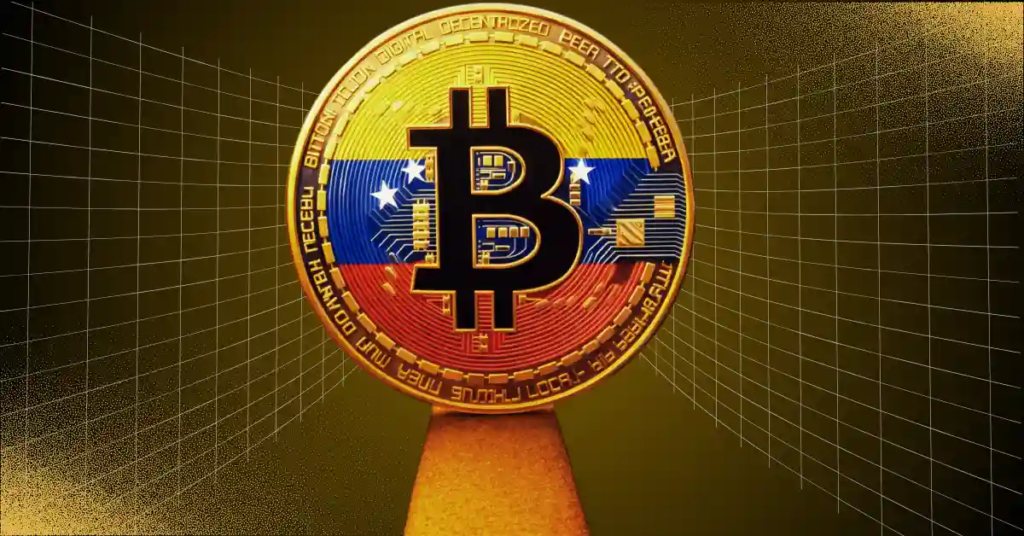
Following the removal of Venezuelan president Nicolás Maduro, global attention has focused not only on oil reserves but also on the country’s potential cryptocurrency holdings. Analysts believe Bitcoin may have played a quiet yet strategic role in Venezuela’s financial survival under sanctions. If such holdings exist, they could soon influence global crypto markets.
The uncertainty stems from years of isolation from traditional financial systems. As sanctions tightened, Venezuela was forced to explore alternative stores of value and payment rails, making digital assets a logical option.
Why Experts Suspect a Bitcoin Stash Exists
Several crypto specialists argue it is reasonable to assume Venezuela accumulated Bitcoin over time. Exclusion from global banking, restricted dollar access, and frozen assets created strong incentives to diversify into portable, censorship-resistant assets. Bitcoin, alongside gold and limited dollar reserves, likely formed part of this shadow strategy.
Gui Gomes of OranjeBTC described the situation as comparable to hiding wealth “under the mattress,” except in digital form. While definitive proof is elusive, the logic behind such accumulation is widely accepted among analysts.
Conflicting Estimates Highlight the Uncertainty
Estimates of Venezuela’s Bitcoin holdings vary dramatically. Some reports speculate holdings worth tens of billions of dollars, which would place the country among the world’s largest sovereign Bitcoin holders. More conservative figures from blockchain data providers suggest much smaller balances, possibly only a few hundred coins.
These discrepancies reflect the limitations of on-chain analysis. While blockchain transactions are transparent, wallet ownership is not. Without confirmed addresses, estimates remain speculative and must be treated cautiously.
Recommended Article: How Trump’s Venezuela Intervention Is Fueling Bitcoin’s 2026 Bullish Case
How Venezuela Could Have Acquired Bitcoin
Experts suggest Venezuela likely relied on unconventional methods to build crypto reserves. With major custodial firms based in the U.S. or allied countries, the regime would have avoided standard custody solutions. Instead, assets may be spread across thousands of wallets controlled by military and political insiders.
In addition, Venezuela has a history of seizing assets from domestic Bitcoin miners. Before mining was outlawed in 2024, authorities frequently confiscated mining equipment and rewards. Some analysts believe these seized coins could have contributed to state-linked holdings.
Sanctions, Secrecy, and On-Chain Limits
Blockchain intelligence firms can trace transactions and balances linked to known wallets, but anonymity remains a challenge. According to Chainalysis, identifying the true owners behind wallets is often impossible without off-chain intelligence.
This opacity complicates enforcement and recovery efforts. If Venezuela’s Bitcoin is widely distributed across personal wallets, any attempt to freeze or seize assets would be far more difficult than targeting centralized accounts.
What Could Happen to the Bitcoin Next
If Venezuela does hold substantial Bitcoin, several scenarios are possible. One is a sell-off, either orderly or chaotic, as assets change hands during political transition. Such selling could pressure Bitcoin prices in the short term, particularly if large volumes hit exchanges.
Another possibility is seizure by U.S. authorities as part of enforcement actions. Some speculate that confiscated Bitcoin could be transferred to the U.S. Treasury, potentially contributing to a future strategic reserve. While legally complex, analysts note such a move would likely be bullish if the assets were held rather than sold.
Implications for Global Crypto Markets
Regardless of the outcome, the situation underscores crypto’s growing role in geopolitics. Bitcoin’s ability to function as both a store of value and a sanctions workaround places it at the intersection of finance and foreign policy. Any movement of Venezuelan-linked Bitcoin would be closely watched by traders worldwide.
Ultimately, the episode highlights how digital assets can become unintended beneficiaries of geopolitical disruption. As 2026 unfolds, Venezuela’s suspected Bitcoin stash may serve as a real-world test of how crypto markets absorb state-level shocks and power transitions.