

Bitcoin Price Action Turns Choppy
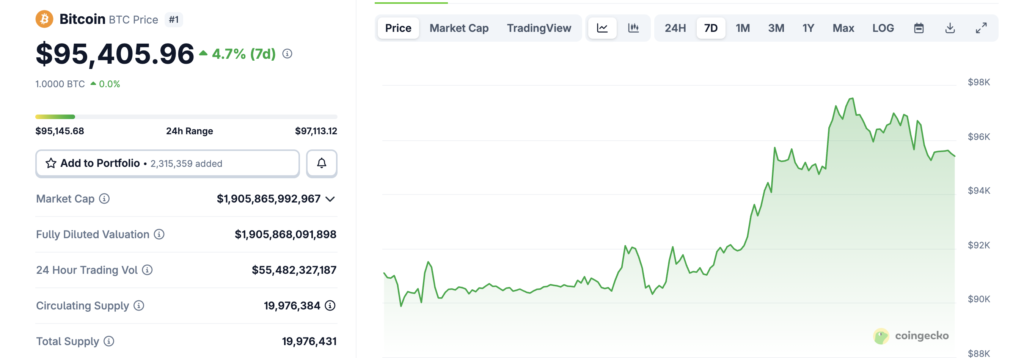
Bitcoin entered January 15, 2026, showing renewed volatility after several weeks of consolidation above key psychological levels. Intraday price swings widened noticeably as traders responded to a steady stream of macroeconomic data, policy commentary, and shifting risk sentiment across global markets. Rather than trending decisively higher or lower, Bitcoin has moved erratically, reflecting uncertainty rather than conviction.
This choppiness follows an extended period of relative stability, during which market participants appeared comfortable holding positions while waiting for clearer signals. The recent return of volatility suggests that investors are reassessing assumptions made earlier in the year, particularly around liquidity conditions and the durability of risk appetite.
ETF Flows Provide Conflicting Signals
Spot Bitcoin exchange-traded funds remain one of the most influential forces shaping market behavior in 2026. Recent data shows a split pattern, with some ETFs recording renewed inflows while others experienced modest outflows over consecutive sessions. This divergence highlights differing institutional strategies rather than a unified shift in sentiment.
Portfolio managers appear to be actively reallocating rather than exiting the asset class. For some institutions, Bitcoin continues to serve as a long-term allocation tied to monetary debasement and portfolio diversification. Others are trimming exposure tactically, responding to near-term volatility and macro uncertainty. The net effect has been a market caught between steady underlying demand and short-term caution.
Interest Rate Expectations Drive Sensitivity
Bitcoin’s sensitivity to interest rate expectations has become increasingly pronounced. Even subtle changes in the outlook for monetary policy have triggered rapid price adjustments, underscoring the asset’s growing integration into global financial markets. Recent data releases pointing to uneven economic momentum have complicated forecasts for future rate cuts or pauses.
As real yields fluctuate, Bitcoin traders are reacting swiftly to shifts in liquidity expectations. This dynamic reinforces the idea that Bitcoin, while still distinct from traditional assets, now trades within a broader macro framework. Until interest rate trajectories become clearer, volatility driven by policy speculation is likely to persist.
Recommended Article: Bitcoin Breaks Past $95,000 on Cooling Inflation and Regulatory Optimism
Derivatives Positioning Remains Elevated
Despite spot market turbulence, derivatives markets show no signs of excessive panic or euphoria. Open interest in Bitcoin futures remains elevated, indicating sustained participation from both institutional and professional traders. Funding rates have hovered near neutral, suggesting balanced positioning between long and short exposures.
Options markets reflect a similar theme. Traders are pricing in volatility but avoiding aggressive directional bets, favoring hedging strategies instead. This cautious stance reduces the likelihood of sudden liquidation cascades, but it also leaves the market vulnerable to sharp moves if sentiment breaks decisively in either direction.
Long-Term Holders Stay Inactive
On-chain data provides a counterbalance to short-term noise. Long-term Bitcoin holders remain largely inactive, with older coins showing minimal movement. This behavior suggests that core investors are unfazed by recent volatility and continue to view current price levels as acceptable or undervalued.
Historically, periods marked by long-term holder inactivity combined with heightened short-term trading often precede significant moves. Whether that move resolves higher or lower depends on external catalysts, but the lack of capitulation reinforces the idea that structural confidence remains intact.
Bitcoin’s Near-Term Outlook
Looking ahead, Bitcoin’s near-term trajectory appears closely tied to macro clarity rather than crypto-specific developments. Clearer signals on monetary policy, inflation trends, and global growth expectations could restore directional momentum. In the absence of such clarity, range-bound volatility may dominate trading conditions.
For now, Bitcoin’s behavior reflects a market in transition—caught between institutional maturation and unresolved macro risk. Volatility may frustrate short-term traders, but for long-term participants, it continues to represent a feature rather than a flaw of Bitcoin’s evolving role in global finance.