Ethereum Enters 2026 With Strong Fundamentals but Muted Price Action
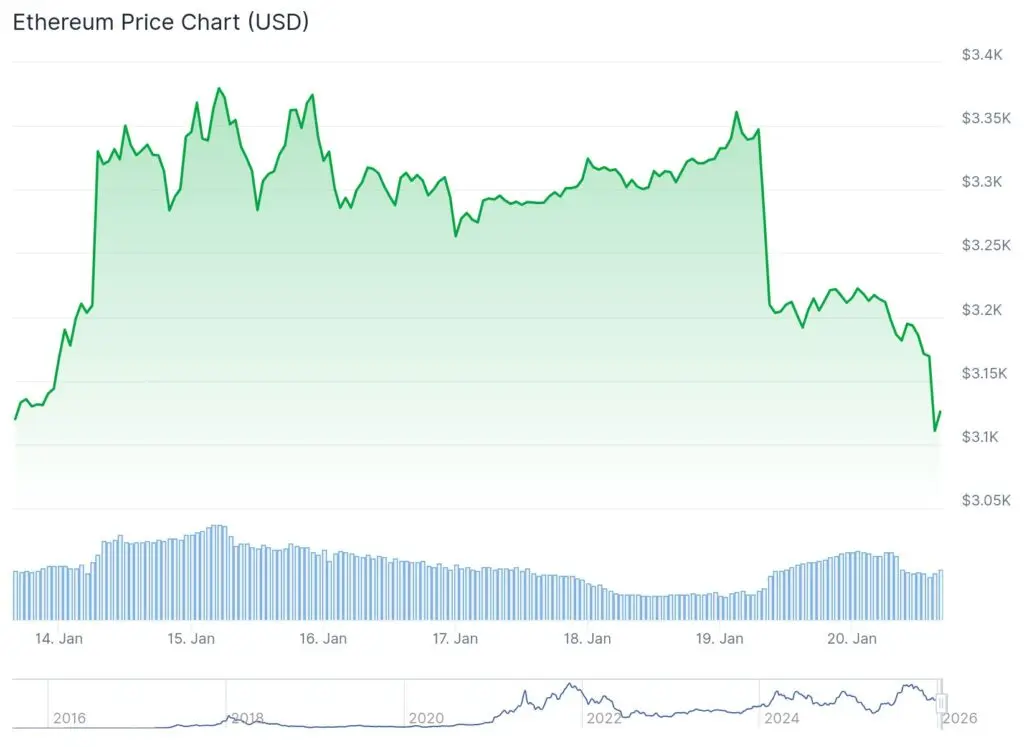
Ethereum began 2026 with solid network activity and expanding institutional interest, yet price performance has remained restrained compared with Bitcoin. While Ether continues to trade well above historical averages, it has struggled to build sustained momentum despite steady development progress.
This divergence between fundamentals and price has sparked debate among investors over whether Ethereum is undervalued or simply entering a longer consolidation phase following years of rapid growth.
Scaling Upgrades Move From Vision to Execution
Ethereum’s roadmap has shifted decisively from theory to execution. Data availability improvements, validator efficiency upgrades, and broader Layer 2 integration are now operational realities rather than future promises.
These changes are designed to reduce congestion and transaction costs while maintaining decentralization. Developers argue that this phase is less about dramatic headlines and more about steady performance gains that support long-term adoption.
Layer 2 Growth Reshapes Network Economics
Layer 2 networks continue to absorb a growing share of Ethereum activity. Transaction volumes on rollups have increased sharply, particularly for payments, gaming, and decentralized finance applications.
While this expansion strengthens Ethereum’s ecosystem, it also complicates traditional valuation metrics. Fee revenue on the base layer has moderated, even as overall usage rises, forcing investors to rethink how network value is measured.
Institutional Participation Expands Quietly
Institutional interest in Ethereum continues to broaden, though often with less fanfare than Bitcoin. Asset managers, infrastructure providers, and fintech firms are increasingly integrating Ethereum-based settlement and tokenization capabilities.
Spot Ethereum products have seen mixed flows, but long-term allocations remain sticky. Many institutions view Ethereum as strategic infrastructure rather than a short-term trading asset, contributing to reduced speculative volatility.
Competitive Pressure Intensifies Across Blockchains
Ethereum faces stronger competition than at any previous point. Alternative blockchains are aggressively marketing lower fees, faster finality, and simplified user experiences.
While none have displaced Ethereum’s dominance, they have captured specific niches, particularly in consumer-facing applications. This competition keeps pressure on Ethereum developers to deliver upgrades without compromising security or decentralization.
Regulatory Clarity Remains a Key Variable
Regulation continues to shape Ethereum’s investment narrative. Policymakers in major jurisdictions are moving toward clearer frameworks for staking, token issuance, and decentralized finance.
Greater clarity could unlock additional institutional participation, but uncertainty remains around how different regions will classify and supervise Ethereum-based activity. Investors are watching regulatory signals closely before increasing exposure.
What the Market Is Waiting For
Ethereum’s market appears to be waiting for confirmation rather than speculation. Clear evidence that scaling upgrades translate into sustained economic activity could reignite price momentum.
Until then, Ethereum may continue trading sideways while its ecosystem quietly expands. For long-term investors, this period may be less about immediate returns and more about positioning ahead of the network’s next growth phase.