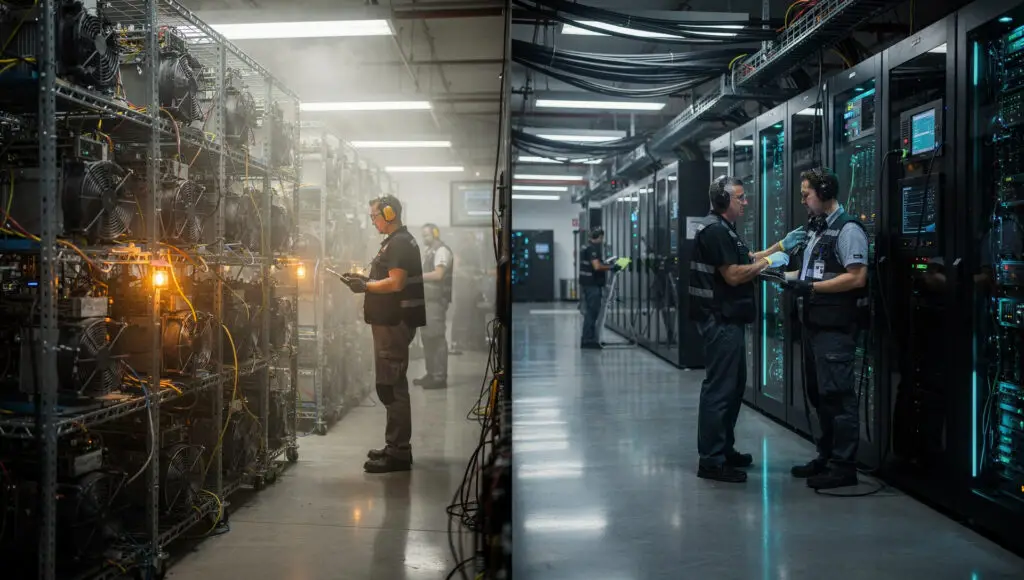


AI Expansion Moves From Boardrooms to Backyards
As artificial intelligence investment accelerates in 2026, the impact is no longer confined to corporate earnings calls or federal policy debates. Across the United States, the physical footprint of AI infrastructure—particularly large-scale data centers—is increasingly shaping local political conversations.
What was once welcomed as a source of jobs and tax revenue is now prompting scrutiny from residents, city councils, and utility regulators.
Data Centers Drive Community Concerns
AI data centers require vast amounts of land, electricity, and water. In several states, communities hosting new facilities have begun questioning whether promised economic benefits outweigh rising utility strain and environmental impact.
Residents near proposed sites have raised objections related to noise pollution, heat emissions, and long-term land use, forcing local governments to slow approvals or reconsider zoning rules.
Energy Demand Becomes a Political Flashpoint
The energy intensity of AI infrastructure has emerged as one of the most contentious issues. Utilities report that large data centers can consume as much electricity as mid-sized cities, placing stress on local grids.
In some regions, ratepayers fear that surging industrial demand could lead to higher household electricity costs, turning infrastructure investment into a politically sensitive issue during local elections.
Recommended Article: AI Infrastructure Boom Sparks Local Politics and Regulatory Pushback
State and Local Governments Reassess Incentives
For years, state and municipal governments offered generous tax incentives to attract data centers. In 2026, that approach is under review. Lawmakers are asking whether incentive structures properly account for infrastructure strain, environmental costs, and long-term sustainability.
Some jurisdictions are introducing conditional incentives tied to renewable energy usage, water recycling commitments, and community benefit agreements.
Trust and Transparency Shape Project Outcomes
Analysts note that public trust has become a decisive factor in whether AI infrastructure projects move forward. Communities are demanding clearer disclosures around energy sourcing, emissions, and operational safeguards.
Companies that fail to engage early with local stakeholders increasingly face delays, protests, or outright rejection of proposed developments.
Labor and Automation Complicate Public Perception
Unlike traditional manufacturing plants, AI data centers generate relatively few permanent jobs once construction ends. This reality complicates the political narrative around economic development.
Local leaders must balance the appeal of high-tech investment against voter concerns that automation-heavy infrastructure delivers limited long-term employment benefits.
Regulatory Fragmentation Creates Uncertainty
Oversight of AI infrastructure remains fragmented across jurisdictions. Zoning laws, environmental reviews, and energy regulations vary widely, creating uncertainty for both developers and communities.
Calls are growing for clearer state-level or federal frameworks that standardize requirements without halting investment momentum.
Corporate Strategy Shifts Toward Social License
In response to mounting pushback, major technology firms are adjusting strategies. Some are prioritizing locations with abundant renewable energy, while others invest in grid upgrades or community programs to secure local support.
Executives increasingly recognize that technical feasibility alone is insufficient; maintaining a social license to operate has become a strategic necessity.
National Competitiveness Adds Pressure
At the federal level, policymakers view AI infrastructure as essential to national competitiveness. This framing adds tension to local debates, as communities find themselves at the intersection of global technology rivalry and local quality-of-life concerns.
Balancing strategic urgency with democratic accountability remains a complex challenge.
What This Means for AI Growth in 2026
The AI infrastructure boom is unlikely to slow, but its path forward will be shaped by political negotiation as much as capital investment. Projects that align growth with transparency, sustainability, and community engagement are more likely to succeed.
In 2026, the future of AI in the United States is being decided not only in Washington or Silicon Valley, but also in town halls and zoning meetings nationwide.