Wartime Measures Become the New Economic Baseline
Russia entered 2026 no longer treating its war-driven economic controls as temporary. What began as emergency stabilization measures following the invasion of Ukraine have now hardened into long-term policy architecture.
Budget frameworks, industrial output targets, and labor allocation are Russia’s economic model, signaling that the government expects prolonged confrontation rather than normalization. This shift marks a transition from crisis management to institutional redesign.
Defense Spending Anchors Fiscal Planning
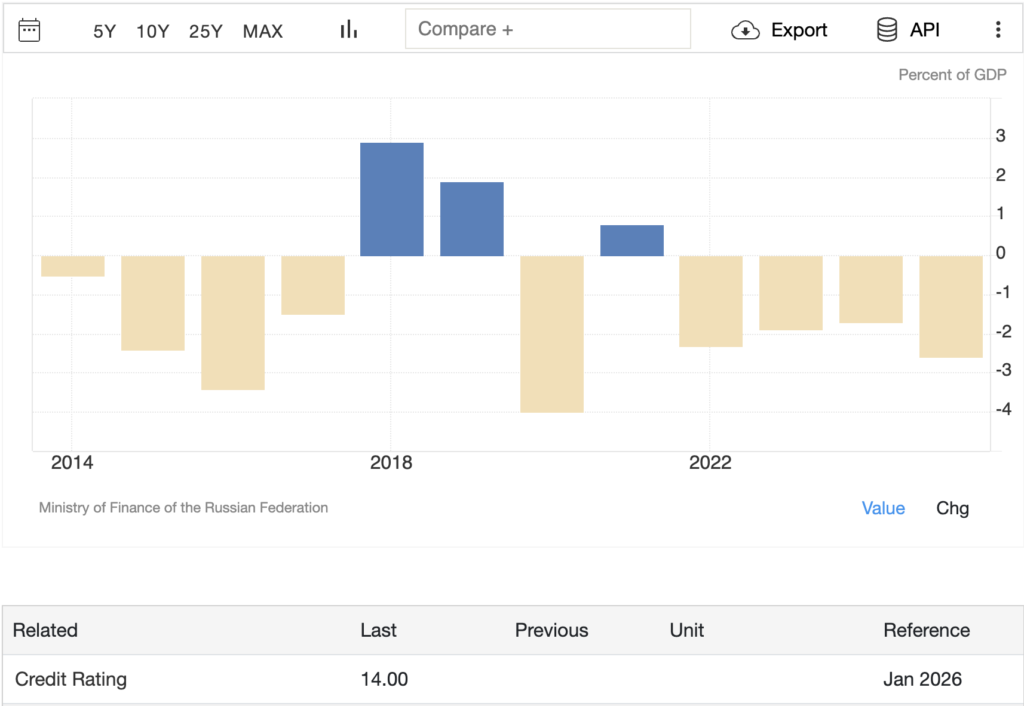
Military expenditure has become the anchor of Russia’s national budget. Defense and security outlays now dominate fiscal priorities, absorbing resources that once supported infrastructure, healthcare, and education.
Rather than stimulus-driven growth, the government emphasizes guaranteed funding for arms production, logistics, and personnel. Civilian industries increasingly depend on defense-linked contracts, blurring the line between commercial activity and state-directed production.
Labor Shortages Force State Intervention
Russia’s labor market is under sustained strain. Mobilization, emigration, and demographic decline have created acute worker shortages across manufacturing, construction, and transportation.
In response, the state has expanded controls over hiring, wages, and workforce mobility. Firms tied to strategic industries receive preferential labor allocations, while others struggle to operate at capacity. Productivity gains remain limited, with shortages addressed through compulsion rather than innovation.
Recommended Article: Russia Institutionalizes Wartime Economy as Emergency Measures Become Permanent
Import Substitution Replaces Efficiency
Sanctions have not collapsed the Russian economy, but they have reshaped it. Import substitution policies are now permanent, even as they increase costs and reduce quality.
Parallel imports through third countries keep production running, but supply chains are longer, less reliable, and more expensive. The economy functions, but at lower efficiency, reinforcing a model that prioritizes endurance over competitiveness.
Consumer Economy Becomes Secondary
Household consumption plays a diminishing role in economic planning. Real income growth has slowed, and consumer choice has narrowed as imported goods disappear or rise sharply in price.
State messaging emphasizes patriotism and resilience, framing economic hardship as a necessary sacrifice. Welfare spending remains targeted, focused on politically sensitive groups rather than broad-based demand support.
Financial Controls Deepen
Capital controls and currency management remain central tools. The government actively steers credit toward favored sectors while limiting exposure to external financial shocks.
Russia’s banking system has adapted to isolation, but at the cost of transparency and flexibility. Financial institutions increasingly function as extensions of state policy rather than independent intermediaries.
Long-Term Risks of a Permanent War Economy
While Russia’s economy has avoided collapse, long-term risks are mounting. Aging infrastructure, declining productivity, and technological stagnation threaten future growth potential.
By locking itself into a wartime economic structure, Russia trades adaptability for control. The system is durable but brittle, capable of sustaining conflict while struggling to generate innovation or rising living standards.
What This Signals for 2026 and Beyond
Russia’s economic strategy in 2026 is no longer about stabilization or recovery. It is about sustaining confrontation at manageable cost.
This model may function in the short to medium term, but it narrows future options. Economic resilience is being achieved through rigidity, not renewal, leaving the country increasingly dependent on state direction and geopolitical isolation.