Strategic Competition Shapes Early 2026 Politics
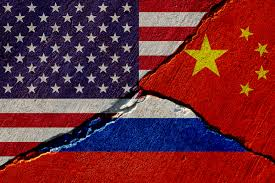
The opening months of 2026 have underscored how deeply strategic competition now defines global politics. Relations between the United States, Russia, and China continue evolving within a landscape marked by mistrust, economic pressure, and security concerns.
Rather than isolated disputes, tensions increasingly reflect systemic rivalry. Analysts describe the current phase as structural rather than temporary, according to international analysis.
United States Prioritizes Economic and National Security
Washington has further aligned economic policy with national security objectives. Supply chain resilience, technology leadership, and industrial capacity now sit at the core of U.S. strategic planning.
Trade policy and foreign investment reviews increasingly reflect this mindset. Officials frame these moves as defensive rather than confrontational, according to a recent government statement.
Russia Focuses on Strategic Endurance
Russia continues adapting to long-term geopolitical pressure through economic realignment and strategic autonomy. Energy exports, regional partnerships, and domestic production remain key pillars of resilience.
Moscow portrays endurance as a competitive advantage rather than a constraint. This narrative emphasizes sustainability over short-term gains, based on state-aligned reporting.
Recommended Article: Russia Locks In Wartime Economy as Temporary Controls Become Permanent…
China Balances Domestic Stability and Global Influence
China enters 2026 focused on stabilizing growth while preserving international influence. Policymakers pursue targeted stimulus measures alongside industrial policy support for key sectors.
At the same time, Beijing emphasizes diplomatic engagement across Asia, Africa, and Latin America. Observers note a renewed emphasis on soft power, according to foreign policy coverage.
Technology Emerges as a Central Battleground
Technology has become a primary arena for geopolitical competition. Export controls, semiconductor access, and artificial intelligence governance dominate negotiations among major powers.
These disputes blur traditional boundaries between commerce and security. Experts warn technological decoupling could accelerate fragmentation, as outlined in a strategic brief.
Multilateral Institutions Face Growing Strain
Global institutions face mounting pressure as power blocs pursue national priorities over collective solutions. Consensus-building has become increasingly difficult amid diverging strategic interests.
This erosion challenges the effectiveness of long-standing frameworks. Diplomats caution that institutional weakness may amplify instability, according to an international review.
Outlook for Global Stability in 2026
Despite rising tensions, outright conflict remains unlikely in the near term. Instead, competition is becoming normalized as a permanent feature of global politics.
The challenge for all sides lies in managing rivalry without escalation. Whether restraint prevails will shape the international order for years, according to expert commentary.