South Korea Positions Itself as a Global AI Leader
South Korea has taken a bold step into artificial intelligence governance by implementing what it describes as the world’s first comprehensive, fully enforced AI legal framework. The legislation reflects the government’s ambition to place the country alongside the United States and China as one of the world’s leading AI powers.
Officials argue that early regulation will provide clarity for businesses and build public trust in emerging technologies. By acting now, South Korea hopes to shape global norms rather than react to standards set elsewhere, positioning itself as a rule-maker in the AI era.
The AI Basic Act Sets New Compliance Standards
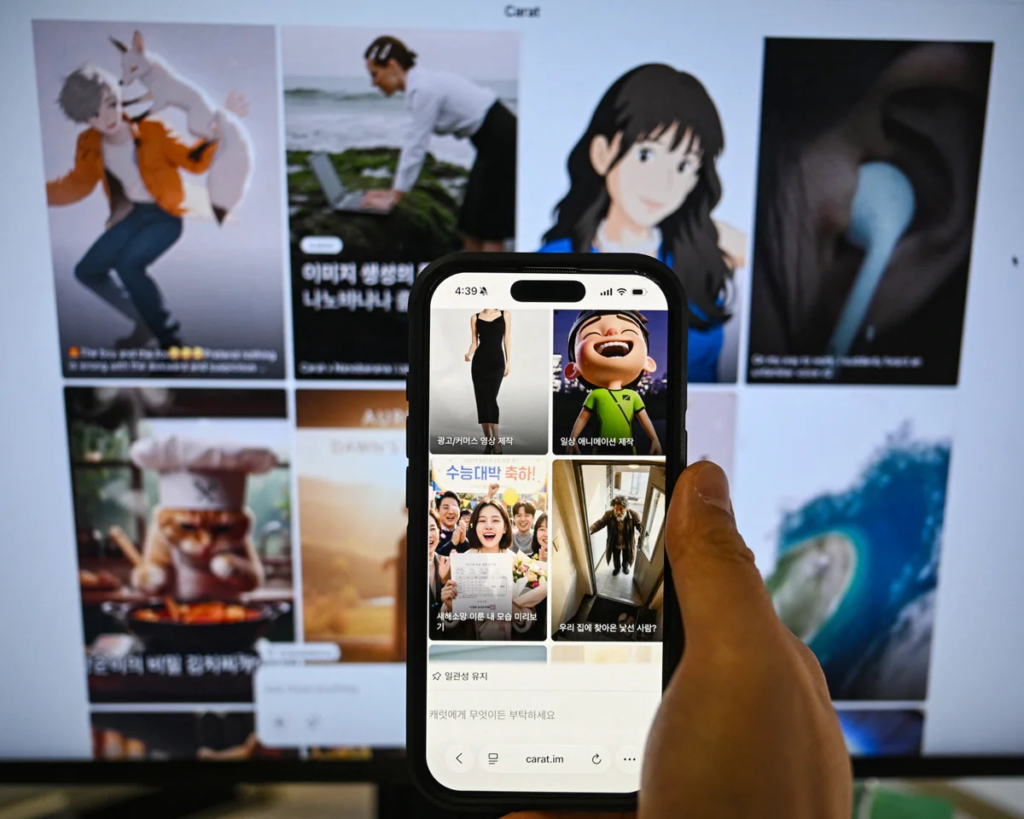
At the center of the reform is the AI Basic Act, which introduces obligations for companies offering AI services. Providers must label AI-generated content, apply digital watermarks to synthetic media, and ensure transparency for systems deemed “high-impact,” such as those used in healthcare, hiring, and financial decisions.
The law also requires risk assessments and documentation explaining how automated decisions are made. While penalties remain relatively modest, the framework establishes a legal baseline that few countries have attempted at a national level.
Recommended Article: Technology Faces Hard Limits as Energy, Security, and Regulation Converge
Startups Warn of Heavy Compliance Burdens
Local technology startups have emerged as some of the loudest critics of the new rules. Many argue that compliance requirements will disproportionately burden smaller firms that lack legal and administrative resources.
A survey by the Startup Alliance found that nearly all domestic AI startups felt unprepared for the new obligations. Entrepreneurs warn that early regulation could slow innovation and push talent abroad, particularly as competitors in the United States operate under looser frameworks.
Civil Society Says Protections Fall Short
While startups argue the law goes too far, civil society organizations claim it does not go far enough. Human rights groups have criticized the legislation for focusing on corporate compliance rather than protections for individuals harmed by AI systems.
Organizations such as Minbyun, a collective of human rights lawyers, argue that the law prioritizes “users” like hospitals and financial institutions, rather than citizens affected by algorithmic decisions. They also point to loopholes that allow companies to avoid classification as high-impact AI if a human is nominally involved.
Deepfakes and Public Trust Drive Urgency
South Korea’s move comes against a backdrop of rising concern over AI-generated content, particularly deepfakes. The country accounts for a disproportionate share of global victims of deepfake abuse, a fact that has intensified public pressure for action.
Scandals involving synthetic media shared on messaging platforms exposed gaps in existing laws and accelerated political momentum. Lawmakers viewed AI regulation as necessary not only for economic leadership, but also for protecting social stability and public trust.
A Different Path From the EU, US, and China
South Korea’s approach diverges sharply from other major AI jurisdictions. Unlike the European Union’s risk-heavy regulatory model, the market-driven frameworks favored by the United States and United Kingdom, or China’s state-centric oversight, Seoul has opted for a principles-based system.
Legal scholars such as Melissa Hyesun Yoon of Hanyang University describe the framework as “trust-based promotion and regulation.” The goal is to encourage innovation while establishing guardrails that can evolve over time rather than lock in rigid rules.
Global Tech Companies Face Uneven Rules
Another source of controversy lies in how the law treats foreign firms. While all domestic companies must comply regardless of size, only large foreign players such as Google and OpenAI face obligations under specific thresholds.
Critics argue this creates competitive imbalance, placing Korean startups at a disadvantage while global giants absorb compliance costs more easily. Supporters counter that the thresholds are necessary to avoid overburdening smaller international entrants.
Government Defends Flexible Enforcement
The Ministry of Science and ICT has defended the legislation as a living framework rather than a rigid rulebook. Officials have promised grace periods before penalties are enforced and ongoing revisions to clarify definitions such as “high-impact AI.”
The government maintains that roughly 80–90% of the law focuses on promoting industry rather than restricting it. By reducing legal uncertainty early, policymakers believe they can attract long-term investment and encourage responsible AI development.
What South Korea’s AI Law Signals Globally
South Korea’s experiment is being closely watched by governments, tech companies, and regulators worldwide. If successful, the framework could serve as a reference point for countries seeking balance between innovation and accountability.
If it fails, critics warn it may reinforce fears that early regulation stifles competitiveness. Either way, South Korea has forced the global AI debate out of theory and into practice. As artificial intelligence becomes embedded in everyday life, the country’s gamble highlights a central question facing policymakers everywhere: regulate now and adapt, or wait and risk losing control later.