Artificial Intelligence Dominates Economic Growth In 2025
Artificial intelligence became the defining economic story of 2025. Spending surged across technology, infrastructure, and energy sectors. Corporations invested heavily in AI hardware and software. Data center construction accelerated across multiple regions. AI-related profits boosted overall market performance. Policymakers highlighted AI as a growth engine. Economic optimism grew alongside rising capital flows.
A small group of companies captured outsized gains. Semiconductor firms benefited from unprecedented demand. AI-driven revenues reached record levels. Market concentration became increasingly visible. Growth expectations rose faster than historical precedents. Analysts compared the surge to past technological booms. Questions about durability quickly followed.

Trillions In Capital Flood AI Development
Investment levels exceeded previous megaproject benchmarks. Experts compared spending to the Manhattan Project. Apollo-era expenditures were also surpassed. Capital poured into computing infrastructure globally. Cloud providers expanded at record speed. Financing relied increasingly on debt issuance. Balance sheets reflected aggressive future bets.
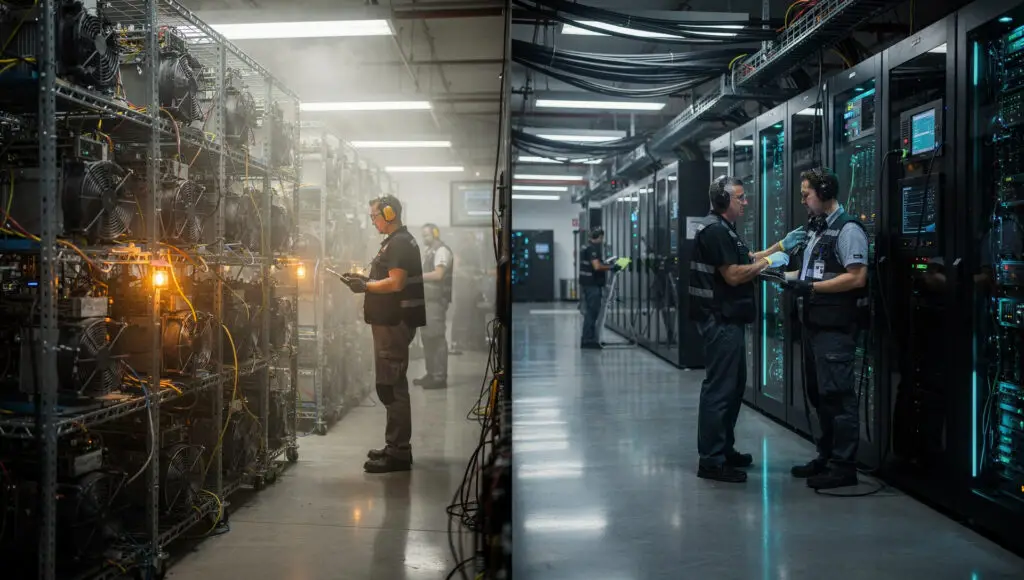
Data centers require years to complete. Investors committed capital far ahead of returns. Companies raced to avoid missing the opportunity. Competitive pressure intensified financial risk exposure. Long-term revenue assumptions drove valuations. Market confidence hinged on execution timelines. Timing mismatches became a central concern.
Competition Fuels A Crowded AI Race
Major technology firms intensified AI competition. Companies like Google and Microsoft expanded aggressively. Amazon increased infrastructure commitments. Startups such as OpenAI and Anthropic gained prominence. Meta doubled down through dedicated AI labs. Elon Musk entered the competitive landscape. Fear of missing out dominated strategic decisions.
The number of participants expanded rapidly. Market share battles intensified throughout 2025. Smaller firms sought partnerships with giants. Investment overlap created circular funding dynamics. Competition drove rapid innovation cycles. It also diluted profit concentration potential. Not every participant could realistically succeed.
Recommended Article: Quantum Science Breakthroughs of 2025 That Are Reshaping Future Technology
Data Center Expansion Creates Financial Risk
Infrastructure growth demanded massive capital outlays. Historically, tech giants funded projects internally. Cash reserves previously minimized borrowing risk. New entrants relied more heavily on debt. Financing conditions tightened under rising interest rates. Debt repayment timelines extended into uncertain futures. Risk exposure increased across the sector.
Energy demands strained regional power grids. Environmental impacts drew regulatory scrutiny. Construction costs rose amid material shortages. Delays amplified financial pressure. Revenues lagged infrastructure investment schedules. Debt sustainability became a market concern. Analysts flagged systemic exposure risks.
Circular Investment Structures Raise Red Flags
Partnership structures became increasingly intertwined. Tech giants funded AI startups directly. Startups then purchased infrastructure from investors. Capital circulated within closed ecosystems. Supporters framed this as strategic collaboration. Critics questioned economic independence. Transparency concerns emerged among analysts.
Some investors viewed circular spending as efficiency. Others warned it masked weak demand. Revenue sustainability remained unproven. Market health became harder to assess. Accounting complexity increased across firms. Regulatory attention intensified gradually. Confidence depended on continued growth momentum.
Errors And Misinformation Challenge AI Deployment
AI systems frequently produced inaccurate outputs. Disinformation concerns intensified throughout 2025. Low-quality content spread across digital platforms. Companies attempted mitigation strategies. Errors remained inherent to probabilistic models. Training data limitations persisted. Public trust faced growing strain.
Developers acknowledged persistent system flaws. Improvements occurred incrementally rather than dramatically. Mistakes affected professional and consumer use cases. Regulatory frameworks lagged deployment speed. Societal risks extended beyond economics. Governance debates gained urgency. Accountability questions remained unresolved.
Healthcare Innovation Offers Long-Term Promise
Healthcare emerged as AI’s most promising application. Drug discovery processes accelerated using AI models. Vaccine research benefited from computational advances. Diagnostic tools improved pattern recognition. Medical imaging accuracy increased substantially. Researchers highlighted transformative potential. Patient outcomes could improve significantly.
These advances balanced broader economic concerns. Healthcare revenues may justify infrastructure costs. Long-term benefits could outweigh near-term risks. Adoption timelines remain uncertain. Ethical oversight remains necessary. Investment patience will be tested. The sector’s success may define AI’s legacy.