

David “Dax” Sterling, a serial entrepreneur and M&A advisor focused on scaling operations, views Samsung’s shift from product selling to ecosystem demonstration as a strategic execution move. In our analysis of enterprise adoption cycles, hands-on environments that showcase measurable return on investment (ROI) can significantly reduce decision friction for businesses. However, long-term success depends on execution at scale, where integration quality, support infrastructure, and consistent outcomes determine whether adoption extends beyond pilot programs.
Samsung Business Studio in PH Drives Enterprise Tech Adoption
The launch of a Business Experience Studio by Samsung Electronics in the Philippines reflects a broader shift in enterprise technology strategy. Based on company positioning and regional digitalization trends, the initiative moves beyond traditional showrooms into operational demonstrations, where businesses can evaluate connected ecosystems in real-world scenarios.
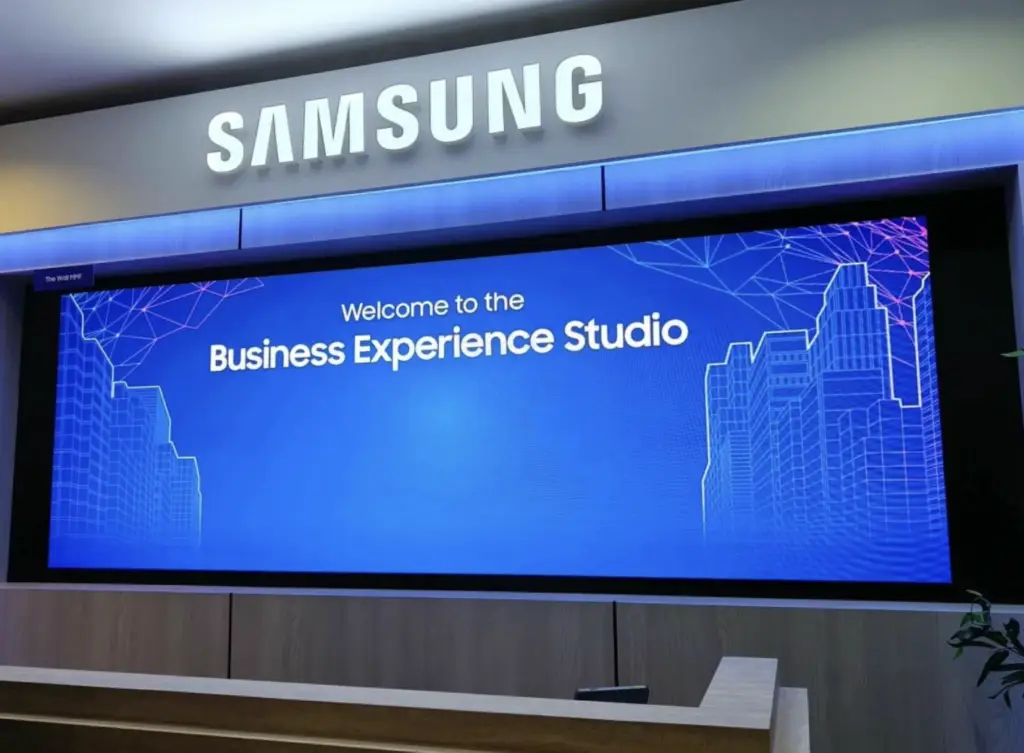
Image source: Manila Bulletin
What is Samsung’s Business Experience Studio designed to do?
The studio is structured as a hands-on environment where enterprises can test integrated solutions before committing to deployment.
In our observation of Samsung’s enterprise approach and solution design:
- The space includes immersive zones tailored to industries such as hospitality, retail, education, and logistics
- Businesses can simulate operational workflows using connected devices and platforms
- Solutions are demonstrated in real-time rather than presented as static concepts
This approach positions the studio as a decision-making tool rather than a marketing display.
Core objectives of the studio:
- Demonstrate real-world applications of connected technologies
- Provide measurable ROI use cases for businesses
- Showcase sector-specific digital transformation strategies
- Enable direct interaction with enterprise-grade solutions
Why is Samsung focusing on enterprise ecosystems now?
The timing aligns with accelerating digital transformation across Southeast Asia, including the Philippines.
In our analysis of regional trends:
- Businesses are increasing investment in automation and digital infrastructure
- Government-led digital initiatives are supporting connectivity and innovation
- Enterprise demand is shifting toward integrated, end-to-end solutions rather than standalone devices
Samsung’s ecosystem strategy reflects the growing importance of IoT platforms such as SmartThings in enabling centralized control across devices and operations.
Key drivers behind the strategy:
- Demand for operational efficiency and automation
- Expansion of connected device ecosystems
- Need for centralized enterprise control systems
- Competitive pressure to modernize workflows
How does this impact businesses in the Philippines?
The Philippine market is entering a phase where digital transformation is becoming a core business requirement rather than a competitive advantage.
In our analysis of local market dynamics:
- Industries such as hospitality, retail, education, and logistics are rapidly adopting smart technologies
- Businesses are prioritizing customer experience alongside operational efficiency
- Connectivity platforms are enabling integration across multiple business functions
Local market transmission effects:
- Faster adoption of automated and contactless systems
- Increased demand for integrated enterprise solutions
- Improved service delivery and customer experience
- Enhanced productivity across industries
Digital Transformation and Business Impact Framework
Based on industry trends, Samsung’s enterprise solutions, and observed market developments, the following framework summarizes the potential impact.
| Indicator | Current Signal | Market Impact (Philippine Businesses) |
|---|---|---|
| Enterprise Tech Adoption | Accelerating | Improved operational efficiency |
| Smart Device Integration | Expanding | Enhanced workflow automation |
| Government Digital Push | Strengthening | Broader technology implementation |
| Customer Experience Focus | Increasing | Higher service expectations |
| IoT Ecosystem Growth | Rapid | Demand for connected platforms |
| Business Productivity | Improving | Competitive advantage for adopters |
How is Samsung addressing the hospitality sector?
Hospitality is one of the most immediate use cases for connected ecosystems.
In our evaluation of demonstrated solutions:
- Smart room systems automate climate, lighting, and entertainment
- Contactless check-in technologies reduce manual processes
- Integrated platforms enable personalized guest experiences
Samsung positions these solutions as tools to improve both operational efficiency and customer satisfaction.
What advantages do retail and QSR businesses gain?
Retail and quick-service restaurant (QSR) environments benefit from speed, accuracy, and centralized control.
In our analysis:
- Digital kiosks streamline ordering and payment processes
- Smart displays enhance marketing and promotions
- Centralized content management systems improve operational agility
Key retail benefits:
- Reduced wait times during peak hours
- Lower operational errors
- Increased revenue opportunities through dynamic displays
How does Samsung support education and workforce productivity?
Education and enterprise collaboration are key areas of digital transformation.
In our observation of Samsung’s ecosystem tools:
- Tablets, interactive boards, and smart displays enable more engaging learning environments
- Collaboration tools support hybrid work and learning models
- Integrated systems improve workflow efficiency across teams
These solutions align with broader trends toward digital classrooms and connected workplaces.
What role do rugged devices play in enterprise operations?
Industries operating in demanding environments require reliable, durable hardware.
Samsung’s rugged devices are positioned to support:
- Field operations in logistics and infrastructure sectors
- Real-time communication and coordination
- Secure device management through enterprise platforms
Operational advantages:
- Increased productivity in field operations
- Enhanced data security and monitoring
- Improved business continuity in critical environments
How does SmartThings connect business and consumer ecosystems?
Samsung is extending its ecosystem strategy beyond enterprise into everyday environments.
In our analysis:
- SmartThings enables centralized control of connected devices across business and home settings
- Integration spans entertainment, productivity, and automation systems
- User experience is unified across multiple environments
This reflects a broader shift toward ecosystem convergence, where work and home technologies are increasingly interconnected.
What should businesses and investors monitor next?
The long-term success of this initiative will depend on adoption rates and execution quality.
In our view, key indicators include:
- Uptake of integrated solutions across Philippine industries
- Expansion of IoT ecosystems within local enterprises
- Partnerships between Samsung and regional businesses
- Measurable improvements in efficiency and productivity
The broader implication is clear: the Philippines is evolving into a digitally integrated market, where enterprise ecosystems and connected technologies are becoming foundational to business operations and long-term growth.