

Elena Chen, a blockchain developer and DeFi security auditor who has worked with Ethereum Layer-2 systems and DAO governance, sees this coming together as an important stress test for how crypto regulations will change in the future. She says, “From a protocol and governance point of view, the overlap between policy formation and direct market participation creates risks that aren’t obvious on the surface.” “Regulation controls how money moves into systems, but when important people are affecting both infrastructure and policy direction at the same time, it creates feedback loops that need a lot more openness and scrutiny.”
US Crypto Legislation Advances as Trump Ventures Grow
U.S. lawmakers are moving closer to delivering comprehensive digital asset legislation, even as Donald Trump linked crypto ventures expand across multiple segments of the market. The convergence of regulatory progress and private sector involvement is drawing increased scrutiny, particularly as policymakers seek to balance market development with governance and conflict-of-interest considerations.
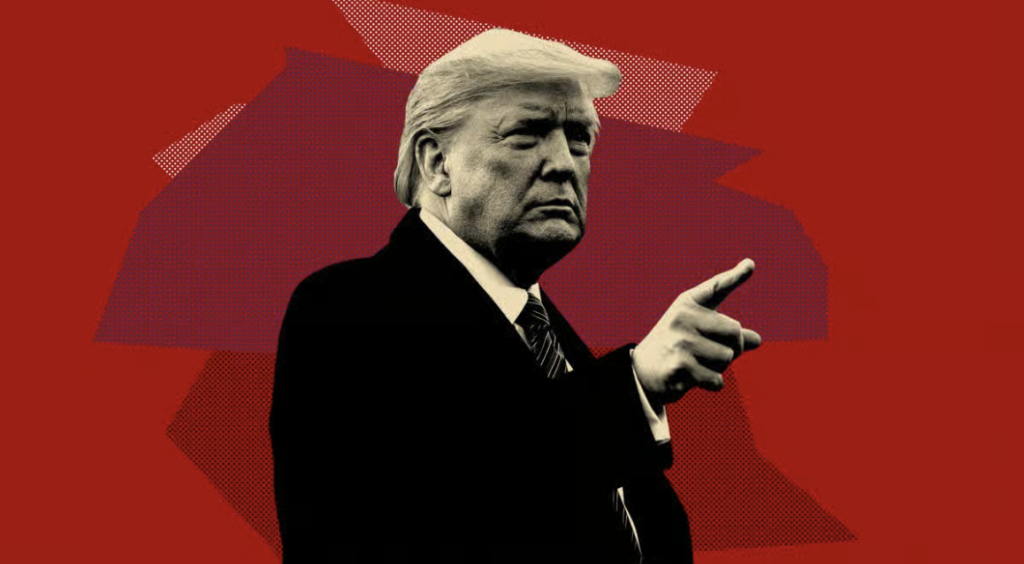
Image source: The Block
What is the timeline for US crypto legislation?
A clearer legislative pathway is emerging in Washington. According to statements from Tim Scott and Cynthia Lummis, lawmakers are targeting the release of a crypto market structure draft before the August recess, with committee markup expected in September. The effort involves coordination with advisers across the executive branch and builds on prior legislative proposals within U.S. Congress.
Policy discussions indicate that lawmakers aim to finalize key components of crypto regulation by the end of the third quarter. This accelerated timeline reflects increasing urgency to establish oversight in a market that has expanded beyond existing regulatory frameworks.
How are Trump-linked crypto ventures expanding?
Parallel to legislative developments, Trump-affiliated crypto initiatives are scaling operations. World Liberty Financial (WLF), a decentralized finance project associated with Trump, is preparing to launch a consumer-facing mobile application designed to simplify digital asset transactions and yield generation.
Key developments include:
- Planned rollout of a fintech-style mobile application
- Potential adjustments to the transferability of the WLFI governance token
- Expansion of user accessibility beyond crypto-native participants
Separately, American Bitcoin Corp (ABTC), a mining and treasury-focused entity, has raised more than $220 million in private funding, with a portion of capital reportedly contributed in Bitcoin. Market disclosures indicate that these ventures are targeting both retail and institutional segments.
What is driving activity around the USD1 stablecoin?
WLF’s USD1 stablecoin is gaining traction across decentralized finance platforms. Market data indicates that the asset has recorded 24-hour trading volumes exceeding $3 billion, supported by integrations with lending and staking protocols.
A third-party attestation conducted by Crowe LLP states that issued tokens are backed by government money market funds. This level of transparency aligns with regulatory expectations as stablecoins remain a central focus of oversight by the U.S. Securities and Exchange Commission and other agencies.
How will U.S. regulation shape crypto market growth?
The United States remains the largest capital market for digital assets, and regulatory clarity is widely viewed as a prerequisite for broader institutional participation. Policy developments under consideration could establish standardized compliance requirements for exchanges, issuers, and custodians.
Key implications include:
- Potential approval pathways for new crypto ETFs
- Increased participation from traditional financial institutions
- Greater clarity in compliance and reporting frameworks
At the same time, the overlap between political leadership and private crypto ventures introduces additional complexity. Analysts note that uncertainty around regulatory neutrality could influence investor sentiment in the near term.
What ethical concerns are being raised?
The expansion of Trump-linked crypto ventures has prompted debate among lawmakers. Some legislators have raised concerns about potential conflicts of interest, particularly in relation to policy decisions that could affect the valuation or operation of associated businesses.
Legislative efforts to introduce restrictions addressing these concerns have so far not advanced, leaving the issue unresolved as broader crypto regulation continues to progress.
How do House and Senate approaches differ?
While both chambers aim to advance digital asset regulation, their approaches differ in scope and structure. The Senate has progressed a stablecoin-focused bill, while the House has developed proposals covering both stablecoins and broader market structure reforms.
Recent legislative discussions suggest that these measures may move forward independently rather than as a unified package. While this approach could accelerate implementation timelines, it may also result in inconsistencies across regulatory frameworks.
What risks should the market consider?
Despite legislative progress, several risks remain for investors and institutions navigating the evolving regulatory landscape.
Key considerations include:
- Regulatory fragmentation between House and Senate proposals
- Policy uncertainty driven by political negotiations
- Conflict-of-interest concerns affecting regulatory credibility
- Market volatility linked to legislative outcomes
Additionally, the rapid expansion of crypto-related ventures may outpace regulatory safeguards, increasing exposure to operational and financial risks.
Market Snapshot: Policy and Industry Developments
| Factor | Current Status | Market Impact |
|---|---|---|
| Legislation Timeline | Target Q3 completion | Increasing clarity |
| Stablecoin Activity | Rising volume | Regulatory focus |
| Institutional Entry | Expanding | Positive |
| Political Risk | Elevated | Uncertain |
| Venture Growth | Accelerating | Mixed signals |
Regulation and expansion move in parallel
The U.S. digital asset market is entering a phase where regulatory development and private sector expansion are occurring simultaneously. Legislative progress may provide long-term clarity, particularly for institutional participants seeking regulated exposure to crypto assets.
However, the intersection of political influence and commercial activity introduces additional scrutiny that could shape both regulatory outcomes and market confidence. If effectively managed, the evolving framework may establish the United States as a leading jurisdiction for digital asset regulation while influencing global policy standards.