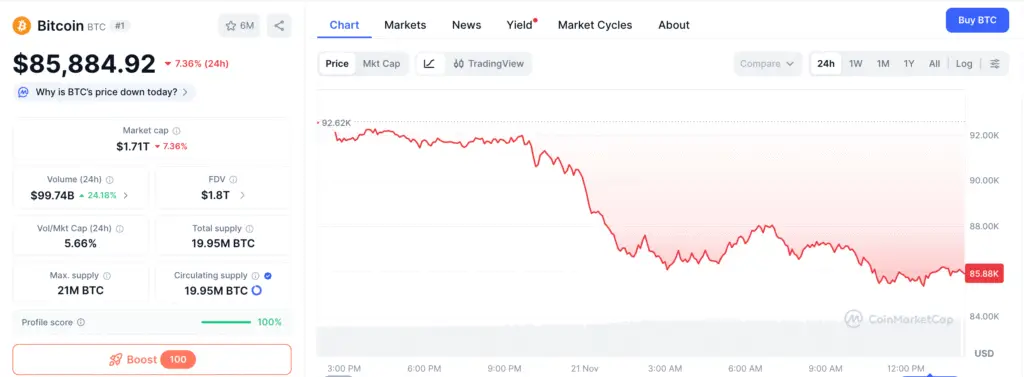
Bitcoin, the flagship cryptocurrency, has found a stability range between $75,000 and $87,000 according to analysts. This range is supported by technical indicators such as the 200-day Exponential Moving Average (EMA) and consistent trading volume patterns. Experts note that Bitcoin’s current price action suggests a cautious recovery from its recent correction.
Crypto strategist Altcoin Sherpa emphasized that the range represents a crucial support zone. He added that Bitcoin may need weeks or even months of consolidation before building momentum for a significant rebound. Analysts also point to the steady $2 billion in weekly ETF inflows as a stabilizing factor that shields the market from deeper declines.
Macroeconomic Trends Continue to Shape Bitcoin’s Market Dynamics
Macroeconomic indicators play an influential role in Bitcoin’s current stability. Weak employment data often fuels speculation about potential monetary stimulus, leading investors to view Bitcoin as a hedge. Conversely, strong job reports and rising interest rates tend to dampen enthusiasm for risk assets.
The strength of the U.S. dollar remains another pivotal factor. Bitcoin tends to gain when the dollar weakens, while a strong dollar suppresses its price performance. Meanwhile, institutional involvement provides liquidity, reducing volatility and maintaining stability within the established range. Inflation also remains a critical driver, influencing investor perception of Bitcoin as a store of value.
European Regulation Impacts SME Adoption of Bitcoin Investments
The Markets in Crypto-Assets Regulation (MiCA) is reshaping how small and medium-sized enterprises (SMEs) across Europe interact with digital assets. These new compliance standards allow cross-border operation under a single license but also impose strict anti-money laundering (AML) and consumer protection protocols.
The Digital Operational Resilience Act (DORA) and Crypto-Asset Reporting Framework (CARF) further demand robust cybersecurity and tax transparency from businesses. SMEs are advised to partner with licensed crypto service providers to navigate these requirements, ensuring regulatory compliance while expanding investment opportunities in Bitcoin.
Recommended Article: US Stocks Fall As Nvidia And Bitcoin Spark Investor Valuation…
Startups Face Challenges Paying Salaries in Bitcoin
The volatility of Bitcoin remains a major obstacle for startups exploring crypto-based payroll systems. Price fluctuations can erode employee compensation value between payment and withdrawal, creating financial uncertainty for staff.
To mitigate risks, many companies are shifting to stablecoins, pegged to fiat currencies for predictable value. Hybrid payroll models—combining Bitcoin holdings for investment and stablecoin use for salary distribution—are gaining traction as practical alternatives that balance innovation and financial stability.
Fintech Startups Leverage Bitcoin Trends to Attract Talent
Fintech startups are capitalizing on Bitcoin’s market trends to enhance recruitment and employee engagement. Offering partial Bitcoin payments appeals to tech-savvy professionals interested in digital asset exposure.
Firms are also integrating advanced payroll platforms supporting both fiat and crypto payments. Educational initiatives further help employees understand crypto salary options, while early adopters gain an advantage by aligning compliance strategies with evolving regulations. These practices allow startups to remain innovative while navigating a rapidly evolving crypto ecosystem.