Bitcoin Extends Its Decline as Traditional Equities Strengthen Sharply
Bitcoin continued falling in early December as investors shifted toward equities that demonstrated stronger and more stable performance. The cryptocurrency traded far below its record levels, highlighting renewed caution across digital asset markets facing persistent volatility.
The S&P 500 delivered gains exceeding sixteen percent this year, signaling a stark contrast with Bitcoin’s three percent decline. This divergence marked the first time since 2014 that stocks advanced while Bitcoin retreated during the same period.
Record Highs Fade Quickly After Billions in Liquidations Hit the Market
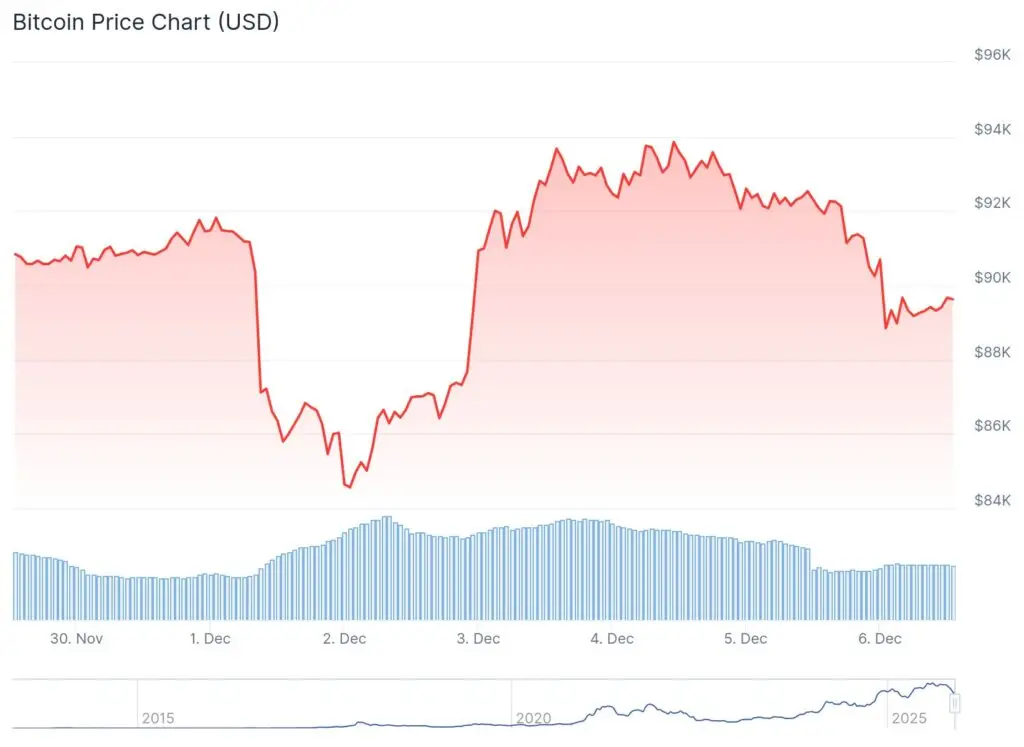
Bitcoin previously surged above one hundred twenty six thousand dollars earlier this year before undergoing a severe two-month collapse. Forced liquidations worth billions triggered cascading sell-offs that accelerated the downturn and strained investor confidence.
The asset fell below eighty five thousand dollars as leveraged positions evaporated and market structure weakened significantly. These liquidations contributed to a broad shift toward risk aversion across the entire crypto ecosystem.
ETF Inflows Slow Sharply as Investor Enthusiasm Begins to Cool
In recent weeks, inflows into Bitcoin exchange-traded funds slowed considerably as institutions reassessed market conditions. Analysts noted that reduced activity reflected declining conviction among investors previously driving large allocations into digital assets.
Prominent endorsements also quieted as financial markets signaled uncertainty around global liquidity trends. This combination of reduced inflows and cautious sentiment pressured Bitcoin further, reinforcing a broader narrative of weakening momentum.
Recommend Article: Bitcoin’s 36% Pullback Reflects Historic Volatility Patterns in Every Cycle
Key Price Indicators Suggest Growing Fragility in Bitcoin’s Market Structure
Bitcoin’s longest streak of daily highs recently reversed, signaling a loss of strength after months of sustained optimism. Technical indicators highlighted vulnerability as price action failed to regain previous support levels following multiple breakdowns.
Traders observed persistent lower highs and declining volume, which historically signaled bearish continuation patterns. These technical developments raised concern about Bitcoin’s near-term direction within an increasingly unstable environment.
Equities Outperform Digital Assets as Investors Embrace Relative Stability
The strong performance of traditional equities demonstrated investor preference for assets offering more predictable returns. Corporate earnings resilience and improving economic signals helped equities outperform despite broader macroeconomic uncertainty.
Compared with volatile crypto markets, equity benchmarks showed steadier upward trajectories that attracted risk-sensitive capital. Investors responded by rotating out of digital assets and into stocks positioned to benefit from strengthening fundamentals.
Major Financing Deals Shape Broader Market Sentiment and Capital Flows
Netflix secured a historic seventy two billion dollar agreement to acquire Warner Bros., marking a milestone within the entertainment sector. The company arranged fifty nine billion dollars in financing, representing one of Wall Street’s largest unsecured bridge loans.
The transaction signaled strong appetite for large-scale corporate deals, indirectly contrasting with shrinking risk tolerance toward cryptocurrencies. As capital concentrated in traditional sectors, digital assets faced diminished inflows and heightened competitive pressure.
Prediction Markets and Regulatory Tensions Add Complexity to Crypto Activity
A contentious dispute emerged within Polymarket regarding whether its United States platform had officially launched. Token holders voted yes, sparking backlash from traders who argued the decision prioritized interpretation instead of objective fact.
Because such votes determine high-value market outcomes, the conflict exposed fragility within decentralized arbitration systems. These governance uncertainties added another layer of risk during a period already defined by turbulence across crypto markets.