December 7, 2025 — Debate is intensifying over whether Bitcoin represents a modern-day financial bubble or a more durable technological breakthrough. The comparison to 17th-century tulip mania persists, yet analysts argue that Bitcoin’s long-term resilience sets it apart from historical speculative frenzies.
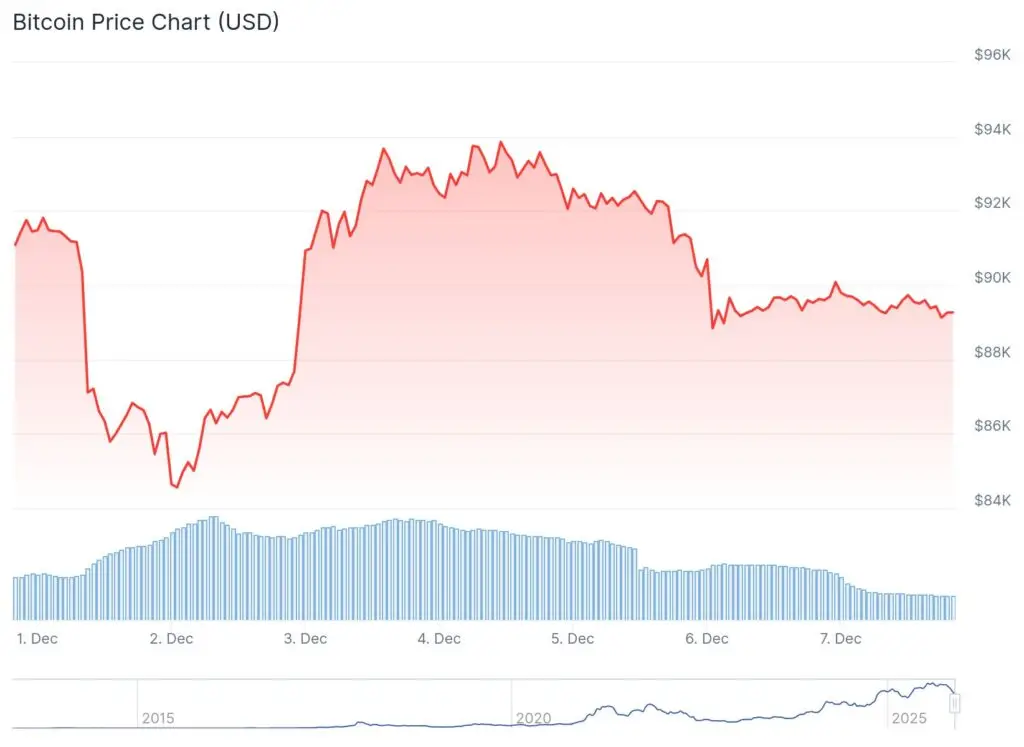
The Dutch tulip bubble saw prices crash by more than 90% after a brief surge. Bitcoin, however, has repeatedly rebounded from severe downturns over its 17-year lifespan, consistently reaching new all-time highs. This ability to recover has led many experts to question whether the tulip analogy oversimplifies a much larger financial evolution.
Psychological Drivers Behind the Tulip Comparison
Psychology plays a major role in why critics frequently compare Bitcoin to tulips. Speculative mania and herd behavior mirror early Bitcoin surges, when investors rushed into the asset based on hype rather than underlying utility.
Media influence further reinforces the comparison. Dramatic headlines create lasting narratives, making extreme price movements memorable and contributing to availability bias.
Fear of missing out also fuels aggressive investment behavior. Rapid gains can lead to overconfidence, while skeptics lean on confirmation bias, citing tulip mania to support the belief that Bitcoin is irrational speculation.
How Market Perception Shapes Crypto Adoption in Fintech
Public sentiment directly affects how fintech companies approach Bitcoin integration. Positive perception accelerates adoption, while uncertainty around volatility and regulation slows momentum.
Research shows risk perception as a key barrier. Many consumers cite lack of knowledge and fear of losses. Fintech firms that emphasize security and education tend to build greater trust.
Perceived usefulness strongly influences adoption. In markets with clear regulatory frameworks, crypto payment solutions gain traction faster. In emerging markets, behavioral biases often play a larger role in driving interest.
Recommended Article: Bitcoin Recovery Hopes Rise as Coinbase Highlights December Market Shift
Regulatory Shifts and Bitcoin’s Long-Term Stability
Bitcoin’s stability is heavily influenced by evolving global regulation. Inconsistent rules across jurisdictions have historically amplified volatility, creating uncertainty for traders and institutions.
Efforts to regulate stablecoins, exchanges, and custody services are underway, but incomplete frameworks continue to contribute to market instability. As traditional financial institutions deepen their involvement, concerns grow about potential contagion during broader financial stress.
Despite these risks, Bitcoin has not yet posed systemic threats to global markets. Regulatory oversight has so far contained volatility within the crypto ecosystem itself.
Lessons From Bitcoin’s Resilience for Crypto Payroll Systems
Bitcoin’s ability to withstand repeated downturns offers insights for companies designing crypto payroll solutions. Security, decentralization, and transparency—hallmarks of Bitcoin’s architecture—can inform more efficient payment structures for SMEs.
Blockchain transparency strengthens accountability between employers and employees. Decentralization reduces reliance on singular service providers, enhancing operational resilience.
However, managing volatility remains essential. Payroll platforms must incorporate instant conversion to fiat or stablecoins to ensure predictable compensation. Compliance with emerging regulations is equally critical for long-term sustainability.
The Unique Role of Transparency and Predictability
Bitcoin’s predictable monetary structure—its fixed supply and transparent issuance schedule—contributes to long-term confidence. Payroll platforms can adopt similar principles by prioritizing clarity in payment workflows, transaction logs, and conversion mechanisms.
Increasing transparency also helps companies build trust with employees who may be unfamiliar with crypto-based compensation systems.
A Digital Asset Beyond Historical Analogies
Bitcoin’s evolution makes the tulip comparison increasingly insufficient. While both saw periods of intense speculation, Bitcoin’s technological utility, global adoption, and capacity for long-term recovery set it apart.
The cryptocurrency now stands at the intersection of innovation and financial disruption. Its future success will depend on regulatory clarity, public perception, and continued technological advancement.
For now, Bitcoin remains a volatile yet resilient digital asset—one that challenges both traditional markets and historical analogies as it continues to reshape global finance.