

Emergency Economic Controls Become Permanent Policy
Russia’s economic model in 2026 no longer resembles a temporary response to conflict. What began as emergency controls following the invasion of Ukraine have hardened into a permanent governing framework. Fiscal policy, industrial planning, and labor allocation are now explicitly structured around sustaining a long-term war economy rather than restoring prewar normalcy.
This shift reflects a strategic calculation by the Kremlin: survival and endurance matter more than efficiency or growth. Rather than preparing for reintegration into global markets, policymakers are designing an economy capable of functioning indefinitely under pressure.
Militarized Budgeting Redefines State Priorities
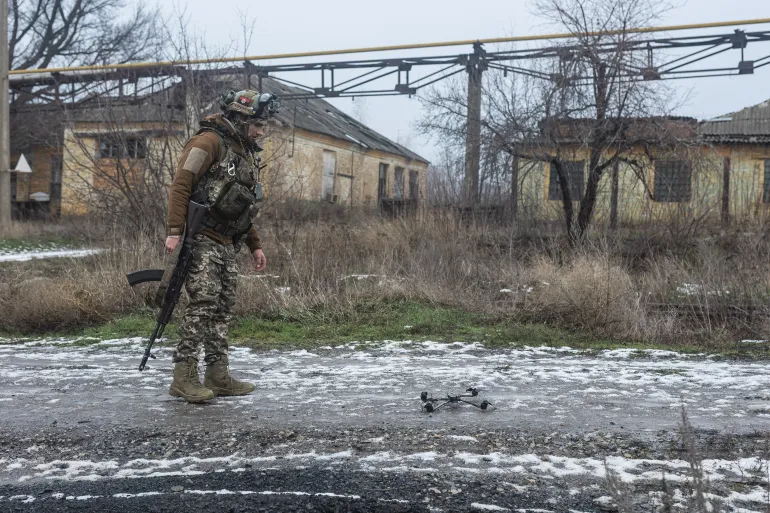
Defense and security spending now anchor Russia’s federal budget. Military production, logistics, and internal security receive priority funding, while civilian programs face tighter constraints. This budgeting structure locks in long-term contracts for arms manufacturers, transport firms, and energy suppliers tied to the war effort.
The result is predictability for strategic industries but shrinking flexibility elsewhere. Education, healthcare, and regional development are increasingly subordinated to national security objectives. The budget signals that war is not a phase to be exited, but a condition to be managed.
Labor Shortages Drive State-Directed Workforce Controls
Russia’s labor market is under severe strain. Mobilization, demographic decline, and emigration have reduced the available workforce, particularly among younger and skilled workers. In response, the state is intervening directly to steer labor toward priority sectors.
Wage incentives, legal obligations, and targeted recruitment programs are pushing workers into defense manufacturing, transport, and infrastructure. Civilian employers struggle to compete, reinforcing the economy’s tilt toward military-linked production. Rather than encouraging productivity gains through innovation, the system relies on coercion and allocation.
Recommended Article: Russia Tightens Economic Controls as War Economy Becomes Permanent
Industrial Policy Shifts Toward Command-Style Production
Industrial policy has become increasingly explicit. The government is setting output targets, guaranteeing demand, and directing investment into strategically important factories. Market signals play a secondary role to political necessity.
This approach reduces exposure to external shocks and sanctions disruptions, but at a cost. Inefficient production lines are kept alive for strategic reasons, not competitiveness. Over time, this erodes incentives for innovation and locks the economy into aging technologies.
Sanctions Become a Baseline Assumption
Western sanctions no longer dominate economic debate inside Russia. Instead, they are treated as a permanent condition baked into planning assumptions. Import substitution, parallel trade routes, and reliance on a narrower set of external partners have become normalized.
Rather than seeking reintegration, Russia is adapting to partial isolation. Economic resilience is defined by survivability, not openness. This mindset further justifies centralized control and reduces pressure for reform.
Household Stability Masks Structural Stagnation
For ordinary Russians, the war economy produces a mixed reality. Employment remains high due to labor shortages, but real incomes face pressure from inflation, limited consumer choice, and declining public services. The state offsets dissatisfaction through targeted benefits for military families and strategic workers.
This selective redistribution helps maintain political stability while concealing broader stagnation. Growth is uneven and increasingly dependent on defense-related activity rather than consumer demand or private investment.
Reshaping the Economy, Not Stabilizing It
Under Vladimir Putin, economic policy has become an extension of national security doctrine. The objective is not stabilization in the conventional sense, but endurance. The system is being reshaped to sustain confrontation indefinitely, even if that means accepting lower growth and declining productivity.
This model may prevent short-term collapse, but it entrenches long-term weakness. Reversing a permanent war economy would require political change, fiscal reorientation, and reintegration into global systems—none of which appear imminent.
Long-Term Risks Accumulate Beneath the Surface
A permanent war economy carries compounding risks. Aging infrastructure, shrinking human capital, and constrained innovation threaten Russia’s future competitiveness. Yet these costs are deferred in favor of immediate strategic objectives.
Russia in 2026 is not stabilizing—it is hardening. The economy is being engineered to withstand pressure, not to prosper once it ends.