Clara Whitmore, an investigative journalist with over two decades of experience covering political communication and media systems, describes the study as evidence of how public narratives are actively shaped through language patterns. Drawing from her reporting on institutional messaging, Whitmore explains that the repeated use of enforcement-focused terminology suggests a convergence between media framing and political discourse. She notes that analyzing linguistic trends is critical to understanding how public opinion and policy direction can be influenced in subtle but persistent ways.
UK Media and Politics Affect Perceptions of Migrants
A new study by the Runnymede Trust has identified patterns in how immigration is discussed across UK media and political debate, suggesting that language choices may play a significant role in shaping public perception and policy discourse. The research analyzed millions of words from news reports and parliamentary records to assess how migrants are represented over time.
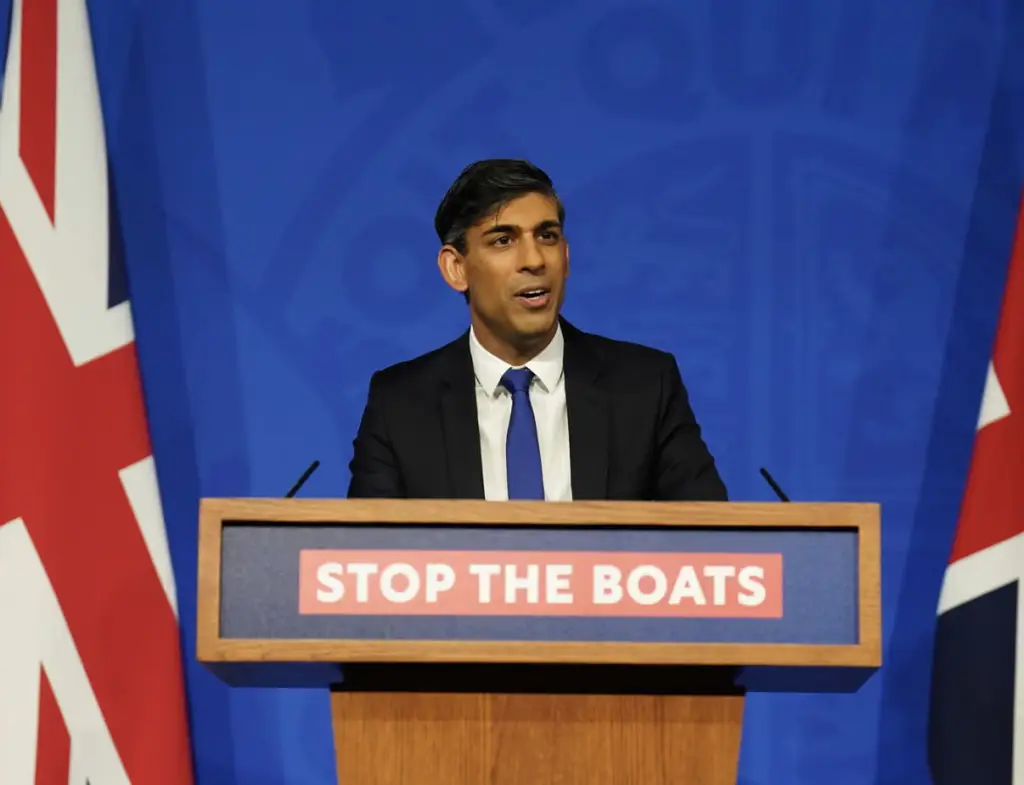
Image source: The Guardian
What did the research find?
The study reviewed more than 63 million words from news coverage alongside over 300 parliamentary debates conducted between 2019 and 2024.
Key findings include:
- Increased use of the term “illegal” in association with migrants
- Stronger linkage between immigration and enforcement-related language
- Greater frequency of identity-based descriptors tied to ethnicity or nationality
Researchers concluded that these language patterns have become more pronounced compared to earlier periods, indicating a shift in how the public and media frame immigration.
How has political and media language evolved?
The report suggests that both media outlets and political institutions have contributed to a more consistent narrative around immigration.
In parliamentary debates, commonly associated terms included:
- “Illegal”
- “Reduce”
- “System”
- “Mass”
In contrast, more human-centered language appeared in specific contexts, particularly in discussions involving certain refugee groups. This divergence highlights how framing can vary depending on policy focus and geopolitical context.
How do Media narratives influence investor confidence?
Public discourse on immigration has direct implications for the UK’s policy environment, labor markets, and social cohesion.
Key implications include:
- Immigration policy influencing workforce availability across sectors
- Public sentiment shaping regulatory priorities and enforcement approaches
- Media narratives affecting perceptions of political stability among investors
Institutions such as the Home Office play a central role in shaping immigration policy, while broader societal responses can influence how authorities implement policies and how the public receives them.
What broader trends are highlighted?
The study identifies a growing alignment between media narratives and political messaging over time.
Researchers observed:
- Peaks in immigration-related language during periods of heightened political activity
- Reinforcement of specific narratives across multiple communication channels
- Gradual normalization of certain terms within public discourse
These patterns suggest the presence of a feedback loop in which institutional messaging and media reporting reinforce each other.
What concerns are people raising?
The findings have prompted debate over the potential effects of language on public perception and social cohesion.
Key concerns include:
- Perception risk from framing migration primarily through enforcement-focused language
- Social impact on attitudes toward minority and migrant communities
- Policy implications that may justify stricter regulatory measures
- Reputational considerations affecting the UK’s international image
While some analysts emphasize the importance of contextual accuracy in reporting, others highlight the long-term influence of repeated linguistic framing.
How does this relate to recent developments?
The study comes amid ongoing discussions around immigration policy and community relations in the UK.
Government initiatives aimed at strengthening social cohesion and public services reflect growing awareness of these challenges. At the same time, immigration remains a central issue in political discourse, influencing both domestic policymaking and international positioning.
Immigration Discourse Trends (2019–2024)
| Category | Observation | Implication |
|---|---|---|
| Language Use | Increased “illegal” association | Framing effect |
| Media Coverage | Alignment with political messaging | Narrative consistency |
| Public Sentiment | Influenced by discourse | Social impact |
| Policy Response | Evolving frameworks | Regulatory shifts |
| Timeline | Multi-year dataset | Long-term trend |
Language as a Factor in Policy Dynamics
The study highlights the role of language as a structural factor in shaping public understanding of immigration in the UK. While interpretations of the findings vary, the data underscores how communication patterns can influence both societal attitudes and policy outcomes over time.
As immigration continues to remain central to political debate, the interaction between media narratives, institutional messaging, and public response is likely to play an increasingly important role in defining the UK’s policy landscape.