Clara Whitmore, an investigative journalist with decades of experience covering state power, civil unrest, and legal enforcement, describes the arrests as a potential inflection point in how the UK applies its security laws. Drawing from her reporting on protest movements and institutional response, Whitmore explains that the use of terrorism legislation in this context represents a significant escalation in legal enforcement. She notes that the scale and application of such measures will likely face sustained scrutiny to assess whether they align with democratic norms and international legal standards.
Mass Arrests at London Protest Intensify UK Policy Debate
UK authorities arrested hundreds of demonstrators in London during a protest opposing the government’s decision to ban Palestine Action under anti-terror legislation. The scale of enforcement has intensified debate over the balance between national security policy and civil liberties.
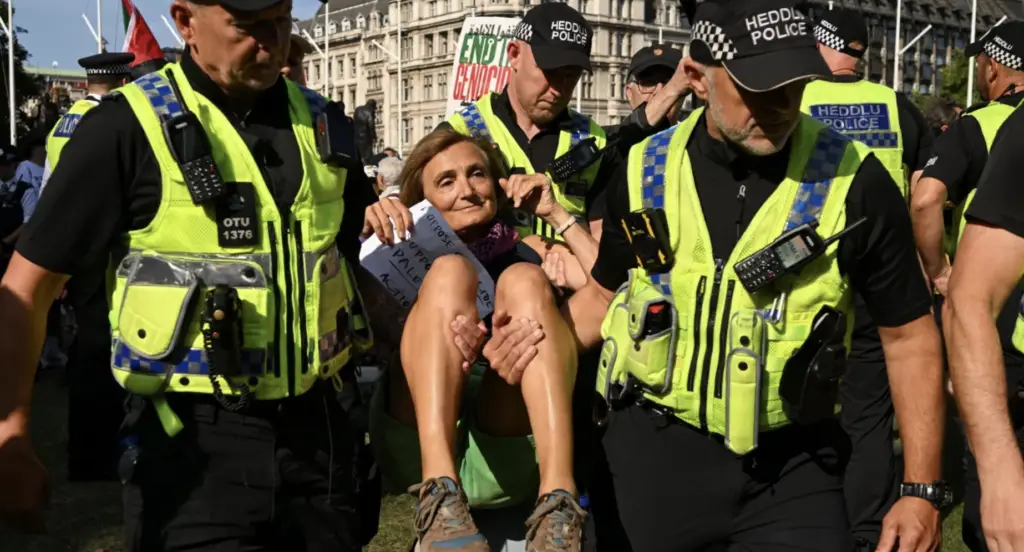
Image source: BBC
What happened during the protest?
Police detained at least 450 individuals during a demonstration in Parliament Square. The Metropolitan Police carried out the arrests, with officers from across the country supporting the operation.
Key developments included:
- Arrests beginning shortly after midday
- Total detentions exceeding 460 by evening
- Demonstrators displaying placards expressing support for the banned group
The scale of arrests represents one of the largest enforcement actions in recent UK protest activity.
Why was the group banned?
The UK government designated Palestine Action as a proscribed organization under anti-terror legislation in July 2025.
The decision followed an incident involving damage to military aircraft at an airbase, which authorities attributed to the group’s activities. Under UK law:
- Membership or support for a proscribed organization is a criminal offense
- Violations can carry penalties of up to 14 years in prison
This designation marks a relatively rare application of terrorism legislation to a direct action organization.
How do Protest laws impact UK policy and regulation?
Developments in protest enforcement and legal classification can influence the UK’s regulatory environment, institutional credibility, and broader policy landscape.
Key implications include:
- Legal frameworks affecting perceptions of rule of law
- Public demonstrations influencing policy direction and legislative review
- International scrutiny shaping diplomatic and regulatory positioning
Institutions such as the Home Office play a central role in enforcing and reviewing these measures.
What concerns have been raised by institutions?
Several international and civil society organizations have raised concerns regarding the proportionality of the enforcement response.
The United Nations Human Rights Office described the ban as potentially excessive, while Amnesty International warned that mass arrests linked to protest activity could conflict with international legal standards.
Key concerns include:
- Potential restrictions on freedom of expression
- Legal thresholds for terrorism-related offenses being tested
- Precedents that may affect future protest rights
Authorities have not indicated immediate revisions to the policy.
How does this compare historically?
The number of arrests exceeds figures recorded during several major past protests, including unrest linked to the 1990 poll tax demonstrations.
Recent developments also indicate:
- Continued weekly demonstrations following the ban
- Increased enforcement under anti-terror legislation
- Growing legal challenges to the designation
A High Court review has been approved to examine the legality of the proscription.
What risks and implications should be considered?
The situation presents several legal, political, and institutional risks.
Key considerations include:
- Legal risk from ongoing judicial review proceedings
- Reputational risk tied to international scrutiny
- Operational risk affecting law enforcement and judicial capacity
- Policy risk involving potential revisions to protest and security laws
Additionally, large-scale enforcement actions may strain system capacity, particularly within detention and court processes.
Protest Enforcement and Policy Impact
| Factor | Current Status | Implication |
|---|---|---|
| Arrests | 450+ | High enforcement level |
| Legal Status | Proscribed organization | Strict penalties |
| Judicial Review | Approved | Legal uncertainty |
| Institutional Response | Critical | Policy scrutiny |
| Protest Activity | Ongoing | Sustained pressure |
Enforcement Action Raises Broader Policy Questions
The large-scale arrests linked to the protest highlight the complexity of balancing national security objectives with civil liberties in the UK. While authorities emphasize the legal basis for enforcement, the scale and context of these actions have intensified debate over proportionality and rights protections.
As legal challenges progress and public discourse evolves, the outcome may influence how authorities apply anti-terror legislation in future protest-related cases, shaping both domestic policy and international perceptions of the UK’s legal framework.