Global Leaders Convene in Manila to Review Progress on Nuclear Solutions
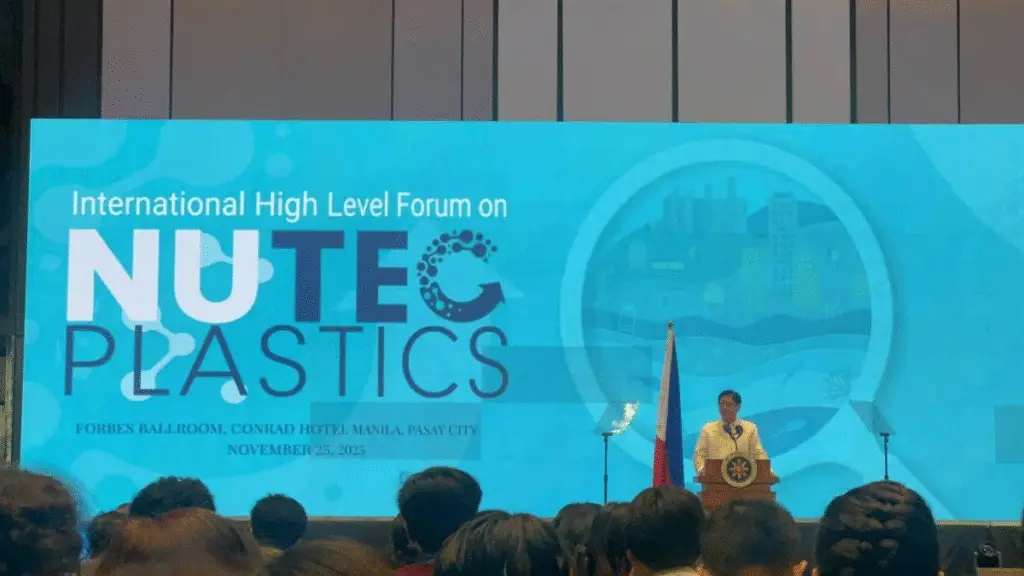
Global policymakers and scientists gathered in Manila to assess progress under the NUTEC Plastics initiative, a program launched by the IAEA in 2020 to combat global plastic pollution. The meeting highlighted the scale of the environmental challenge, with more than twenty million tonnes of plastic entering aquatic systems every year.
Delegates emphasized that nuclear science is increasingly vital in tackling pollution at both structural and microscopic levels. The forum showcased solutions focused on detection, monitoring, and upcycling, providing governments with new tools to reduce waste and strengthen environmental resilience.
Nuclear Technologies Support Pollution Reduction Through Two Major Pathways
NUTEC Plastics operates through two complementary strategies designed to address plastic waste comprehensively. The first strategy focuses on monitoring and assessment by using nuclear-derived tools to track microplastics across marine ecosystems.
The second strategy applies radiation-based processes to upcycle plastic waste into durable materials. These technologies help countries convert environmental liabilities into commercially viable products, supporting a transition toward circular economies.
Advanced Imaging Tools Reveal Microplastics Invisible to Conventional Methods
Nuclear imaging techniques allow scientists to detect microplastics that are as small as one thousandth of a millimeter. These tools offer precision unavailable through traditional laboratory methods. Researchers use radiotracers to determine how particles migrate through water, sediment, and living organisms.
Studies conducted under NUTEC Plastics have documented microplastics inside seafood and even within developing marine animals such as shark embryos. These findings help policymakers understand how plastic pollution affects food chains and human health.
Recommended Article: China’s County-Level Growth Model Offers Framework for Sustainable Development
International Sampling Missions Strengthen Global Capacity for Microplastic Research
IAEA experts conducted sampling missions in Antarctica and the Galápagos Islands to study microplastic presence in remote environments. These missions confirmed that even isolated ecosystems now show signs of contamination.
More than one hundred laboratories worldwide now participate in the NUTEC Plastics Global Marine Monitoring Network. Over four hundred scientists have been trained to analyze microplastics, improving global capacity to collect data and support evidence-based environmental policies.
Radiation Technology Enables Countries to Transform Waste Into Useful Products
Radiation-induced processes allow countries to sort plastic waste more effectively and convert it into construction materials, fuels, or industrial additives. These applications reduce landfill volume while creating products with commercial and community value.
In the Philippines, radiation-assisted upcycling has supported production of low-cost housing materials. Other countries have adopted similar practices using electron-beam technology to reinforce plastics, produce synthetic fuels, or manufacture resilient building components.
Public–Private Partnerships Strengthen Innovation Across Multiple Industries
NUTEC Plastics encourages collaboration between governments, research institutions, and private companies to ensure scientific advances translate into real-world applications. These partnerships have enabled several countries to develop commercially scalable recycling technologies.
Examples include Argentina’s recycled-plastic railway sleepers, China’s conversion of polyolefin waste into industrial wax, Indonesia’s weather-resistant roofing materials, and Malaysia’s transformation of PTFE waste into industrial additives. These innovations showcase how nuclear applications support local industries.
Circular Economy Strategy Drives Nations Toward Cleaner and Greener Production
The IAEA introduced a Circular Economy Assessment Platform to help countries evaluate the viability of integrating electron-beam technologies into recycling operations. This platform supports national planning and accelerates the shift toward sustainable resource management.
The agency also unveiled its Transportable E-beam System, a mobile unit designed to support research, training, and industrial demonstrations. Fifty-three Member States are currently adopting structured development plans to scale nuclear-based solutions from laboratory prototypes to industrial facilities.