


Senate Vote Collapses as Shutdown Deadline Nears
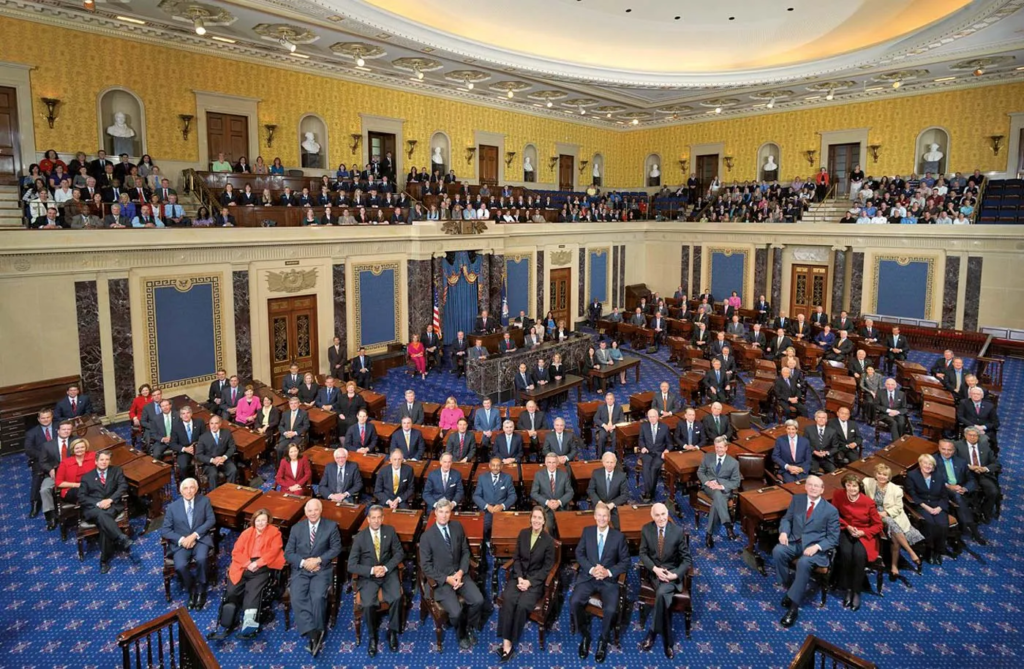
The United States edged closer to a partial government shutdown after the United States Senate rejected a procedural vote intended to advance a critical funding package. The failed vote stalled legislation that would finance more than three-quarters of federal government operations.
With the deadline looming, lawmakers acknowledged that a shutdown could begin within days unless an agreement is reached. The breakdown underscores deep divisions in Washington, where even routine funding measures have become vehicles for broader political confrontation.
Immigration Policy Sparks Democratic Resistance
Democratic senators blocked the vote to protest the immigration policies advanced by Donald Trump since his return to office. The immediate dispute centers on funding for the Department of Homeland Security, which oversees border enforcement and immigration operations.
Democrats demanded tighter oversight and restrictions on enforcement practices, arguing that unchecked funding would endorse aggressive tactics that have drawn public criticism. Their refusal to advance the bill reflected mounting frustration over the administration’s hardline approach.
Chuck Schumer Frames the Standoff as Moral Test
Senate Democratic leader Chuck Schumer described the vote as a moral stand rather than a procedural maneuver. He argued that Congress has a responsibility to impose guardrails on immigration enforcement agencies funded by taxpayer dollars.
Schumer’s remarks framed the shutdown threat as a consequence of unresolved policy disagreements rather than partisan obstruction. His position signals that Democrats are prepared to absorb political risk to force concessions on immigration oversight.
Recommended Article: Trump’s Warning to Iraq Triggers Sovereignty Clash as al-Maliki Defies US Pressure
ICE Funding Becomes the Flashpoint
At the center of the dispute is Immigration and Customs Enforcement, which has received expanded funding under Trump’s agenda. Critics argue that the agency’s enforcement methods require stricter accountability, including clearer rules on use of force and identification requirements for officers.
Republicans counter that limiting ICE funding would undermine border security and embolden illegal crossings. This clash has transformed budget negotiations into a referendum on Trump’s immigration strategy.
Economic Consequences Extend Beyond Washington
A government shutdown would place hundreds of thousands of federal employees on furlough or force them to work without pay. The impact would ripple beyond Washington, disrupting services, delaying contracts, and straining household finances across the country.
Agencies such as the Federal Emergency Management Agency face particular concern, as severe winter weather continues to affect large portions of the United States. Lawmakers from both parties have warned that operational disruptions could compound existing challenges if funding lapses.
Trump Urges Bipartisan Support Amid Pressure
In response to the failed vote, Trump called on lawmakers to approve a temporary funding framework, urging a bipartisan “yes” vote to prevent a shutdown. The White House signaled openness to short-term compromises while maintaining its broader immigration objectives.
However, trust between the administration and congressional Democrats remains fragile. Even if a revised package advances, it must still pass both chambers of Congress, leaving limited time to avert disruption.
Midterm Politics Raise the Stakes
The standoff unfolds in a politically charged year, with the entire House of Representatives and a third of the Senate facing reelection. Immigration remains one of the most polarizing issues in American politics, amplifying the symbolic weight of the funding battle.
For Democrats, resisting Trump’s immigration agenda energizes their base. For Republicans, standing firm reinforces commitments to border security. This dynamic makes compromise more difficult, even as economic risks mount.
What the Shutdown Fight Signals for Governance
The Senate’s failure to advance the funding bill highlights persistent dysfunction in federal budgeting. Routine appropriations have become flashpoints for ideological conflict, increasing the frequency and severity of shutdown threats.
As Trump presses forward with his policy agenda, Congress faces a recurring dilemma: accept executive priorities or risk economic disruption. The current standoff suggests that immigration will remain a defining fault line shaping legislative outcomes in the months ahead. Whether a last-minute deal emerges or a shutdown unfolds, the episode underscores how governance in Washington remains hostage to unresolved political battles.