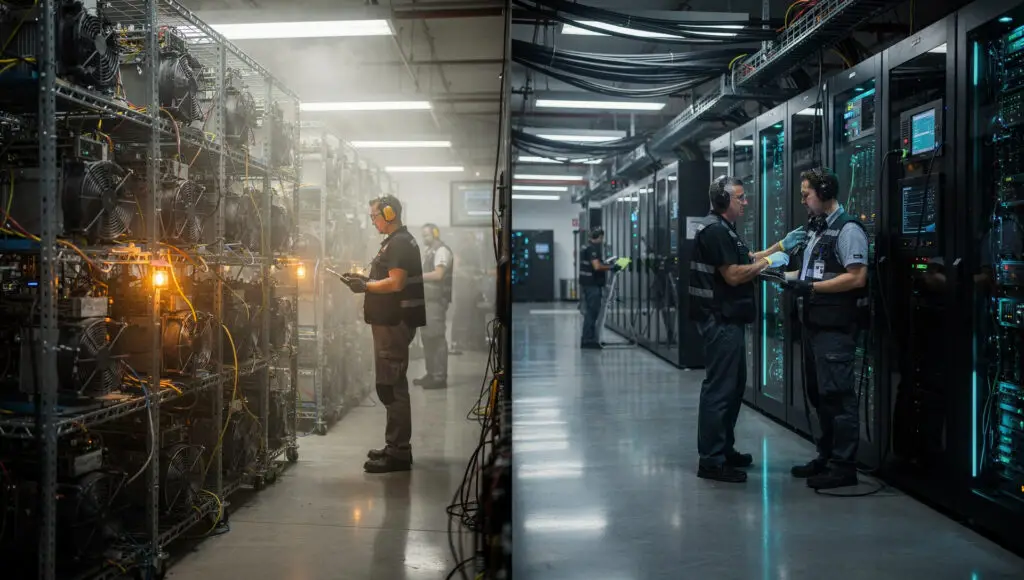
China’s Mining Presence Surges Again Despite the 2021 Nationwide Prohibition
China is witnessing a significant revival in Bitcoin mining activities despite its sweeping 2021 ban. New data shows miners rapidly returning to energy-rich provinces amid changing economic incentives.
Hashrate Index estimates that China has climbed back to the third-largest mining market globally. This resurgence highlights the resilience of miners and the economic appeal of stranded electricity across several regions.
Provincial Energy Surpluses Create Ideal Conditions for Large-Scale Mining Expansion
Many miners report that regions like Xinjiang continue offering abundant low-cost energy. These local power surpluses create attractive conditions for mining operations despite national restrictions.
Operators argue that surplus electricity must be consumed locally due to transmission bottlenecks. As a result, Bitcoin mining becomes an economically viable outlet for energy that would otherwise go unused.
Industry Data Shows Rapid Growth as Rig Manufacturers Report Surging Sales
Mining-rig producer Canaan confirms a major rebound in Chinese demand across recent quarters. Sales in China have risen sharply as miners respond to profitable incentives and improved market conditions.
Sources indicate that more than half of Canaan’s second-quarter revenue originated from China. This marks a significant shift from previous years when U.S. tariff uncertainty and regulatory pressure constrained domestic growth.
Recommended Article: Bitcoin Rebounds as Market Signals Point to a Possible Trend…
Analysts Cite China’s Pragmatic Flexibility When Regional Economic Gains Increase
Industry specialists suggest that China sometimes moderates enforcement when strong local incentives emerge. Profit-driven opportunities in certain provinces create space for renewed mining even without official policy shifts.
They argue that the mining rebound sends a strong signal about Bitcoin’s global resilience. Subtle regulatory easing could also strengthen Bitcoin’s narrative as a strategically important digital asset.
Rising Bitcoin Prices and Global Distrust of the Dollar Support Mining Revenues
Bitcoin’s rally toward record highs earlier this year boosted mining profitability across several regions. Some miners returned following the asset’s rapid appreciation during periods of geopolitical tension.
Experts say distrust of the U.S. dollar and Trump-era crypto-friendly policies strengthened global mining confidence. However, Bitcoin remains roughly one-third below its peak as broader risk appetite softens.
Local Governments’ Data Center Overinvestment Creates Excess Computing Capacity
Overbuilding of data centers by financially stressed provincial governments has contributed to the resurgence. Oversupply in computing infrastructure left regions with unused capacity suitable for mining operations.
This environment allowed miners to rapidly scale their activities using infrastructure initially intended for commercial or industrial computing projects. These developments further encouraged underground and semi-formal operations.
Signs Point to Gradual Policy Softening as China Explores Regulated Digital Assets
China recently signaled a softer posture on digital asset innovation despite the mining ban remaining intact. Hong Kong’s regulatory progress on stablecoins positions the territory as a competitive crypto hub.
Sources indicate China may allow yuan-backed stablecoins for international trade in the future. Analysts believe these efforts suggest shifting priorities as China seeks influence in global digital finance.