


A Cautious Monetary Stance Amid Mounting Economic Strain
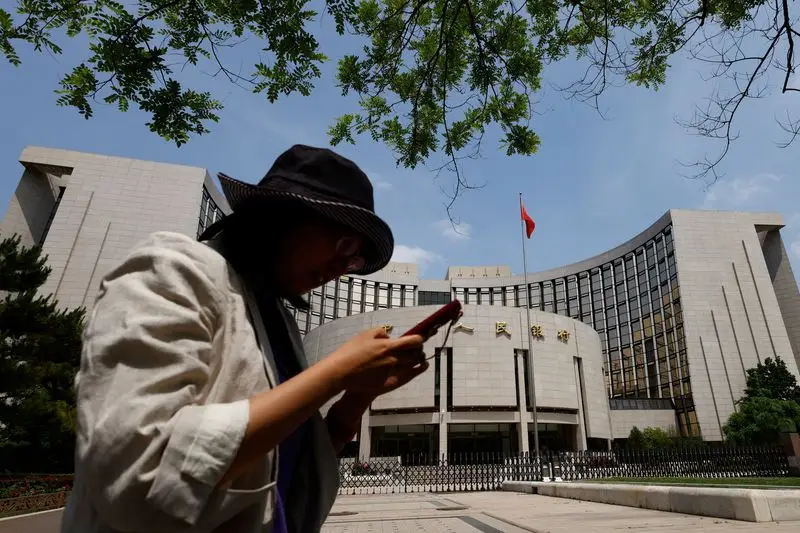
China’s central bank has opted to keep its benchmark lending rates unchanged for a seventh consecutive month, signaling continued caution as the world’s second-largest economy struggles to regain momentum. The decision reflects a balancing act between supporting growth and avoiding financial instability, even as recent economic data points to persistent weakness across several key sectors.
The move underscores the challenges facing policymakers as slowing consumption, soft industrial activity, and a prolonged property slump weigh on confidence.
Key Lending Rates Remain Unchanged
The People’s Bank of China maintained the one-year loan prime rate at 3% and the five-year loan prime rate at 3.5%. These benchmarks play a central role in the economy, influencing borrowing costs for businesses and households alike.
The one-year rate serves as a reference for most new corporate and consumer loans, while the five-year rate is closely tied to mortgage pricing. By holding both steady, policymakers signaled reluctance to deploy additional monetary easing at this stage.
Weak Data Reinforces Growth Concerns
The rate decision follows a string of disappointing economic indicators released for November. Retail sales growth slowed sharply, rising just 1.3% from a year earlier and missing expectations by a wide margin. The slowdown highlights subdued consumer demand at a time when policymakers are trying to stimulate spending.
Industrial production also underperformed, expanding at its weakest pace in more than a year. The combination of softer consumption and slower factory output suggests that the recovery remains fragile and uneven.
Property Sector Slump Continues to Drag
China’s prolonged real estate downturn remains a major source of economic stress. Fixed-asset investment, which includes property development, contracted further over the first eleven months of the year, exceeding economists’ expectations for decline.
Housing prices continued to fall in November, with new home prices declining even in top-tier cities such as Beijing, Guangzhou, and Shenzhen. Resale home prices dropped even more sharply, reinforcing concerns that confidence in the property market has yet to stabilize.
Why Policymakers Are Holding Back
Despite the weak data, authorities have shown restraint in cutting interest rates further. Economists note that monetary policy alone may not be sufficient to revive private-sector confidence, particularly when structural challenges persist.
Lower borrowing costs can encourage lending, but they may have limited impact if households and businesses remain cautious about spending and investment. Policymakers appear wary of overstimulating credit growth while the effectiveness of rate cuts remains uncertain.
The Limits of Monetary Policy
Experts argue that China’s current slowdown highlights the diminishing returns of traditional monetary tools. With confidence subdued, cheaper loans may not translate into stronger demand. Instead, deeper reforms may be needed to address structural issues weighing on growth.
Economists emphasize that without improvements in income growth, job security, and long-term expectations, households may continue to save rather than spend, blunting the impact of monetary easing.
Fiscal Measures Take Center Stage
In parallel with its cautious monetary stance, China has signaled a greater reliance on fiscal support. Authorities have announced plans to issue ultra-long-term special government bonds to finance infrastructure and strategic projects.
Policymakers have also pledged to boost consumption through targeted measures, aiming to counter deflationary pressures that have lingered throughout the year. These steps suggest that fiscal stimulus, rather than interest rate cuts, may become the primary lever for supporting growth.
Trade Developments Offer Limited Relief
An interim trade arrangement with the United States, which led to the suspension of particularly high tariffs on Chinese exports, has offered some relief. Improved trade conditions could help stabilize manufacturing activity and support export growth in the near term.
However, analysts caution that external demand alone is unlikely to offset domestic weaknesses, especially if global growth remains uneven.
Market Reaction Remains Muted
Financial markets reacted calmly to the rate decision. Mainland equities edged higher, while the yuan remained broadly stable against the U.S. dollar. The muted response suggests that investors had largely anticipated the central bank’s move.
Market participants appear focused less on short-term rate adjustments and more on the broader policy direction for 2026.
A Difficult Road Ahead for Growth
China’s leadership continues to target economic growth of around 5%, but achieving that goal may prove challenging without stronger momentum in consumption and private investment. The extended pause in rate cuts reflects concerns about financial risks and the effectiveness of further easing.
Analysts widely agree that a combination of moderate monetary support, more aggressive fiscal measures, and structural reforms will be needed to revive confidence and sustain growth.
What Comes Next for Policy
Looking ahead, policymakers face difficult choices. Additional stimulus may become unavoidable if growth continues to weaken, but authorities appear determined to avoid abrupt policy shifts that could destabilize markets.
The central bank’s steady stance sends a clear message: while support remains on the table, Beijing is prioritizing stability over short-term boosts. Whether this approach will be enough to lift the economy out of its slowdown remains one of the key questions heading into 2026.